
Madhya Pradesh High Court Refuses Bail to Man Held With 20 Bottles of Codeine Cough Syrup
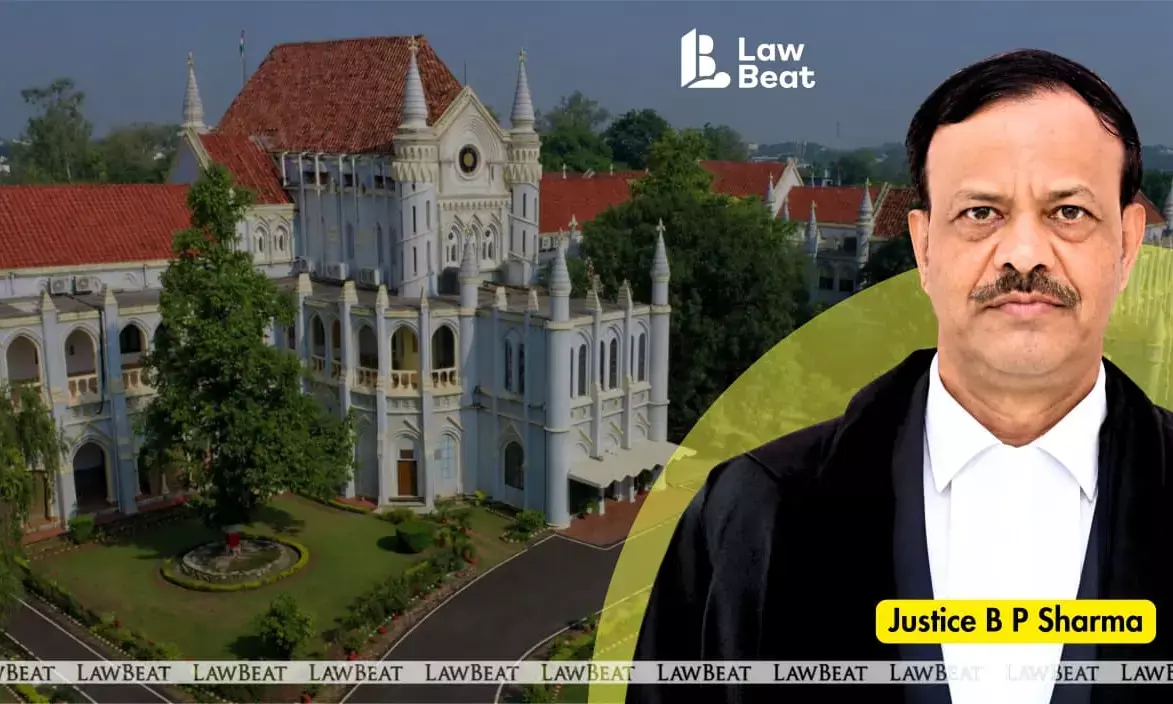
Hostile Seizure Witnesses Do Not Automatically Win Bail in Cough Syrup Case, Says Madhya Pradesh High Court
The Madhya Pradesh High Court has refused bail to a man accused of carrying 20 bottles of codeine-based cough syrup for sale, holding that a medicinal label does not take a product outside the Narcotic Drugs and Psychotropic Substances Act when it is possessed without a licence or valid documents.
Justice B. P. Sharma, sitting at Jabalpur, dismissed the second bail application of Amar Yadav, who faces charges under Sections 8(b), 21 and 22 of the NDPS Act, 1985, and Section 5/13 of the M.P. Drug Control Act. The plea was filed under Section 483 of the Bharatiya Nagarik Suraksha Sanhita, 2023 (Section 439 of CrPC). His earlier application had been dismissed as withdrawn on July 23, 2026.
According to the prosecution, police in Satna received information on April 27, 2026, that Yadav was standing near the Jamuna Colony ground with cough syrup meant for sale. Police allegedly recovered 20 bottles of Onrex cough syrup, each of 100 ml, containing codeine phosphate. The case was registered at Police Station City Kotwali as Crime No. 399/2026, and a charge-sheet has since been filed.
Hostile Witnesses and the “Medicinal” Argument
Appearing for Yadav, advocate Smita Varma argued that he was falsely implicated and that nothing was recovered from him. She pointed out that both independent seizure witnesses, Dheerendra Sen and Suneet Jaiswal, did not support the prosecution and denied the recovery in their presence. She also submitted that the search was not recorded through audio-video means as Section 105 of the BNSS requires, that Section 52-A of the NDPS Act was not properly complied with, and that the syrup is a medicinal preparation falling outside the Act. Even otherwise, she argued, the quantity was not commercial. She relied on Supreme Court rulings in Jagdish, Dilip and Sanjeet Kumar Singh, along with Delhi and Patna High Court orders granting bail in Onrex cases.
Opposing the plea, panel lawyer N.S. Solanki told the court that 20 bottles amount to a commercial quantity, that Yadav produced no licence, and that hostile independent witnesses cannot by themselves sink the prosecution case at this stage. He also pointed to four criminal antecedents, including an earlier NDPS and Drugs and Cosmetics Act case, and invoked the bar under Section 37 of the NDPS Act.
The court first dealt with quantity. Relying on Note 4 of the 2001 notification, as inserted in 2009, it said the weight of the entire mixture or preparation counts, not just the narcotic content. It cited the Supreme Court’s decision in Hira Singh v. Union of India and held that “the contention that only the codeine content is to be considered for determining the quantity cannot be accepted.” The recovery, it concluded, “is of commercial quantity.”
On the medicinal-preparation plea, the bench said the argument “has no force in the facts of the present case.” Citing Mohd. Sahabuddin v. State of Assam, it noted that unlicensed handling of large quantities of codeine-based syrup attracts the NDPS Act and “cannot be exempted merely because the product is a pharmaceutical preparation.” It also referred to a Calcutta High Court ruling on Phensedyl syrup and stressed that Yadav “is not a licence holder and has not produced any valid document justifying possession.”
The court found the precedents cited by the applicant distinguishable on facts. On the independent witnesses turning hostile, it observed that the recovery “cannot be disbelieved at the stage of consideration of bail without examining the remaining prosecution evidence.” The effect of their depositions, and the alleged procedural lapses, would be weighed by the trial court during trial.
Having examined the case diary, the court held that Yadav’s “prima facie involvement” in possessing a commercial quantity of codeine-based syrup could not be ruled out. As he failed to satisfy the twin conditions under Section 37 of the NDPS Act, the court declined relief and dismissed the application. The ruling means Yadav will remain behind bars while his trial continues.
Case Title: Amar Yadav vs. The State of Madhya Pradesh
Order Date: November 16, 2026
Bench: Justice B. P. Sharma