
Madhya Pradesh High Court Says Prior Service Cannot Be Ignored For Pension Benefits
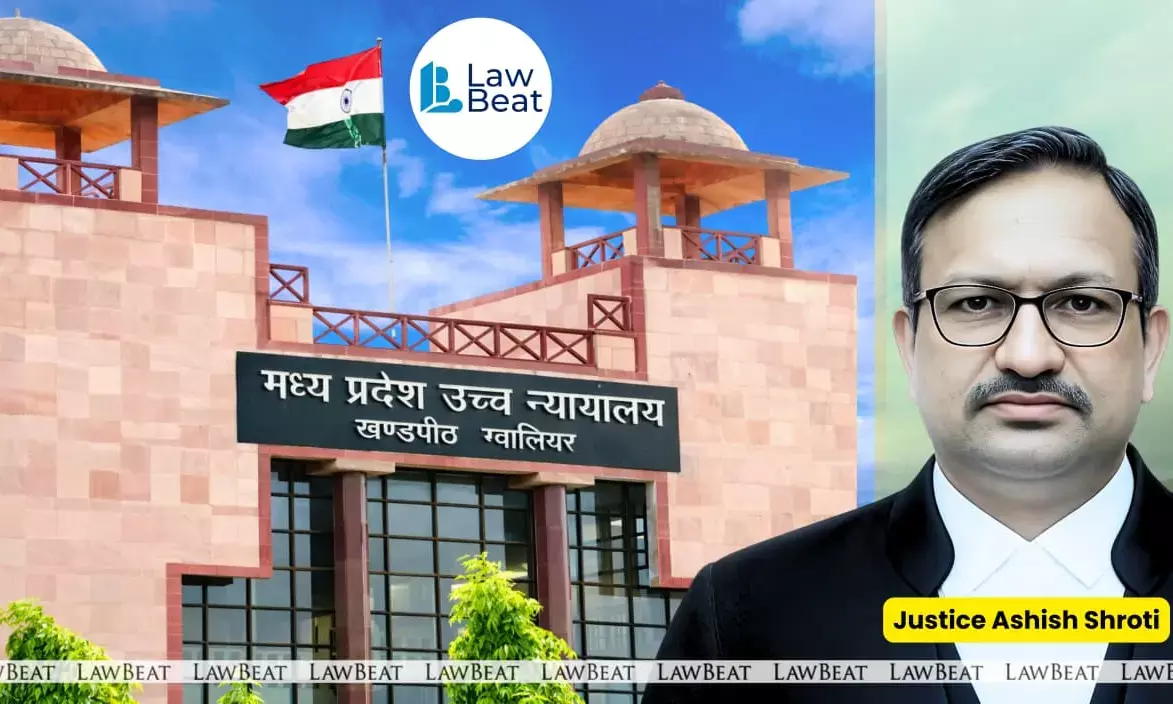
Technicalities Cannot Defeat Pension Rights, Rules MP High Court
The Madhya Pradesh High Court has ruled that a government employee’s past service with a State-controlled entity cannot be excluded from pension calculation merely on technical grounds, reinforcing a liberal interpretation of pension rules in favour of retirees.
The decision came in a writ petition before Justice Ashish Shroti filed by Munesh Kumar Gautam, a retired police officer, who sought inclusion of his earlier service with the erstwhile Madhya Pradesh Electricity Board (MPEB) for the purpose of calculating his retiral dues. The petition challenged a 2018 communication that effectively denied him the benefit based on an objection raised by the District Pension Officer.
Gautam had initially joined the Electricity Board as Assistant Grade III in 1981. After obtaining a no-objection certificate from the Board, he applied for and was selected as a Sub-Inspector in the Police Department in 1988. He resigned from his earlier post and went on to serve in the police force for nearly three decades before retiring in 2017.
Despite departmental approval at one stage for counting his earlier service, the benefit was later denied following an objection that the Pension Rules did not permit inclusion of service rendered outside the State Government.
The court, however, found this objection to be misplaced and inconsistent with the governing legal framework. Referring to Rule 26 of the Madhya Pradesh Civil Services (Pension) Rules, 1976, the court reiterated that resignation ordinarily results in forfeiture of past service, but an exception exists where the employee takes up another appointment with prior permission. The court noted that Gautam had indeed obtained such permission and that his application was duly forwarded by the Board, thereby satisfying the requirement.
Rejecting the State’s argument that the permission was limited to participation in the selection process, the court held that the existence of a no-objection certificate clearly indicated institutional approval for his transition. It observed that raising such objections decades later, after the employee had already retired, was untenable.
Significantly, the court also examined whether service rendered with the Electricity Board could qualify for pension under the rules. It held that although qualifying service generally begins with appointment under the State Government, the rules also permit inclusion of service rendered under other provisions, provided it is pensionable.
In this context, the court analysed the statutory framework governing the Electricity Board and concluded that it was a body constituted and controlled by the State Government. The service conditions of its employees, including pay and duties, were determined under statutory provisions framed with State oversight. Therefore, the court held that such service met the criteria laid down under the Pension Rules.
“The objection raised by District Pension Officer is found to be unfounded and not in consonance with the provisions of the Pension Rules,” the court observed, while overruling the objection.
The judgment also drew support from the Supreme Court’s ruling in State of Rajasthan v. O.P. Gupta, noting that when pension rules are capable of multiple interpretations, courts should adopt the one that favours the employee. Echoing this principle, the High court emphasised that pension is a continuing benefit and cannot be denied on hyper-technical grounds.
On the issue of prior permission, the court went a step further to hold that such permission must be presumed in cases where the employee was selected through a proper channel and served the State for decades without objection. It observed that questioning procedural compliance at such a belated stage would defeat the very purpose of pensionary benefits.
Allowing the petition, the court directed the authorities, including the District Pension Officer, to process Gautam’s claim by counting his service from June 21, 1981 to January 15, 1988, in accordance with an earlier departmental order.
Case Title: Munesh Kumar Gautam v. The State of Madhya Pradesh and Others
Date of Order: March 20, 2026
Bench: Justice Ashish Shroti