
Madhya Pradesh High Court: Sexual Acts Within Marriage Not Criminal, Drops Key Charge in Dowry Case
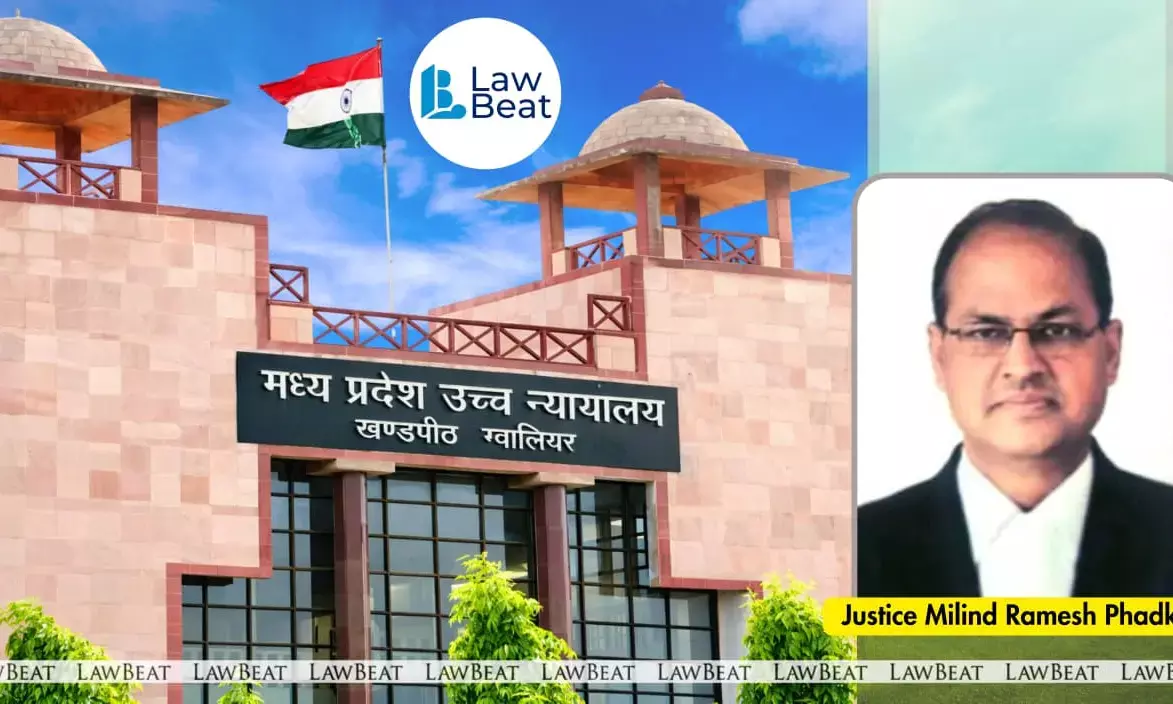
Sexual Acts Within Marriage Not an Offence Under Law, Observes MP High Court
The Madhya Pradesh High Court has reiterated the limited scope of its inherent powers under Section 482 of the Code of Criminal Procedure while partly allowing a plea seeking quashment of criminal proceedings arising out of matrimonial allegations involving dowry harassment, sexual abuse and cruelty.
In a detailed order, the Court drew a careful distinction between vague allegations and prima facie prosecutable claims, ultimately quashing proceedings against a sister-in-law and striking down the charge under Section 377 IPC against the husband, while allowing the trial to proceed on other serious charges.
The case arose from a petition filed by the husband and his family members seeking quashing of an FIR registered at Mahila Police Thana, Bhind, which invoked offences under Sections 377, 354, 498-A, 323, 294, 506 and 34 of the IPC, along with provisions of the Dowry Prohibition Act and the Arms Act. Appearing for the petitioners, Advocate Tapendra Sharma argued that the allegations were exaggerated, inconsistent and motivated by matrimonial discord, while Public Prosecutor Brijesh Kumar Tyagi and Advocate Madan Mohan Tripathi, appearing for the complainant, opposed the plea.
The complainant had alleged persistent dowry demands, physical and sexual abuse, and threats to her life, including an incident where her father-in-law allegedly pointed a licensed firearm at her. She further accused her husband of subjecting her to forced unnatural acts and abandoning her after dispossessing her of her stridhan. The petitioners, however, contended that the dispute stemmed from incompatibility and that the complainant had voluntarily left the matrimonial home, later filing false cases as a counterblast to earlier proceedings.
Justice Milind Ramesh Phadke, after examining the record, observed that the Court’s inherent powers must be exercised “sparingly, with circumspection,” and only when the allegations do not disclose any offence or amount to an abuse of process. Applying this principle, the Court found merit in the argument concerning the sister-in-law, noting that only “general and omnibus allegations” had been made against her without any specific role being attributed.
Significantly, the Court pointed out that the complainant’s statement under Section 164 Cr.P.C. did not assign any role to the sister-in-law, nor were any allegations made against her in earlier maintenance proceedings. In such circumstances, the Court held that her implication appeared “prima facie an abuse of the process of law,” and accordingly quashed the FIR and all consequential proceedings against her.
On the more contentious issue of the charge under Section 377 IPC against the husband, the Court undertook a detailed analysis of the evolution of the law on sexual offences. Referring to the expanded definition of rape under Section 375 IPC post the 2013 amendment, the Court noted that various forms of penetration, including oral and anal acts, now fall within the ambit of rape.
However, the Court emphasized the continued existence of Exception 2 to Section 375 IPC, which excludes sexual acts between a husband and wife from the definition of rape, provided the wife is not a minor. In this context, the Court held that “such allegations would not constitute an offence under Section 377 IPC” when they arise within a subsisting marital relationship. It further relied on precedents to conclude that the overlap between Sections 375 and 377 IPC, coupled with the marital exception, renders Section 377 inapplicable in such cases.
Accordingly, the Court quashed the charge under Section 377 IPC against the husband, holding that no prima facie offence was made out on this count. However, it declined to interfere with the remaining charges, including cruelty, assault, criminal intimidation and dowry harassment, observing that these allegations were supported by the complainant’s statements and required examination during trial.
Rejecting the petitioners’ arguments on inconsistencies and lack of medical evidence, the Court held that such issues involve disputed questions of fact and cannot be adjudicated at the stage of quashing. It reiterated that “minor inconsistencies or omissions… are matters of trial” and do not warrant interference under Section 482 Cr.P.C.
The petition was thus partly allowed.
Case Title: Krishnagopal Sharma and Others v. The State of Madhya Pradesh and Others
Date of Order: March 25, 2026
Bench: Justice Milind Ramesh Phadke