
Madras HC Quashes TVK Govt’s Jobs Order For Karur Stampede Victims' Kin: Public Employment Not To Be Thrown Away As 'Largesse'
Public Jobs Cannot Be Given as Charity: Madras High Court Strikes Down Karur Stampede Appointments
The Madurai Bench of the Madras High Court on July 27 quashed the State government's decision to grant public employment to 32 family members of those who died in the Karur stampede, holding that public employment cannot be thrown away as ‘largesse’ and that the appointments violated the constitutional guarantees of equality under Articles 14 and 16.
Setting aside two Government Orders through which the jobs had been granted, the Court held that executive power cannot be exercised in a manner that bypasses the settled constitutional framework governing public employment.
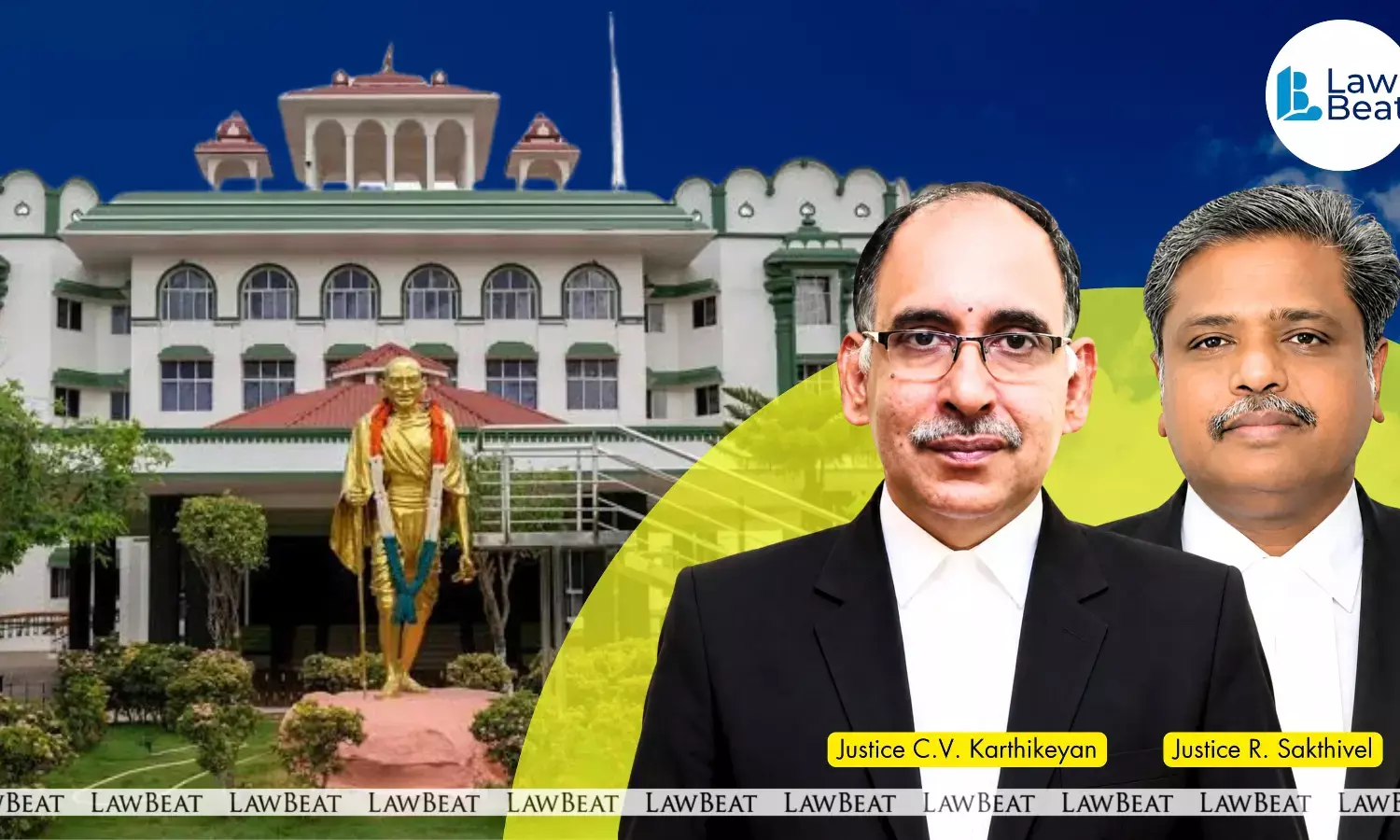
A Division Bench of Justice C.V. Karthikeyan and Justice R. Sakthivel allowed three public interest petitions challenging Government Order dated July 6, 2026, through which the State had appointed 32 next of kin of the 41 persons who lost their lives in the tragedy.
The Bench also quashed Government Order dated July 9, 2026, which amended certain appointments made under the earlier Government Order.
What was the case of the petitioners?
Before the High Court, the petitioners contended that the Government had created an impermissible class of beneficiaries by granting government jobs solely because the beneficiaries had lost family members in the stampede.
They further argued that the tragedy was already under investigation by the Central Bureau of Investigation, under the supervision of a former Supreme Court Judge, pursuant to proceedings before the Supreme Court, and therefore extending public employment during the pendency of the investigation was wholly unwarranted.
What was the State's case?
The State defended its decision, contending that it was merely extending a humanitarian measure to families devastated by the tragedy and that such an expression of compassion ought not to have been challenged through a writ petition.
It also raised a preliminary objection to the maintainability of the petitions, submitting that a Public Interest Litigation was not maintainable in matters concerning appointments to public employment.
Further, the State submitted that it had considered reports from the District Collectors of Karur, Erode, Tirupur, Dindigul, and Salem, along with the recommendations of the Additional Chief Secretary (Revenue), before deciding to grant government employment to the identified beneficiaries.
What did the High Court observe?
The Court noted that when the petitions first came up on July 10, appointment orders were scheduled to be distributed later that day.
Rather than disrupting the public function, it permitted the ceremony to proceed after making it clear that the appointments would remain purely provisional and subject to the outcome of the writ petitions. It also ensured that the matters would be decided before the beneficiaries received their first salary.
Finally deciding the matter, the Bench rejected the State's preliminary objection regarding maintainability, holding that the petitions did not involve a conventional service dispute but raised a constitutional challenge to executive action affecting public employment.
It observed that while PILs are ordinarily not maintainable in service matters, the present petitions questioned the legality of a Government policy allegedly violating Articles 14 and 16 and therefore warranted judicial scrutiny.
The Court further held that its jurisdiction under Article 226 empowered it to mould relief and examine the validity of the impugned Government Orders.
On merits, the Bench found that the State had failed to demonstrate any legally sustainable basis for extending public employment to the victims' families.
It distinguished the decisions relied upon by the Government, including appointments granted to dependants of fallen defence personnel, the daughter of murdered Madurai councillor Leelavathi and families affected by the Sterlite police firing.
The Court observed that armed forces personnel who sacrifice their lives for the nation constitute a distinct class.
The Bench found that the impugned Government Order merely referred to reports submitted by District Collectors without recording whether each beneficiary continued to be in financial distress despite receiving ₹10 lakh as ex gratia compensation, whether the families remained in indigent circumstances, or whether eligibility conditions had been examined individually.
It also noted that age relaxation had been granted in certain cases without adequate reasons being recorded. The Court further observed that the Government had not explained why payment of ₹10 lakh as ex gratia was insufficient or why further relief necessarily had to take the form of public employment.
Referring extensively to the Supreme Court's decision in Canara Bank v. Ajithkumar G.K. and earlier decisions, the Bench reiterated that compassionate appointment is a narrow exception to the constitutional scheme of public employment and cannot be treated as another source of recruitment.
It observed that such appointments are intended only to relieve immediate financial hardship and cannot be extended on equitable considerations dehors the settled constitutional framework.
The Court further observed that the impugned appointments also prejudiced those who had already applied for compassionate appointment under the existing scheme and continued to await consideration.
"...we would confine ourselves to those who had applied for compassionate appointment and are still waiting and who have been denied and suddenly find 32 others being granted employment overlooking their credentials. We hold that these appointments are in direct violation of the fundamental rights to a citizen of this country under Article 14 and Article 16 of the Constitution of India."
The Bench observed that accepting the State's justification would leave no rational basis to deny similar claims arising out of other tragic incidents involving loss of life, including industrial accidents, road accidents, fires and factory explosions, thereby undermining the constitutional guarantee of equality in public employment.
Every Public Employment Has Value: Court
Rejecting the State's contention that the appointments were only to "low-level" posts and therefore caused no real prejudice to the constitutional scheme of recruitment, the Court observed:
"Unfortunately, we do not agree with that statement. Every employment has its own credential. Every employment in public service has its own value. To that employee, every employment is a matter of pride. Even when a Watchman is promoted as an Office Assistant, to him, it is success in life. It can never be stated that he was employed in a lowly post and grant of employment is justified on the ground that the Government is handing over lowly posts to those who died in the Karur stampede. It is not proper. It is not justifiable. We do not uphold of it."
The Bench held that every government post carries dignity and significance and must be filled strictly in accordance with the constitutional mandate of equality.
Rejecting the State's reliance on Article 162 of the Constitution, the Court held that although the provision confers executive power on the State, such power cannot be exercised in a manner that overrides the constitutional guarantees contained in Articles 14 and 16.
"Public employment is not to be thrown away as a largesse by the State. It has to be earned. Its value has to be realised and its importance has to be cherished."
The Bench observed that while the State undoubtedly has a duty to support families affected by tragedies, such support must be extended through constitutionally permissible means and not by distributing public offices.
The Court also expressed dissatisfaction with the stand taken by the Tamil Nadu Public Service Commission, observing that, instead of assisting the Court on the constitutional principles governing public employment, it merely relied on the Government Order, which stated that compassionate appointments fell outside its purview.
Before concluding, the Bench suggested that rather than granting government employment, the State should adopt long-term measures aimed at rehabilitation and economic self-sufficiency.
"The Government may consider providing technical education, skill development and encourage entrepreneurship so that the beneficiaries become self-reliant and even generate employment for others."
Allowing all three writ petitions, the Bench quashed both Government Orders, holding that they violated Articles 14 and 16 of the Constitution and could not be sustained under Article 162.
The Court also noted that the beneficiaries had accepted the appointments with full knowledge that they were provisional and subject to the outcome of the proceedings and, therefore, had acquired no vested right to continue in service.
Case Title: Theeran Thirumurugan @ Thirumurugan v. The Chief Secretary and connected matters
Date of Order: July 27, 2026
Bench: Justice C.V. Karthikeyan and Justice R. Sakthivel