
Madras High Court Dismisses PIL Against Vimal Elaichi Ads, Says Surrogate Advertising Is A Question Of Fact For Regulators
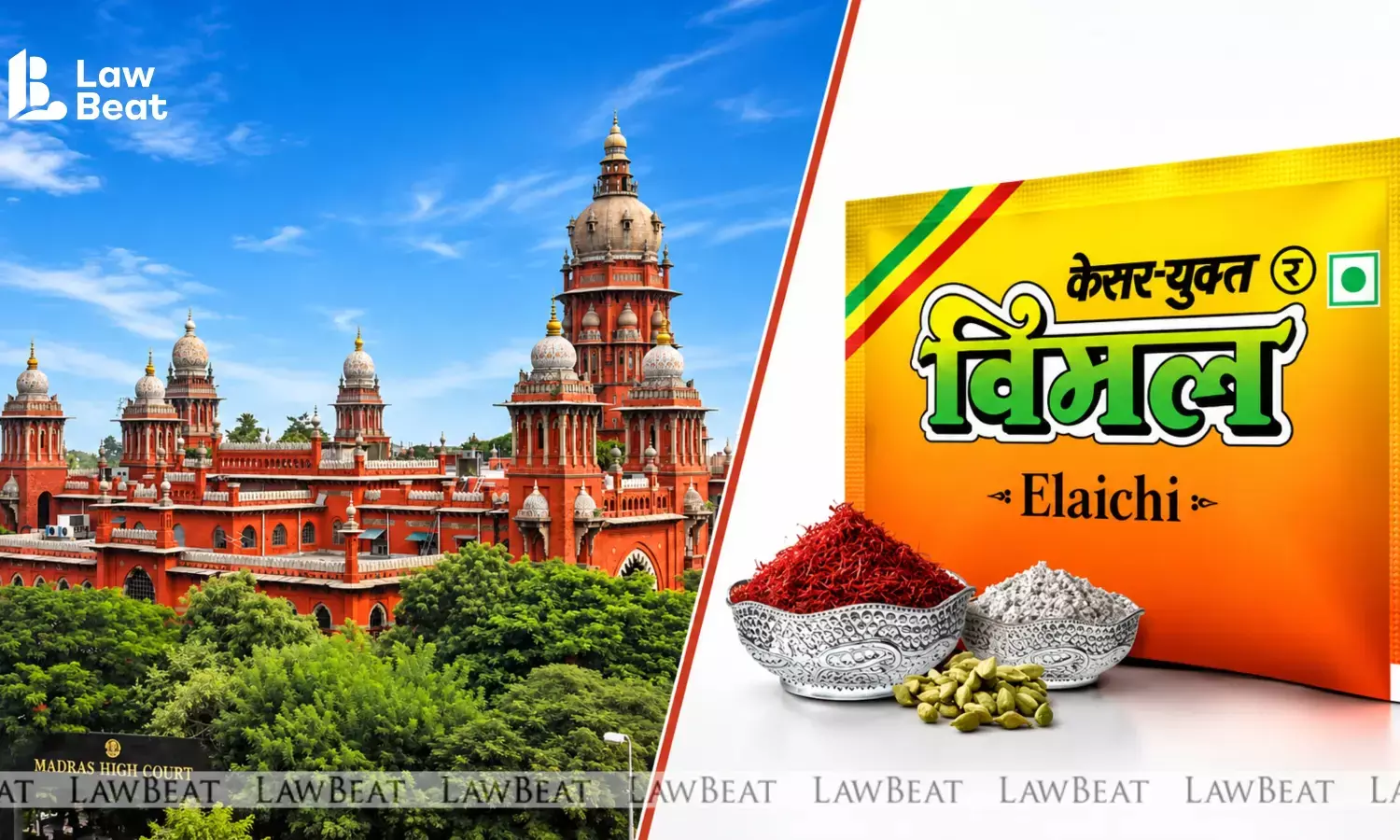
Madras HC refuses to brand Vimal Elaichi ads as surrogate pan masala promotion; says regulators must decide first
The Madras High Court on November 11 dismissed a public interest litigation that sought action against the advertisements for "Vimal Elaichi", holding that whether a campaign is a surrogate advertisement for pan masala is a question of fact which the statutory authorities must examine first, and that a writ of mandamus cannot issue where the petitioner has never placed his grievance before those authorities.
A Division Bench of Chief Justice Sushrut Arvind Dharmadhikari and Justice G. Arul Murugan found that the petition rested on media reports, social media and the "possibility" of wrongdoing, and observed that "A writ court does not order inquiries on the chance that something may turn up."
The petitioner, a resident of Madurai, approached the High Court under Article 226 against P.B. Agro LLP, the sixth respondent, which, according to him, manufactures both pan masala and Kesar Elaichi (cardamom with saffron) under the common brand "Vimal". The order records that both are food products registered with the Food Safety and Standards Authority of India (FSSAI), and that the company advertises Vimal Elaichi on television, in print, on social media and on hoardings, using three well-known film actors.
The petitioner's case was that the Vimal brand is known for pan masala and that it is hard to believe a company would spend so much to sell cardamom. He therefore pleaded that the campaign is a surrogate advertisement in breach of the Food Safety and Standards Act, 2006, the Advertising and Claims Regulations, 2018, the Consumer Protection Act, 2019, the CCPA Guidelines of 2022, the Cigarettes and Other Tobacco Products Act, 2003 (COTPA), and the Cable Television Networks Rules, 1994.
In support, he relied on media reports that in August 2026 the Maharashtra Food and Drug Administration had issued show-cause notices to the three actors, stating that the advertisement appears to link Vimal Elaichi with Vimal Pan Masala, which is prohibited in Maharashtra under an order dated July 13, 2026. He also pointed out that the Commissioner of Food Safety in Tamil Nadu had issued orders under Section 30 of the 2006 Act against tobacco and nicotine-based chewable products, and asserted that the Tamil Nadu authorities had done nothing about the sixth respondent.
The petitioner sought a mandamus directing the Union Health Ministry, the State of Tamil Nadu, the FSSAI, the Tamil Nadu Commissioner of Food Safety and the Central Consumer Protection Authority (CCPA) to inquire into and act against the company for the alleged violations, including Section 53 of the Food Safety and Standards Act, Section 5 read with Section 22 of COTPA and Rule 7 of the Cable Television Networks Rules. He further sought a direction to the authorities to require the company to discontinue what he described as surrogate or deceptive advertisement of pan masala, gutka or prohibited goods in the guise of promoting Elaichi, so that residents of Tamil Nadu are not misled into consuming those products.
Senior Advocate Santhosh Paul, appearing for the petitioner, contended that the advertisement is surrogate on its face, that no one can claim protection under Article 19(1)(g) of the Constitution for such a campaign, and that the media reports from Maharashtra make out a prima facie case.
The Bench began by setting out the standard a public interest petition must meet. It observed, "Public interest litigation is an extraordinary legal remedy designed to assist those unable to approach the court themselves. Consequently, it demands rigorous and credible material rather than mere guesswork. This jurisdiction cannot be set in motion based on speculation, internet rumors, or unverified news reports lacking proper foundational research."
Tested against that standard, the Court held that the petition could not go forward, and gave four reasons.
The Court noted that most of the key averments were made on the footing that the petitioner was "advised" or had "learnt through social media", and that the only documents on record were newspaper and web reports of notices issued in another State. On the nature of those notices, it said, "Those notices are show-cause notices. They record a prima facie view and call for an explanation. They are not findings."
The Bench recorded that it was told one of the actors had challenged his notice before the Bombay High Court, "so the matter is still open there", and that the notices also rest on a prohibition order specific to Maharashtra. It concluded, "An action taken by one State, on its own order and at a preliminary stage, gives us no basis to direct the authorities in Tamil Nadu to proceed against anyone."
The Court found that the petitioner's case "rests on suspicion". It recorded that the petitioner accepted that Elaichi is a recognised food product, that it is registered with the FSSAI, and that no law bars its advertisement, and that he also admitted he found no gutka or tobacco product sold by the company under the Vimal brand. He added only that such a possibility "cannot be ruled out".
Declining to order an inquiry under the tobacco law on that basis, the Bench said, "On that footing he wants this Court to order an inquiry under the tobacco law as well. A writ court does not order inquiries on the chance that something may turn up."
On the central allegation, the Bench held that it could not be decided on affidavit in writ proceedings. It observed, "The allegation that the advertisement is surrogate is a question of fact. The answer depends on whether the advertised product is genuinely sold, how it is packaged and marketed, what the advertisement says and shows, and what the advertiser intended."
The Court pointed out that the statutory framework already provides the forum for that inquiry, "The Food Safety and Standards Act, the Consumer Protection Act and the other laws cited already give the competent authorities the power to examine these matters, hear the advertiser and decide. We cannot declare the campaign surrogate on the basis of the affidavit filed by the petitioner, without any concrete substantiating material."
Finally, the Court held that the basic precondition for a mandamus was absent. The petitioner alleged that the respondents "are not taking any action", but admitted in his affidavit that he had made no representation to any of them. The Bench observed, "A mandamus needs a legal duty and a failure to perform it. … An authority that has never been told of a grievance cannot be said to have ignored it."
It added that the petitioner "could have complained to the Commissioner of Food Safety or to the Central Consumer Protection Authority, however, he chose to come directly to this Court."
Conclusively, the Court held "that the writ petition is premature and lacks merit" and dismissed it, without costs. The connected miscellaneous application was closed.
Case Title: D. Rakesh v. Union of India & Ors.
Bench: Chief Justice Sushrut Arvind Dharmadhikari and Justice G. Arul Murugan
Order Date: November 11, 2026