
Madras HC Raps State Action Driven by ‘Superstition,’ Chennai Man Gets Back Idols Removed by Authorities
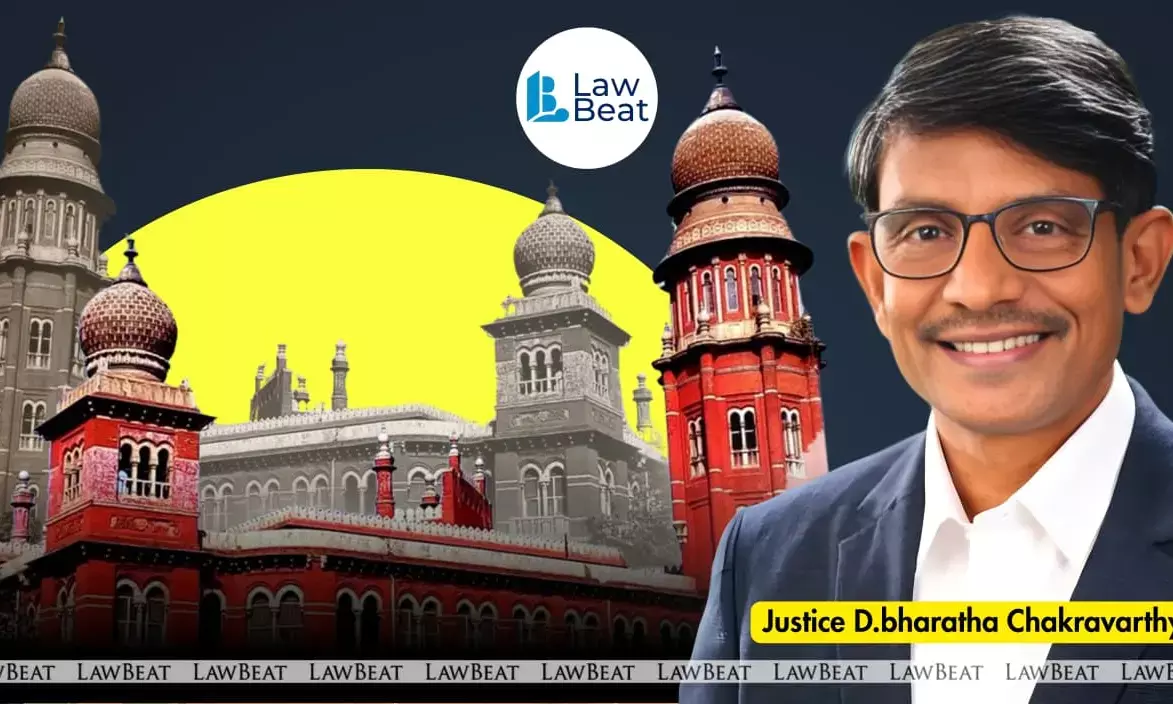
Madras High Court orders return of seized idols, rejecting superstitious claims against private worship
The Madras High Court recently closed a contempt petition filed by a Chennai resident after confirming that idols removed from his house by local authorities had been returned to him, in compliance with an earlier court order that criticised State action driven by superstition rather than law.
The contempt proceedings arose from a dispute over the installation of Hindu idols inside a private residential premises in Ennore. The petitioner, A. Karthik, had approached the high court earlier after officials removed idols of goddess Sivasakthi Dhakshiswari, Vinayagar and Veerabhadran from his home, allegedly following protests by local residents.
In April 2025, the high court had come down strongly on the authorities, holding that their action was unsupported by law and based purely on superstition. The court had noted submissions that residents believed certain “unnatural deaths” in the locality were linked to the installation of the idols, a claim the court rejected outright. It had observed that constitutional authorities were expected to promote scientific temper and not act on unscientific beliefs.
While disposing of the writ petition on April 3, 2025, the court had directed the authorities to hand over the idols back to Karthik. At the same time, it imposed clear conditions, stating that worship could be carried out only within the premises, without loudspeakers, noise pollution or any activity that disturbed neighbours. The petitioner was also barred from conducting programmes involving collection of money from the public.
Alleging that this order was not complied with, Karthik moved the present contempt petition under the Contempt of Courts Act. His counsel told the court that despite the clear direction, the idols were not returned for several months. It was further claimed that local residents had threatened violence if the idols were reinstalled in the premises and that police protection was required.
Opposing the contempt plea, the State authorities argued that the petitioner had exceeded the scope of residential use. According to the government, Karthik had permission only to construct a house but was effectively running a temple without approval. The authorities alleged that poojas were being conducted even at midnight, causing disturbance to the neighbourhood.
A private individual, who was later impleaded as a respondent, also opposed the petitioner. It was claimed that the structure functioned like a public temple, complete with a separate pathway, public worship and collection of hundi money. The respondent further alleged that the land itself was poromboke and did not belong to the petitioner.
After hearing all sides, the bench of Justice D. Bharatha Chakravarthy took note of the fact that the idols admittedly belonged to the petitioner. During the hearing, both the petitioner and the Tahsildar were present before the court. The judge directed Karthik to go to the Tahsildar’s office and collect the idols forthwith.
When the matter was taken up again, it was reported to the court that the idols had been handed over. Recording this submission, court held that the direction issued in April 2025 had now been complied with and that no case of continuing contempt survived.
While closing the contempt petition, court addressed the broader concerns raised by both sides. It clarified that if any construction had been carried out without permission, it was open to the local authorities to proceed in accordance with law after issuing due notice. At the same time, it reiterated that worship in a private premises could not be carried out in a manner that disturbed the public, and any complaint of noise or nuisance could be acted upon by the police.
Court also observed that if a hundi was kept, the Hindu Religious and Charitable Endowments Department would be entitled to inspect and take action as per law. Importantly, it cautioned that members of the public could not take the law into their own hands based on majority sentiment or superstition.
Reiterating its earlier stance, court observed that beliefs linking idols or worship to harm were purely superstitious and had no place in governance guided by constitutional values. With these observations, the contempt petition was formally closed.
Case Title: A.Karthik vs. Mrs. Rashmi Siddharth Zagade, The District Collector and Others
Order Date: December 15, 2025
Bench: Justice D. Bharatha Chakravarthy