
Madras High Court Says Centre May Consider Australia-Style Law to Curb Children’s Internet Use
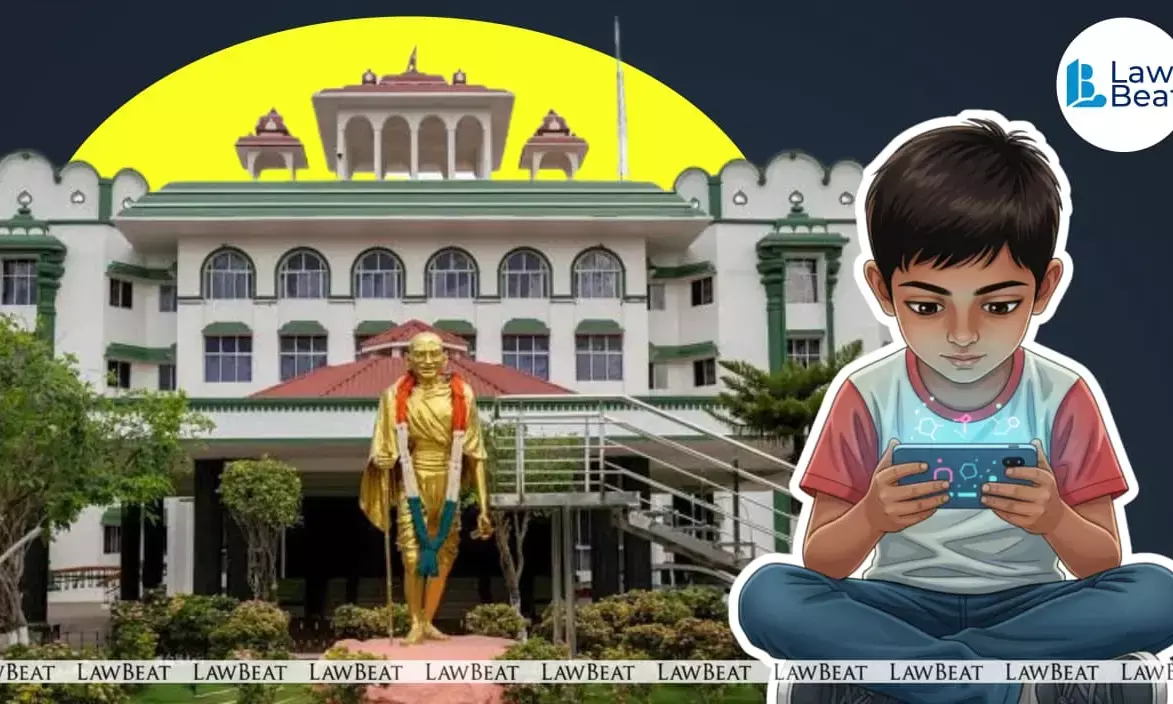
Madurai Bench of Madras High Court suggests Australia-style internet age limits for children in India
The Madras High Court (Madurai Bench) recently observed that the Union of India may explore legislation similar to Australia, where the use of the internet by children below a certain age has been restricted, while dealing with a public interest petition highlighting the easy availability of pornographic content to children online.
Court, however, stopped short of issuing binding directions and instead emphasised the need for stronger awareness measures until any such law is enacted.
The observation came while disposing of a writ petition filed by S. Vijayakumar, who approached the court expressing concern over the unchecked access to pornographic and sexually explicit material, including child sexual abuse material, through digital platforms. The petitioner argued that existing safeguards were inadequate and sought judicial intervention to enforce preventive mechanisms.
A division bench of Justices G. Jayachandran and K.K. Ramakrishnan examined whether statutory authorities were effectively discharging their responsibilities under the National Commission for Protection of Child Rights Act, 2005. The petitioner urged the National Commission for Protection of Child Rights and the Tamil Nadu Commission for Protection of Child Rights to invoke their powers under Sections 13(1)(c) and 13(1)(j) of the Act to compel internet service providers to offer a “Parental Window” or parental control facility, as referred to in a 2017 communication issued by the Union of India.
The petition further sought prosecution of internet service providers under Section 14(2) of the Act for failure to comply with such directions, contending that statutory obligations to protect children were not being meaningfully enforced.
Several Union ministries, state departments, regulatory bodies and senior executives of major telecom and internet service providers were impleaded as respondents, some of them suo motu by the court. In their counter affidavits, the respondents pointed to existing regulatory mechanisms under the Information Technology (Intermediary Guidelines and Digital Media Ethics Code) Rules, 2021, and submitted that objectionable websites are blocked whenever brought to their notice.
Counsel appearing for internet service providers submitted that intermediaries periodically review content and act on complaints, arguing that they are already governed by a separate statutory framework. It was also contended that technological and regulatory measures were in place to address the circulation of unlawful content.
Court, however, was not fully persuaded. It observed that the counter affidavits filed by the authorities were “not impressive” enough to demonstrate that statutory duties under Sections 13 and 14 of the child rights law were being adequately discharged. While acknowledging that some awareness campaigns were conducted, particularly in schools, the bench noted that these efforts were insufficient given the scale of the problem.
Emphasising the statutory mandate of child rights commissions, court said they have a duty to spread child rights literacy and promote awareness of safeguards available for the protection of children. The bench observed that wider use of publications, media outreach, seminars and other communication tools was necessary to reach vulnerable groups effectively.
Court also referred to a recent Supreme Court decision in Just Rights for Children Alliance v. S. Harish, which dealt with issues concerning the rights of POCSO victims and made broader suggestions to the Union of India and stakeholders. Drawing from that judgment, the bench highlighted the importance of a coordinated approach involving awareness, prevention and regulatory oversight.
While acknowledging that dynamically updated lists of URLs containing child sexual abuse material were available, court observed that effective control must also exist at the user end. It noted that parental control applications and informed parental supervision were critical in limiting children’s exposure to harmful content, given their heightened vulnerability.
The bench stressed that while adults may exercise individual choice regarding access to online content, children require additional protection and oversight. It recorded the petitioner’s submission that parental control tools on devices could substantially reduce exposure to harmful material.
Referring again to the Australian example, court said that the Union of India could consider similar legislative measures. However, until such legislation is introduced, court held that authorities must intensify awareness campaigns and ensure that the message reaches parents, children and other stakeholders through all available media.
The writ petition was accordingly disposed of without costs, with the court expressing the expectation that both the central and state child rights commissions would draw up concrete action plans and implement them in letter and spirit.
Case Title: S.Vijayakumar vs UOI and Others
Order Date: December 9, 2025
Bench: Justices G. Jayachandran and K.K. Ramakrishnan