
Maharashtra Deputy CM Ajit Pawar Dies in Baramati Plane Crash; DGCA, AAIB Launch Probe into Charter Aviation Safety
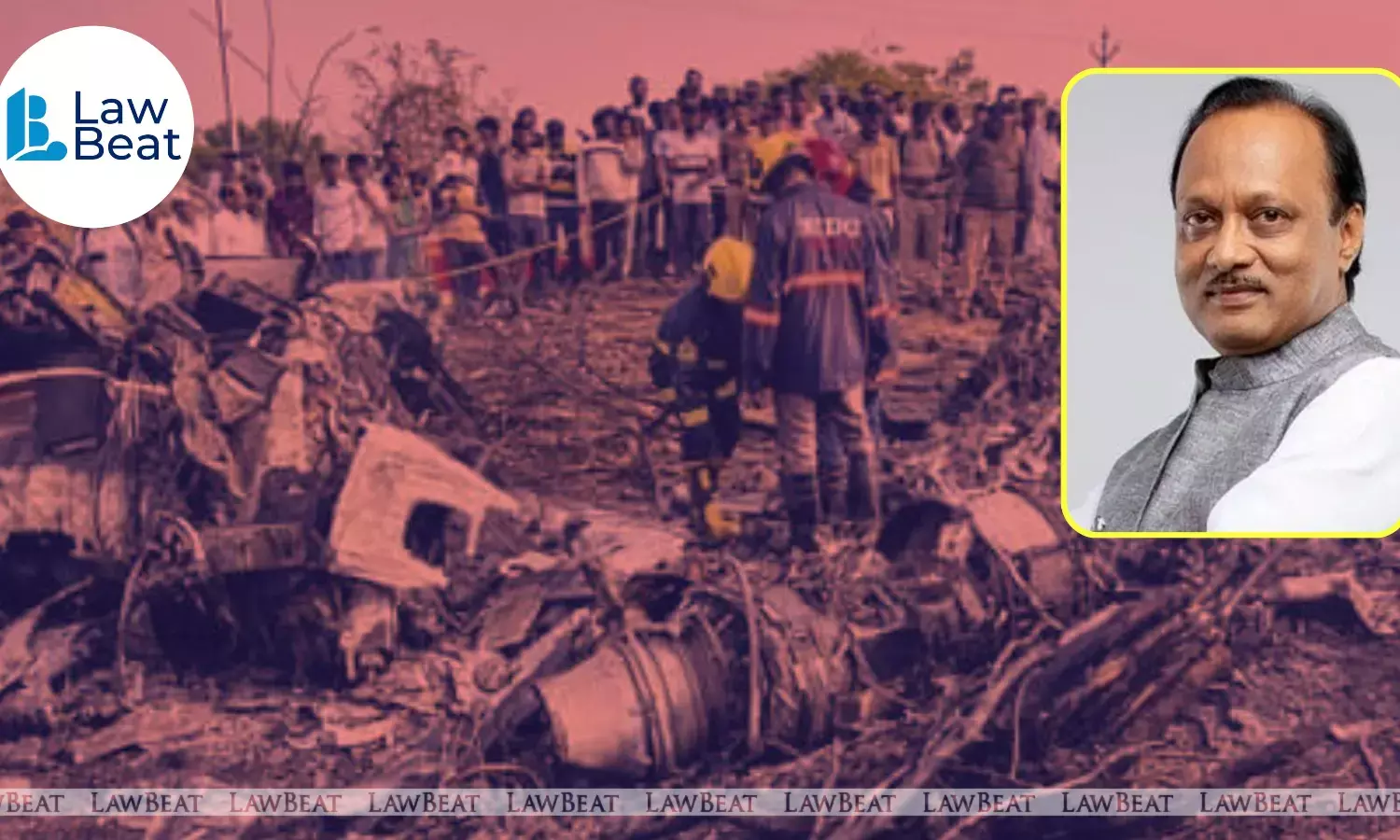
Maharashtra Deputy CM Killed in Baramati Charter Plane Crash; Aviation Probe Underway
The death of Maharashtra Deputy Chief Minister Ajit Pawar in a charter aircraft crash near Baramati on 28.01.2026, has triggered multi-layered aviation, regulatory and administrative scrutiny, with central and state agencies initiating parallel technical and compliance investigations into the circumstances leading to the accident.
The crash occurred during the final phase of landing when a Learjet 45 business jet operating a Mumbai-Baramati sector flight lost control and crashed near the airstrip, resulting in the deaths of all five persons on board, including crew members and accompanying staff.
Preliminary official information indicates that the aircraft burst into flames on impact, leaving no survivors.
The aircraft involved was a privately operated charter jet registered as VT-SSK and operated by VSR Ventures under a Non-Scheduled Operator Permit framework. Official aviation records indicate that five persons were on board, including two crew members, and all sustained fatal injuries in the accident.
The aircraft was operating a scheduled political travel route linked to public engagements in western Maharashtra at the time of the crash.
Initial factual reconstructions suggest the accident occurred during the landing sequence at the Baramati airstrip after the aircraft encountered difficulty stabilising approach conditions.
Reports indicate the crash happened around the morning landing window during descent, with early technical commentary pointing toward potential low-visibility conditions and landing complexity as possible contributing factors, though final conclusions remain subject to technical investigation.
The crash has since moved into a formal investigative phase led by the Aircraft Accident Investigation Bureau along with parallel oversight and technical review by the Directorate General of Civil Aviation. Both agencies have initiated evidence collection, site analysis and technical reconstruction of the flight’s final minutes.
The black box, comprising the cockpit voice recorder and flight data recorder, has been recovered and is expected to provide critical insight into cockpit communications, flight parameters and decision-making sequences during the final approach phase.
Civil aviation authorities have emphasised that the investigation will follow a time-bound and transparent framework under existing aircraft accident and incident investigation rules, with technical teams examining operational records, maintenance history, environmental data and air traffic control interactions to reconstruct the exact sequence of events.
Available technical and operational details suggest the aircraft was attempting landing during approach to the runway when control was lost, with some reports indicating that the crew may have faced difficulty visually acquiring runway alignment during descent. There was reportedly no Mayday distress call before the crash, adding further focus on sudden loss of situational control during the final landing phase.
The accident has also revived regulatory discussion around non-scheduled charter aviation operations, particularly in the context of high-frequency political and VIP travel, operational time pressure and infrastructure limitations at smaller airstrips.
Experts have highlighted the need for enhanced simulator training and procedural safeguards for complex landing environments, particularly where advanced landing assistance systems or commercial-grade emergency infrastructure may not be present.
The crash site has been secured for forensic examination while investigators analyse wreckage distribution, burn patterns and ground impact indicators to determine whether the accident resulted from pilot handling, weather conditions, equipment malfunction or a combination of operational risk factors. Authorities have reiterated that causal attribution will only be made after full technical examination is completed.
The incident occurred within the territorial jurisdiction of the state of Maharashtra and near the city of Baramati, a politically significant region where the leader was scheduled to attend public meetings ahead of local electoral mobilisation activity. The death has led to widespread political reaction and state mourning, reflecting the leader’s long-standing administrative and political role within state governance structures.
From a legal-administrative standpoint, the investigation may determine whether there were any lapses in operator compliance, aircraft maintenance certification, flight planning or infrastructure readiness.
Depending on findings, consequences could range from regulatory advisories and safety protocol revisions to liability determinations under civil aviation safety and insurance frameworks. Historically, major aviation incidents involving public office holders have triggered broader policy reviews and operational audits across the charter aviation sector.
Parallel review may also extend to operational certification frameworks governing Non-Scheduled Operator Permit holders, emergency response infrastructure standards at non-commercial airstrips and audit frequency for high-utilisation charter aircraft fleets.
The Ministry of Civil Aviation has stated that all statutory response mechanisms were activated immediately following the crash and that the investigation will proceed on a priority basis to ensure both technical clarity and public accountability.
At present, the official position remains that the exact cause of the accident is under investigation, with final conclusions expected only after full analysis of flight recorder data, meteorological conditions, crew decision timeline and technical system performance.
Authorities have urged restraint against speculation until formal findings are released.