
“Maintain Law and Order or Resign”: Allahabad High Court Slams Sambhal SP, DM Over 20-Person Namaz Limit
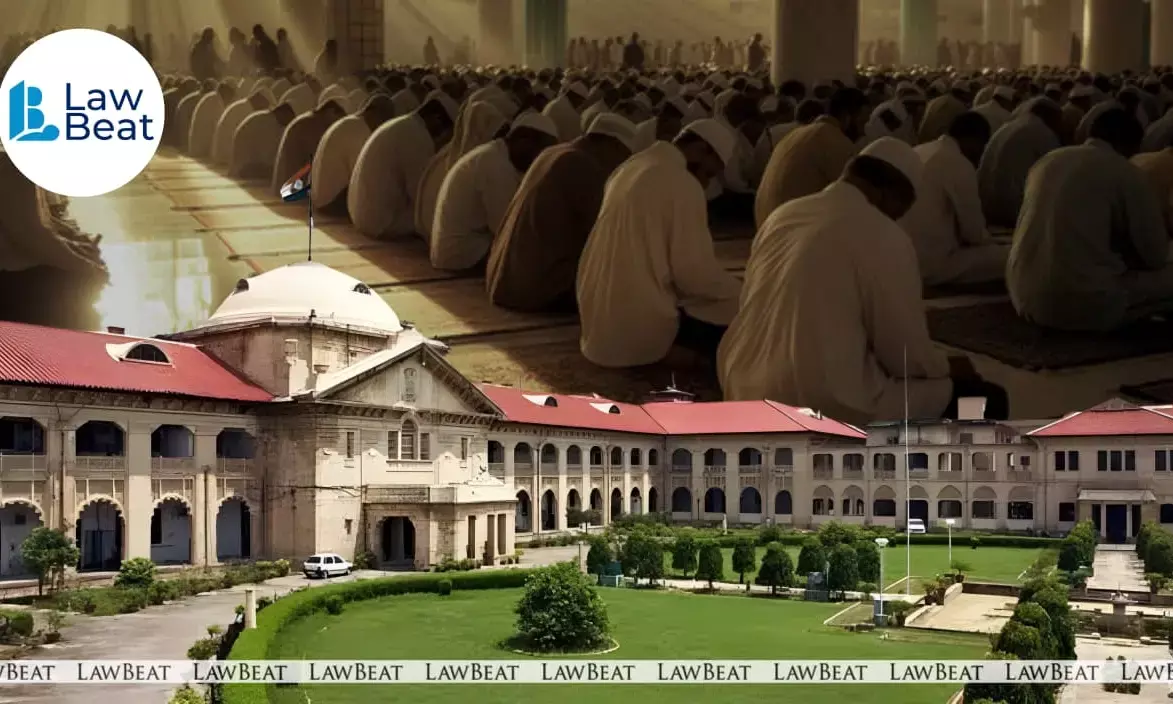
The Allahabad High Court observes that apprehensions of law and order cannot be used to limit the number of people offering prayers at a place of worship.
The Allahabad High Court has said that authorities cannot restrict the number of people offering prayers at a place of worship merely on the ground of apprehended law and order issues, observing that if officials feel incapable of maintaining order, they should resign or seek transfer.
The observation came while hearing a writ petition filed by Munazir Khan, who alleged that he was being prevented from conducting Ramzan prayers on Gata No. 291 in Sambhal district.
The petitioner told the high court that a mosque exists on the land and worshippers traditionally gather there to offer namaz during Ramzan. According to him, the local administration had imposed a restriction allowing only twenty people to offer prayers at the site despite the likelihood of a larger gathering during the holy month.
The State, however, disputed the petitioner’s claim regarding the ownership of the property. The standing counsel informed the court that revenue records reflect the land in the names of Mohan Singh and Bhooraj Singh, both sons of Sukhi Singh.
Court also noted that the petitioner had not placed on record any photographs of the alleged mosque or place of worship where namaz was claimed to be offered.
During the hearing, the State justified the restriction on the number of worshippers by citing concerns that allowing a larger gathering could create a law and order situation in the area.
Rejecting this contention, the division bench of Justice Atul Sreedharan and Justice Siddharth Nandan said that maintaining law and order is the fundamental duty of the State and such apprehensions cannot become a ground to curtail religious worship.
The bench observed that if local authorities such as the Superintendent of Police or the district Collector believe that the situation may go out of control and therefore want to limit the number of people offering prayers, such a stance reflects an inability to enforce the rule of law.
In strong remarks, the court said that if the officials concerned feel they are not competent enough to ensure the rule of law in the district, they should either resign from their posts or seek transfer outside Sambhal.
The court further emphasised that the State has a duty to ensure that members of every community are able to peacefully offer worship at designated places of worship.
It also reiterated a legal position already settled in earlier decisions that when religious activities are carried out on private property, no permission from the State is required. According to the bench, State intervention becomes necessary only when prayers or religious functions are held on public land or when the gathering spills over onto public property.
In the present case, the bench noted that the factual position regarding the property and the alleged mosque required further clarification. The State sought time to obtain instructions on the matter, while the petitioner also sought time to file a supplementary affidavit placing photographs and revenue records on record to establish the existence of the place of worship.
Taking note of these submissions, the high court directed that the matter be listed again on March 16, 2026 as a fresh case in the top ten matters of the day.
Case Title: Munazir Khan v. State of U.P. and 4 Others
Bench: Justice Atul Sreedharan and Justice Siddharth Nandan
Order Date: February 27, 2026