
Married Woman Free To Choose Partner, Can Stay With Parents Till Divorce: Madhya Pradesh High Court
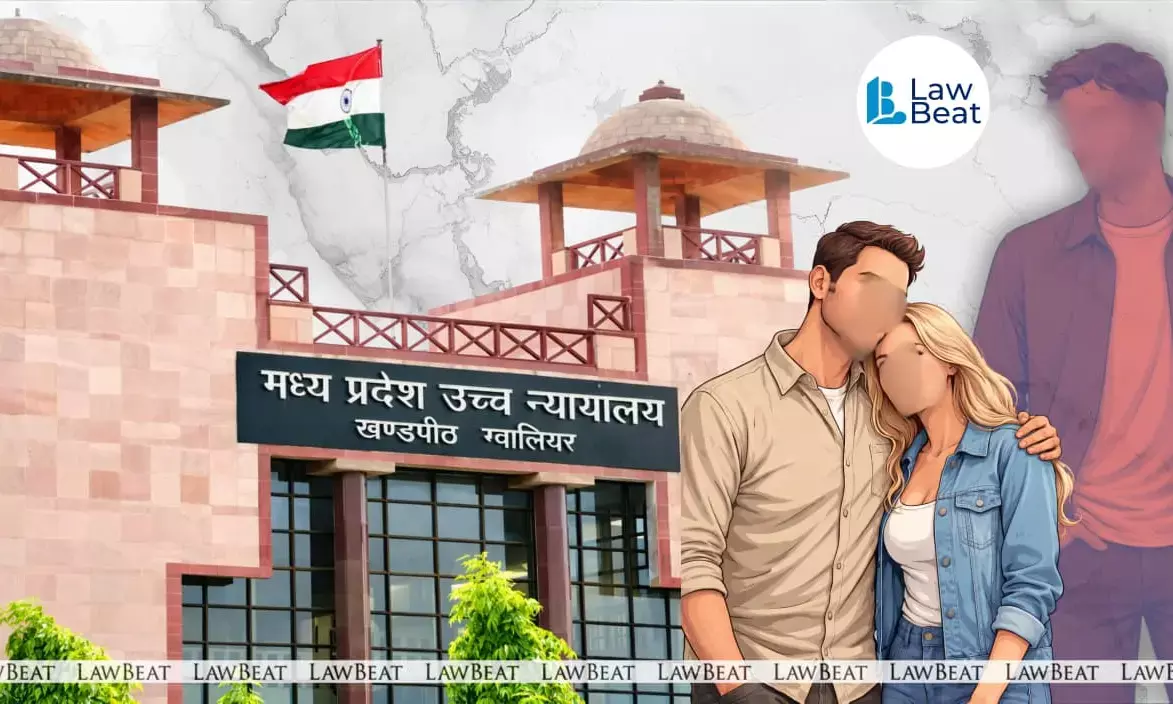
Woman Free To Choose Partner, Says Madhya Pradesh High Court; Directs Mutual Divorce Process
The Madhya Pradesh High Court recently dealt with a sensitive habeas corpus plea that evolved into a broader exercise of balancing individual autonomy, marital breakdown, and the welfare of minor children, ultimately allowing an adult woman to choose her partner while laying down safeguards for her transition and future stability.
A Division Bench of Justice Anand Pathak and Justice Pushpendra Yadav was hearing a petition filed by Ramkesh, who alleged that his wife was under illegal confinement by private respondents. However, when the woman was produced before the Court, she categorically stated that she was a major and had voluntarily chosen to live with respondent No. 6, Kalu. She further expressed her intention to dissolve her marriage with the petitioner, citing continuous ill-treatment during their eight-year marriage.
The Court recorded her statement that she had endured persistent harassment and had even contemplated suicide, but was prevented by Kalu, with whom she had been residing for the past month. In a notable development, her parents also appeared before the Bench and stated that they were willing to support their daughter’s decision to marry Kalu, acknowledging that she would likely be happier in that relationship.
The petitioner, while denying allegations of abuse, informed the Court that he was willing to consent to a divorce, provided he was not required to pay permanent or temporary alimony. He also expressed readiness either to take custody of the three children born out of the marriage or to allow them to remain with the mother. The woman, along with Kalu, conveyed their willingness to take responsibility for all three children.
Taking note of the statements of all parties, the Court observed that both the woman and Kalu were majors and had chosen to live together of their own volition. It held that, “since they are major and want to move on in life, they are free to do so,” thereby reaffirming the principle that adult individuals have the autonomy to make personal choices regarding relationships.
However, the Bench emphasized that a lawful dissolution of the existing marriage was necessary before the woman could enter into another matrimonial relationship. It recorded the undertaking of both spouses to seek divorce by mutual consent. Importantly, it was agreed that the petitioner would not pay any alimony or maintenance, and the woman would not claim any such entitlement. The Court also directed that all jewellery and household articles given at the time of marriage be returned to the woman.
Pending the completion of divorce proceedings, the Court directed that the woman would stay with her parents, while making flexible arrangements for the children. It allowed the children to remain with the mother or move between parents as convenient, while ensuring that the father retained “complete visiting rights” to meet them whenever he wished.
In a significant protective measure, the Court invoked the concept of “Shourya Didi,” directing the Government Advocate and the lady constable who had produced the woman before the Court to act as mentors for her for six months. The Bench noted that such support systems are crucial for women navigating emotional and social vulnerabilities, especially in situations involving familial breakdown and transition.
Quoting from an earlier decision, the Court elaborated that “Shourya Didi” serves as a guiding figure who can provide encouragement, mentorship, and emotional support, particularly when families are unable to effectively address the psychological impact of distressing experiences. It stressed the role of the State and society in ensuring that women are not left unsupported during such phases.
Concluding that the primary grievance in the habeas corpus petition no longer survived in light of the woman’s voluntary decision, the Court disposed of the matter with detailed observations and directions to safeguard the interests of all stakeholders, especially the children.
Case Title: Ramkesh v. The State of Madhya Pradesh and Others
Date of Order: April 23, 2026
Bench: Justice Anand Pathak and Justice Pushpendra Yadav