
Married Woman in Live-In Relationship and Maintenance: What Allahabad High Court Held
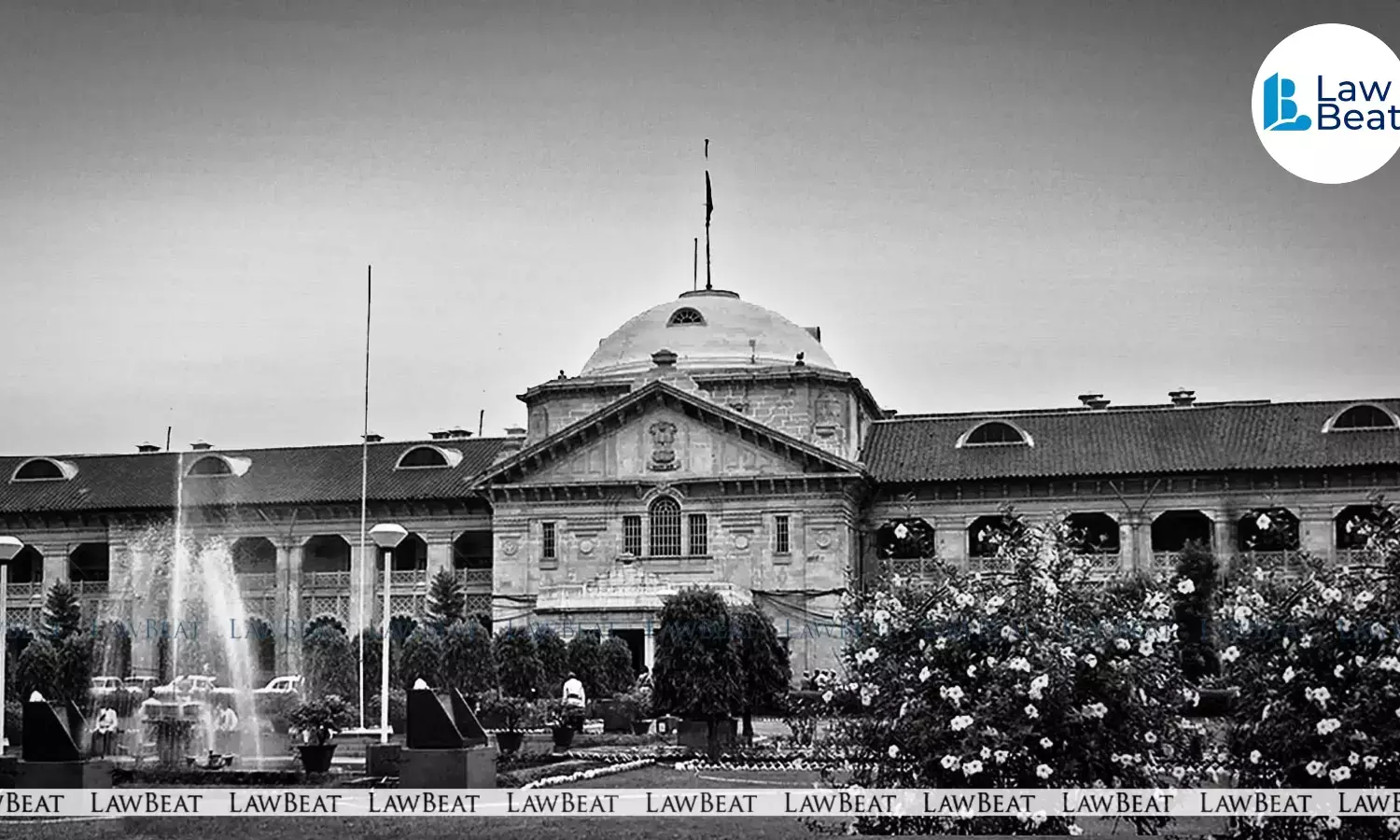
Allahabad High Court says a long-term live-in relationship does not confer rights for maintenance from partner to an already married woman
The Allahabad High Court recently dismissed a criminal revision filed by a woman seeking maintenance under Section 125 of the Code of Criminal Procedure, holding that a long-term live-in relationship cannot confer the status of a “wife” when the woman’s earlier marriage continues to subsist in law.
"If such a practice is permitted in society, where a woman continues to remain legally married to one man, yet resides with another without obtaining dissolution of the first marriage, and thereafter seeks maintenance from the latter, the very object and sanctity of Section 125 Cr.P.C. would stand diluted and the institution of marriage would lose its legal and social integrity," said the bench of Justice Madan Pal Singh.
Court observed so while affirming a February 12, 2024 decision of the family court at Kanpur Nagar, which had rejected the maintenance application filed by Smt. Madhu alias Aruna Bhajpai against Shiv Prakash Bajpai.
The case arose from the revisionist’s claim that she had lived with Bajpai as his wife for nearly a decade and was entitled to maintenance after being allegedly deserted in March 2018. She approached the family court under Section 125 CrPC, which provides a summary remedy to prevent destitution of wives, children and parents.
Before the high court, the woman’s counsel traced her matrimonial history, stating that she was first married to Ram Chandra Tiwari in April 1992 and had two children from that wedlock. Due to matrimonial discord, the spouses started living separately. A petition filed by her first husband under Section 9 of the Hindu Marriage Act was decreed ex parte in 2009, while the woman’s own divorce petition under Section 13 of the Act was later dismissed in default.
During this period, she came into contact with Bajpai, an advocate practising in Unnao. According to her, Bajpai represented that her earlier marriage could be dissolved through a family settlement and notarised agreement, and showed her a similar document allegedly executed between him and his former wife. Relying on this, the woman claimed that she married Bajpai in June 2009 and cohabited with him for almost ten years.
She argued that her name was recorded as Bajpai’s wife in official documents such as Aadhaar and passport, and that she was socially acknowledged as his spouse. She also referred to criminal proceedings registered in 2017, in which she was described as Bajpai’s wife or the stepmother of his children. Placing reliance on the Supreme Court’s judgment in Badshah v. Urmila Badshah Godse, she contended that Section 125 CrPC should extend protection to women who have lived in relationships akin to marriage.
The plea was strongly opposed by Bajpai, who contended that there was no legal marriage between the parties. His counsel submitted that the woman’s first marriage was never dissolved and that he himself continued to be legally married to Smt. Ram Kumari, with whom he resides along with their two children. It was also admitted during arguments that despite his subsisting marriage, he had entered into a relationship with the revisionist.
After examining the record, the high court noted that it was undisputed that the woman’s first marriage was never legally dissolved. Her divorce petition had been dismissed, and therefore the marital tie continued in law. Court further observed that Bajpai’s earlier marriage was also subsisting at the time of the alleged second marriage.
Referring to Section 11 of the Hindu Marriage Act, court held that any marriage contracted during the lifetime of a spouse is void ab initio. Such a union, the court said, cannot create the legal status of husband and wife for the purpose of claiming maintenance.
Court rejected the argument that a notarised deed or mutual settlement could dissolve a Hindu marriage, noting that statutory requirements cannot be bypassed through private arrangements. It distinguished the Supreme Court’s judgment in Badshah, observing that in that case the woman’s earlier marriage had already been dissolved and she was unaware of the husband’s first marriage, unlike the present case.
Justice Singh held that even though the parties may have cohabited for several years and the relationship may appear akin to marriage, such cohabitation does not confer the status of a legally wedded wife under Section 125 CrPC when an earlier marriage subsists.
"Such a proposition neither aligns with the legislative intent nor with the ethical and cultural foundation of Hindu family law," court stressed.
Upholding the family court’s decision, the high court concluded that granting maintenance in such circumstances would dilute the object of Section 125 and undermine the legal sanctity of marriage. The criminal revision was accordingly dismissed.
Case Title: Smt. Madhu Alias Aruna Bhajpai vs. State of U.P. and Another
Order Date: December 8, 2025
Bench: Justice Madan Pal Singh