
Medical Board Opinions Not Sacrosanct: Bombay High Court Upholds AFT Orders Granting Disability Pension
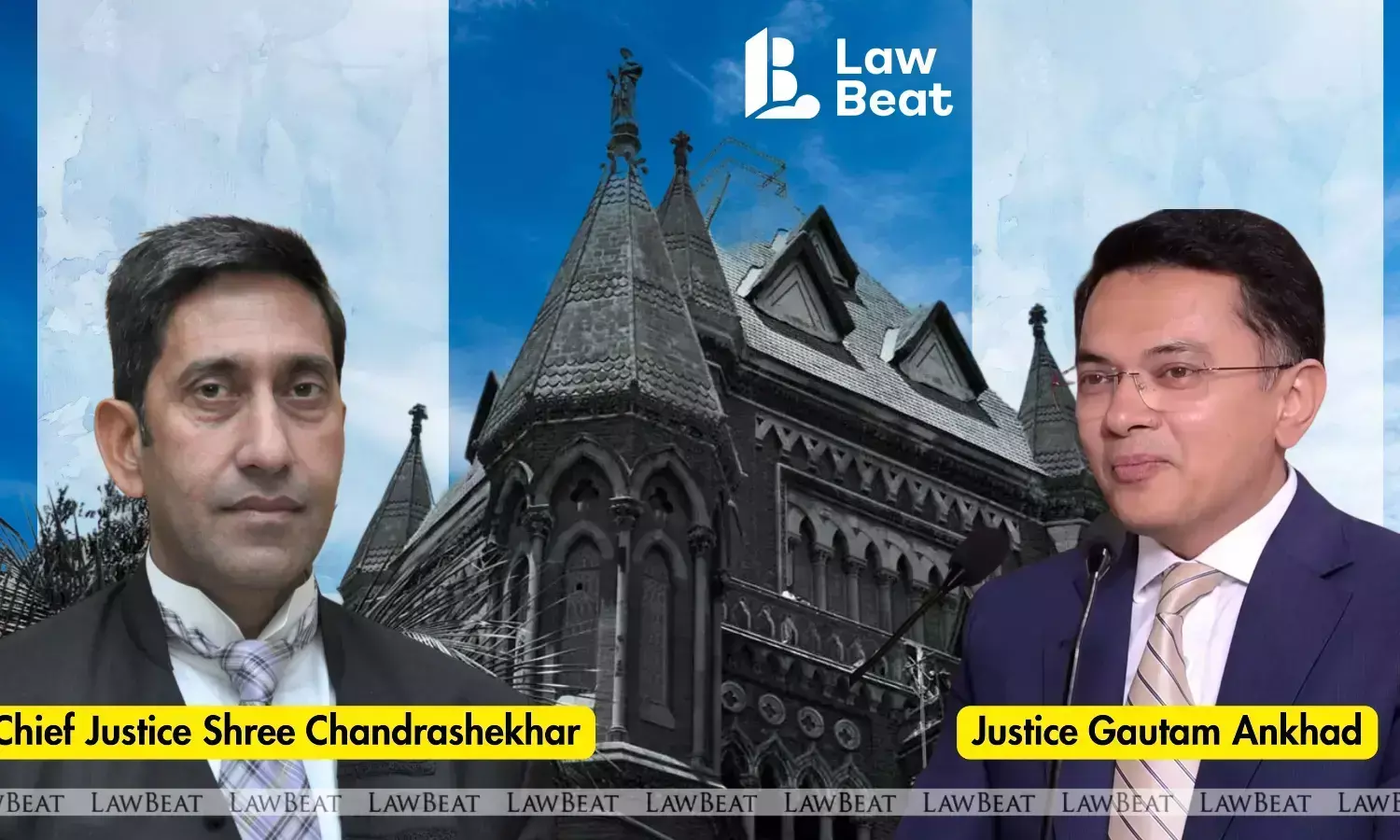
Bombay High Court Rejects Centre’s Challenge to Disability Pension for Retired Armed Forces Personnel
The Bombay High Court has dismissed a large batch of writ petitions filed by the Union of India challenging orders passed by the Armed Forces Tribunal (AFT), Mumbai, granting disability pension to retired Army and Navy personnel suffering from various medical conditions, including diabetes mellitus, hypertension, dyslipidemia, hearing loss, psychiatric disorders, chronic myeloid leukemia and other ailments.
A Division Bench comprising Chief Justice Shree Chandrashekhar and Justice Gautam A. Ankhad dismissed the petitions and upheld the Tribunal’s orders, holding that the opinion of a Medical Board is not sacrosanct and cannot be treated as immune from judicial scrutiny.
The Court declined to accept the Union of India’s contention that the Tribunal lacked jurisdiction to interfere with Medical Board findings and sustained the grant of disability pension in favour of the retired personnel.
The batch of writ petitions arose from multiple orders passed by the AFT, Mumbai, in original applications filed by serving and retired members of the Armed Forces who were either invalided out of service or retired in a low medical category. In each case, the Tribunal held that the disability suffered by the applicants was either attributable to or aggravated by military service and directed the grant of disability pension, often with rounding off of the disability element to 50 per cent or more.
The Union of India approached the High Court contending that the Tribunal had erred in law by reassessing medical conclusions reached by duly constituted Invaliding and Release Medical Boards.
Writ Petition No. 1994 of 2024, concerning Lt. Col. S.K. Rathore, was treated as the lead matter.
Lt. Col. Rathore had served in the Indian Army for more than 23 years and was prematurely retired on 1 July 2003 while in a low medical category. His service record reflected postings in operational and difficult areas including Imphal, Tuting in Manipur, Ladakh, and participation in Operation Rakshak and Operation Parakram.
There was no dispute that he was not suffering from any disability at the time of joining service. Medical Board proceedings recorded that his health was adversely affected due to “continued difficult service conditions as an Infantry Officer” and his deployment during Operation Parakram.
Despite this, the Invaliding Medical Board opined that his diabetes mellitus was a “constitutional disorder” not connected with military service, resulting in denial of disability pension. The Tribunal overturned this finding and granted disability pension, a decision challenged by the Union of India.
The Union of India argued that Medical Board opinions are rendered by trained medical experts and cannot be substituted by judicial bodies. It was contended that lifestyle diseases detected during service, particularly at peace stations, cannot automatically be presumed to be service-related. The Union relied on the Pension Entitlement Rules, 2008 to argue that mere manifestation of a disease during service does not establish attributability or aggravation and that the Supreme Court’s decision in Dharamvir Singh v. Union of India could not be mechanically applied to all cases.
The High Court framed the central legal issue as whether the opinion of a Medical Board declaring a disability as constitutional or non-service related is final and binding, thereby ousting the Tribunal’s jurisdiction.
Answering this in the negative, the Bench undertook a detailed examination of the Pension Entitlement Rules, 2008 and the governing regulatory framework. The Court quoted Rule 5 to reiterate that “the medical test at the time of entry is not exhaustive” and that “the mere fact that a disease has manifested during military service does not per se establish attributability to or aggravation by military service.”
At the same time, the Court emphasised that these provisions do not render Medical Board findings immune from scrutiny.
On the question of aggravation, the Court relied on Rule 11, which states that “a disability shall be conceded aggravated by service if its onset is hastened or the subsequent course is worsened by specific conditions of military service, such as posted in places of extreme climatic conditions, environmental factors related to service conditions, field operations, high altitudes etc.”
The Bench held that service conditions, deployment history and contemporaneous medical material cannot be ignored while assessing entitlement to disability pension.
The Court rejected the Union’s submission that the Pension Entitlement Rules, 2008 had narrowed the scope of disability pension. On the contrary, it held that the rules were intended to clarify and, in several respects, expand entitlement.
The Bench observed that denying disability pension merely because a disease manifested at a peace station would be contrary to the scheme of the rules, especially where the service record reflects long years of operational and field postings.
It was further held that the Armed Forces Tribunal is well within its jurisdiction to test Medical Board conclusions against service records and factual circumstances.
The Court categorically ruled that a Medical Board’s description of a disease as “constitutional” or “lifestyle-related” cannot, by itself, defeat a claim for disability pension. The Tribunal, the Court held, was justified in interfering where Medical Board opinions failed to adequately consider service-related stressors and operational exposure.
Finding no perversity or legal infirmity in the Tribunal’s approach, the High Court dismissed all the writ petitions and upheld the grant of disability pension to the concerned retired personnel.
Case Title: Union of India v. Lt. Col. S.K. Rathore (Deceased) through LRs & Ors. and connected matters
Bench: Chief Justice Shree Chandrashekhar and Justice Gautam A. Ankhad
Date of Judgment: 23.01.2026