
Mere Mention Of A Name Is Not Enough To Face Criminal Trial, Says MP HC While Quashing Case Against Student
Charge-Sheet Is Not a Substitute for Evidence Against Each Accused, Says MP High Court
The Madhya Pradesh High Court at Gwalior has quashed criminal proceedings against an 18-year-old law student in an abduction case, holding that a “mere reference to a person’s name” cannot be enough to put him through a criminal trial when no act is attributed to him.
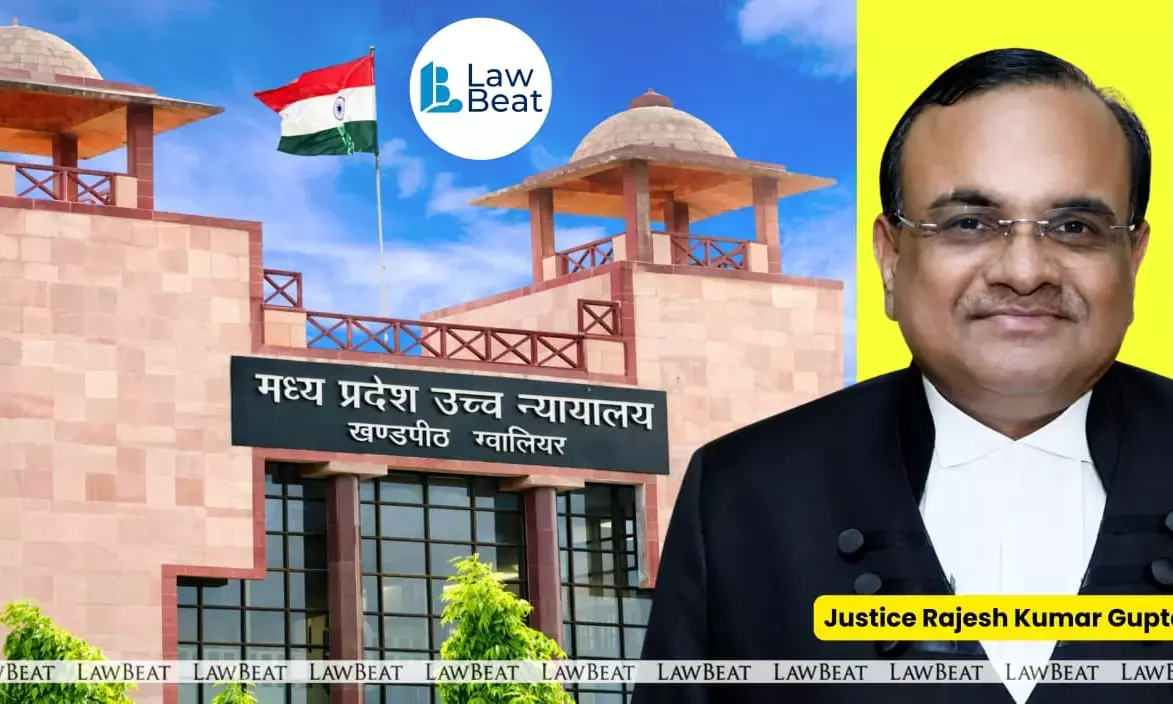
Justice Rajesh Kumar Gupta, on November 4, allowed a petition filed by Kunal Singh Yadav under Section 528 of the BNSS (Section 482 CrPC). He had sought quashing of the FIR registered at Police Station Kampoo, Gwalior (Crime No. 110/2026), under Sections 140(3), 87, 126(2) and 61(2) of the BNS (Sections 365, 366, 341 and 120-B of IPC) and Sections 25/27 of the Arms Act, 1959, along with the charge-sheet.
The case arose from a report by the mother of a 19-year-old woman, who had gone to Mahatma Gandhi College of Law, Gwalior, on May 6, 2026. The mother alleged that co-accused Jeetu Tomar forcibly took her daughter away from the college in a white Baleno car, accompanied by another unidentified person. The woman was recovered the next day. Tomar was arrested and a country-made pistol was allegedly recovered from him.
As the investigation progressed, the petitioner’s name surfaced and he was named in Charge-sheet No. 104/2026, filed on July 22, 2026.
Advocate Rajendra Singh Yadav, appearing for the petitioner, argued that the FIR contained no allegation against his client. The only role attributed to him, he said, was keeping track of the woman’s movements and passing on information, which was not backed by independent material. Call detail records covering nearly three months before the incident showed no contact with Tomar, and neither the eyewitnesses, Vaibhav Rajbhan and Dolly Sansoiya, nor the complainant attributed any overt act to him.
Public Prosecutor Satendra Singh Sikarwar opposed the plea, pointing to the woman’s statement under Section 183 of the BNSS (Section 164 CrPC), which referred to the petitioner and another student as persons keeping information about her. He said the roles of the accused were to be examined at trial. None appeared for the woman, though she was served.
Name Surfaced, But No Role Shown
The High Court framed the issue: did the investigation material disclose any factual foundation linking the petitioner to the crime? It found it did not.
The Court noted that the FIR did not name him, and that the woman’s statement attributed the forcible taking to Tomar and the driver. Her Section 183 (Section 164 CrPC) statement, it said, did not disclose “any particular instance of communication” with the main accused, nor the date, time, mode or nature of any contact.
Drawing a line between acquaintance and conspiracy, the Court observed that “criminal liability cannot be fastened merely because the petitioner was a fellow student or acquaintance.” There had to be prima facie material showing he knowingly shared the alleged criminal design.
The Court also relied on the call records. The prosecution itself had used Tomar’s records to show contact with certain other co-accused, yet could not point to a single call or message connecting the petitioner to the offence. Absence of such records may not rule out a conspiracy, the Court said, but it carried weight when no other corroboration existed.
Rejecting the argument that the charge-sheet closed the matter, the Court held that its inherent powers can be used even after a final report is filed, adding that “the filing of a charge-sheet is not a substitute” for material disclosing the ingredients of the offence against each accused.
The bench relied on Bhajan Lal, Ramesh Chandra Gupta, Rekha Jain, Redla Jyothsna and Ram Prakash Chadha, the last on the need for an agreement to prove criminal conspiracy. It clarified that it was not conducting a mini-trial. Interference was warranted not because evidence was insufficient to convict, but because “the very foundation for prosecuting the present petitioner is lacking.”
The FIR, charge-sheet and pending proceedings were quashed against Kunal Singh Yadav only. The trial against Tomar and the other co-accused will continue independently, uninfluenced by the Court’s observations.
Case Title: Kunal Singh Yadav v. The State of Madhya Pradesh and Another
Order Date: November 4, 2026
Bench: Justice Rajesh Kumar Gupta