
Mother Is First Home: Madhya Pradesh High Court Refuses To Enforce Canada Custody Order
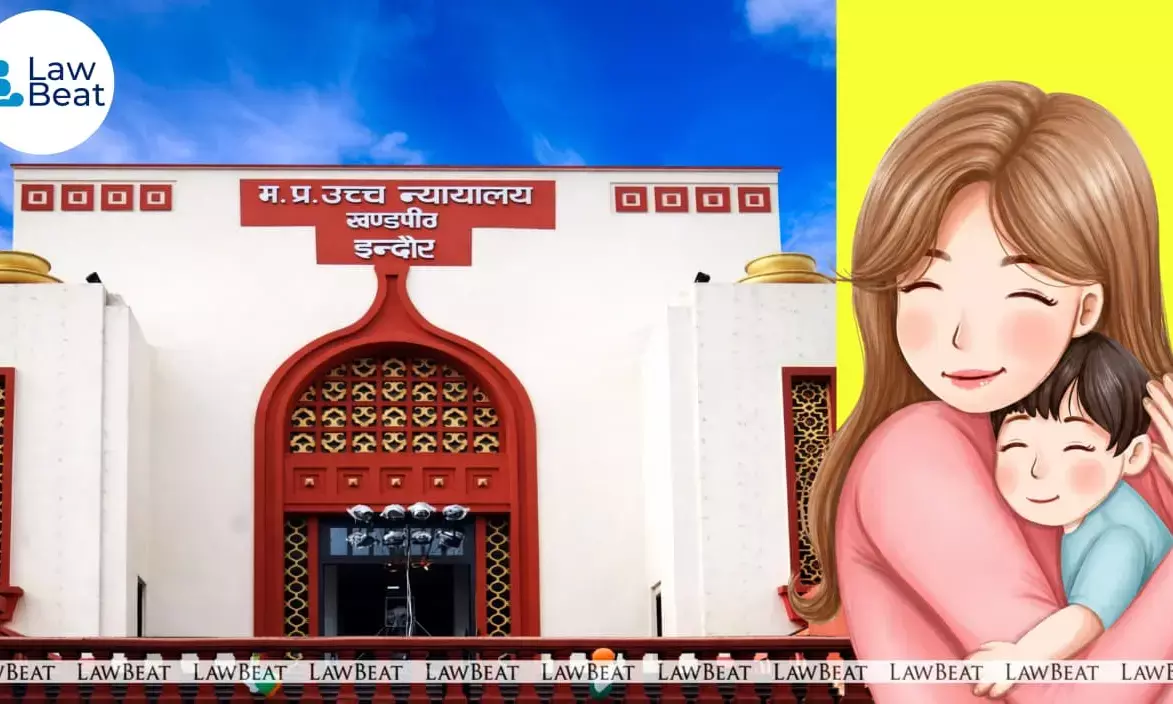
Welfare First, Not Foreign Decree: Madhya Pradesh High Court on Child Custody
The Madhya Pradesh High Court has reaffirmed that in child custody disputes, the welfare of the minor outweighs even binding foreign court orders, refusing to direct the return of a child to Canada despite multiple custody directions passed by a competent court in Ontario.
In a detailed judgment, the Division Bench of Justice Vijay Kumar Shukla and Justice Binod Kumar Dwivedi dismissed a habeas corpus petition filed by a father seeking repatriation of his minor daughter, holding that “the paramount consideration is the welfare and best interest of the child, and not the legal rights of the parents.”
The petition was filed under Article 226 of the Constitution seeking custody of the minor child and her return to Canada in compliance with a series of orders passed by the Superior Court of Justice, Ontario. The father argued that the child was a habitual resident of Canada and that her continued stay in India amounted to illegal retention by the mother.
Represented by Advocate Prabhijeet Jauhar along with Rosemary Raju and Firoza Daruwala, the petitioner relied heavily on foreign court orders granting him custody and directing the child’s return.
Opposing the plea, Senior Advocate A.S. Garg along with Archit Jayakar and Raunak Choukse, appearing for the mother, contended that the child had been residing in India for several years, was well-settled, and that any forced return would disrupt her emotional and educational stability. The State was represented by Deputy Advocate General Sudeep Bhargava.
At the outset, the Court addressed the maintainability of a habeas corpus petition in child custody matters, rejecting objections raised by the respondents. It held that such petitions are maintainable in exceptional cases, particularly where the custody of a minor is alleged to be unlawful. Citing a long line of Supreme Court precedents, the Bench reiterated that habeas corpus jurisdiction can be invoked in child custody disputes, but its exercise is guided by the overarching principle of the child’s welfare.
“The writ of habeas corpus cannot be used for mere enforcement of directions given by a foreign court,” the Court observed, emphasizing that such orders are only one of the factors to be considered. It further clarified that Indian courts are not executing courts for foreign decrees and must independently assess the child’s best interests.
Tracing the factual background, the Court noted that the child was born in the United States and later became a permanent resident of Canada, where she began her schooling. However, during the COVID-19 pandemic, she travelled to India with her mother and continued to stay there. Matrimonial disputes between the parents led to parallel proceedings in India and Canada, with the Canadian court ultimately granting sole custody to the father.
Despite these developments, the High Court declined to order the child’s return. It underscored that “the existence of a foreign court order is only one of the factors. The welfare of the child remains the paramount consideration.” The Bench also noted that India is not a signatory to the Hague Convention on international child abduction, thereby requiring domestic courts to independently evaluate custody issues.
A significant aspect of the judgment was the Court’s interaction with the child in chambers. The Bench recorded that the child, who has been residing in India for the past four years, expressed comfort and emotional attachment towards her mother. It also observed that the child was studying in a good school and appeared well-settled in her current environment.
Taking into account the child’s age, emotional needs, and stability, the Court held that directing her return to Canada would not serve her welfare. “The custody of the child cannot be directed to be handed over to the petitioner solely on the basis of a foreign decree,” the Court ruled, adding that such a move may place the child in an intolerable position.
The judgment also engaged with broader social and cultural dimensions of custody, highlighting the evolving recognition of maternal roles in Indian law and society. While acknowledging the importance of comity of courts, the Bench made it clear that this principle cannot override the child-centric approach mandated by Indian jurisprudence.
Concluding that no case for interference was made out, the Court dismissed the writ petition, clarifying that it had not adjudicated upon permanent custody rights but confined itself to the limited question of the child’s welfare.
Case Title: Saurabh Malpani S/O Shri Shyam Malpani Through Shyam Malpani v. The State of Madhya Pradesh Through its Principal Secretary and Others
Date of Order: April 20, 2026
Bench: Justice Vijay Kumar Shukla and Justice Binod Kumar Dwivedi