
MP High Court Acquits Man Convicted On "Cryptic" Evidence, Refers Trial Judge's Suitability To Acting CJ
Chain Of Circumstances Incomplete: MP High Court Sets Aside Murder Conviction Under SC/ST Act
The Madhya Pradesh High Court at Jabalpur has acquitted a man of murder charges under the SC/ST (Prevention of Atrocities) Act, setting aside his life sentence after finding that the trial court had misread crucial forensic evidence and convicted him on an incomplete chain of circumstances.
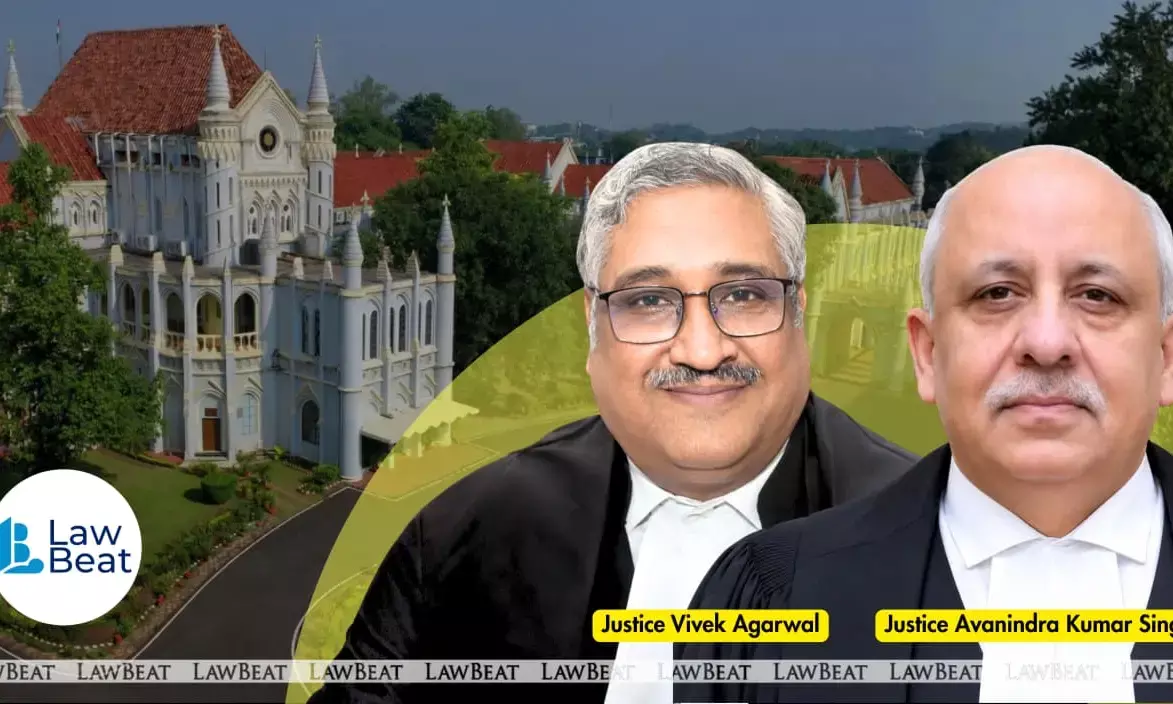
A Division Bench of Justice Vivek Agarwal and Justice Avanindra Kumar Singh allowed the appeal filed by Lotan Lodhi alias Nanna, who had been convicted by the Special Judge, SC/ST (Prevention of Atrocities) Act, Damoh, on October 31, 2025, for the murder of one Munna Ahirwar. He had been sentenced to life imprisonment under both Section 302 of the Indian Penal Code and Section 3(2)(v) of the Scheduled Castes and Scheduled Tribes (Prevention of Atrocities) Act, 1989.
Appearing for the appellant, advocate Madan Singh argued that his client was innocent and had been falsely implicated, submitting that the case rested entirely on circumstantial evidence and that the three circumstances relied upon by the prosecution were not connected with each other. Government Advocate Manas Mani Verma, appearing for the State, supported the trial court's verdict and sought dismissal of the appeal.
Examining the prosecution's case, the bench found the sole witness, Chhotelal Ahirwar, described as related to the deceased, unreliable. His statement was recorded over a month after the incident, "without any explanation" for the delay, and it contradicted the appellant's own memorandum regarding the purchase of liquor that night. The witness had also admitted in cross-examination that there was no enmity between the appellant and the deceased.
The bench also scrutinised the recovery of a mobile phone allegedly belonging to the deceased and said to have been recovered from the appellant. It found no evidence linking the handset to the deceased, no identification of the phone by his relatives, and no scientific material establishing that the SIM card used for communication between the two men was the one found in the recovered handset. The court further noted that the document said to record the handset's seizure was, in its own words, "neither readable nor legible." "The recovery of the mobile phone, by itself, is of no consequence," the court observed, adding that in the absence of a purchase bill or other proof of ownership, this link in the prosecution's case collapsed entirely.
Most strikingly, the bench found that the trial court had recorded a factual error central to the conviction. The Special Judge had held that human blood was found on clothing seized from the appellant. The High Court held this finding to be "perverse and contrary to the FSL report," noting that the forensic report had in fact found no human blood on the appellant's clothes, while blood was found only on the deceased's clothing. "We are constrained to reiterate that learned Trial Court has failed to record the correct facts," the bench said.
Relying on the Supreme Court's ruling in Sharad Birdhichand Sarda versus State of Maharashtra on the tests for circumstantial evidence, and on Mohd. Arif alias Ashfaq versus State (NCT of Delhi) regarding proof of mobile call records, the bench concluded that the prosecution had failed to establish a complete chain of circumstances. It held that "the conviction having been founded on cryptic and non-existent grounds cannot be sustained in the eyes of law."
The bench went a step further and raised concerns about the trial judge himself. Calling the manner in which evidence had been appreciated a matter of "serious concern," the bench directed that the issue of the Special Judge's suitability "to deal with sensitive matters of this nature" be placed before the Acting Chief Justice for appropriate orders.
Setting aside the October 2025 judgment, the High Court acquitted Lotan Lodhi alias Nanna of all charges and ordered his immediate release from custody, unless he is required in connection with any other case. The appeal was allowed, and the trial court records were directed to be sent back.
Case Title: Lotan Lodhi alias Nanna versus The State of Madhya Pradesh
Date of Judgment: September 2, 2026
Bench: Justice Vivek Agarwal and Justice Avanindra Kumar Singh