
MP High Court Pulls Up Authorities for Withholding Compensation After Land Acquisition
Administrative Delays Cannot Override Property Rights: MP High Court Directs Compensation Payment
The Madhya Pradesh High Court has directed authorities to release and disburse compensation of ₹3.35 crore to landowners whose property was acquired for the construction of a National Highway, observing that administrative delays cannot be permitted to override the constitutional rights of citizens. The court held that once land acquisition is complete and compensation has been determined, the State is under a legal obligation to ensure prompt payment.
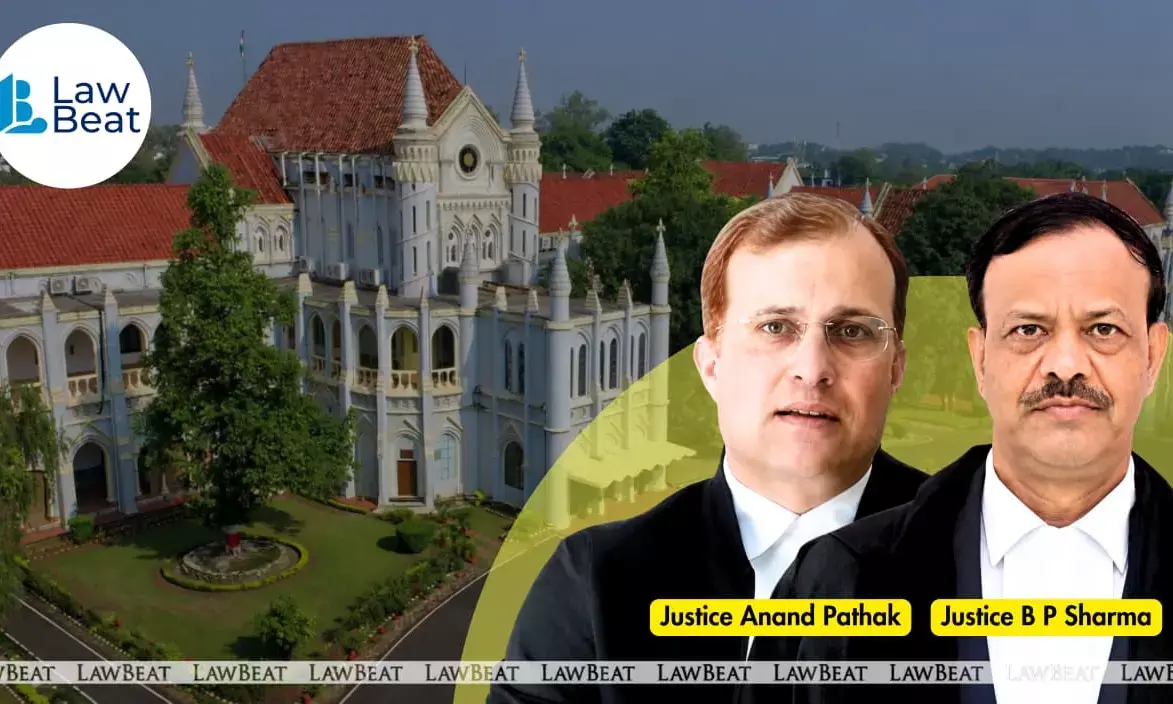
A division bench of Justice Anand Pathak and Justice B.P. Sharma passed the order while allowing a writ petition filed by Smt. Shanti Singh and others against the State of Madhya Pradesh and other authorities. The petitioners had approached the High Court seeking directions for release of compensation that had already been adjudicated in their favour following acquisition of their land for a highway project.
The dispute related to land bearing Khasra Nos. 136/5/1/1 and 136/5/2/1 situated at Sohagpur in Shahdol district. According to the petitioners, their land was initially left out of the larger acquisition exercise undertaken for construction of a National Highway connecting Umariya and Shahdol. Subsequently, authorities realised that the land was required for the project and proceeded to acquire it as “missing plots” under the policy governing acquisition through mutual consent.
Appearing for the petitioners, Advocate Mohan Sausarkar argued that the compensation amount had already been assessed and determined by the competent authority. An award fixing compensation at ₹3,35,40,000 had been passed and the proposal for release of payment was forwarded on January 2, 2026. Despite repeated representations by the landowners, including requests seeking disbursal of the amount, no payment was made.
The petitioners contended that withholding compensation after acquisition amounted to a violation of their constitutional rights. They argued that the right to receive compensation for acquired property forms an integral part of the protection available under Article 300A of the Constitution and that deprivation of property without payment cannot be sustained in law.
On behalf of the State, Additional Advocate General Abhijit Awasthy submitted that the acquisition proceedings had been undertaken in accordance with the applicable policy and statutory provisions. It was argued that while compensation had indeed been determined, certain administrative formalities and procedural compliances remained to be completed before the amount could be released. Advocate Anvesh Shrivastava appeared for respondent No. 3, Madhya Pradesh Road Development Corporation.
After considering the submissions and examining the record, the High Court noted that the essential facts were undisputed. The bench observed that the land had already been acquired for a public purpose and that compensation payable to the petitioners had been quantified by the competent authority.
Rejecting the justification based on administrative delays, the court observed that, “Once the acquisition is complete and compensation has been determined, the respondents are under a bounden duty to ensure prompt payment.” The bench further remarked that any delay in payment defeats the purpose of the statutory framework and causes serious prejudice to affected landowners.
The court emphasised that the right to receive compensation is not merely a statutory entitlement but a constitutional guarantee flowing from Article 300A. It observed that, “Deprivation of property without timely compensation amounts to arbitrary exercise of power and is violative of Article 14 of the Constitution of India.”
The bench also held that the objective behind acquisition of missing plots through mutual consent would be frustrated if landowners were compelled to wait indefinitely for compensation after surrendering their land. Observing that there was “no justification whatsoever” for withholding the amount after compensation had already been quantified, the court ruled that administrative inefficiencies could not override constitutional protections.
Accordingly, the High Court allowed the petition and directed respondents to take all necessary steps to release and disburse the compensation amount, if there was no other legal impediment. The court directed that the payment be made preferably within eight weeks from receipt of a certified copy of the order.
Case Title: Smt. Shanti Singh and Others v. The State of Madhya Pradesh and Others
Date of Order: May 4, 2026
Bench: Justice Anand Pathak and Justice B. P. Sharma