
MP High Court Refuses To Condone Delay In Challenging Arbitral Award Filed Over A Year Later
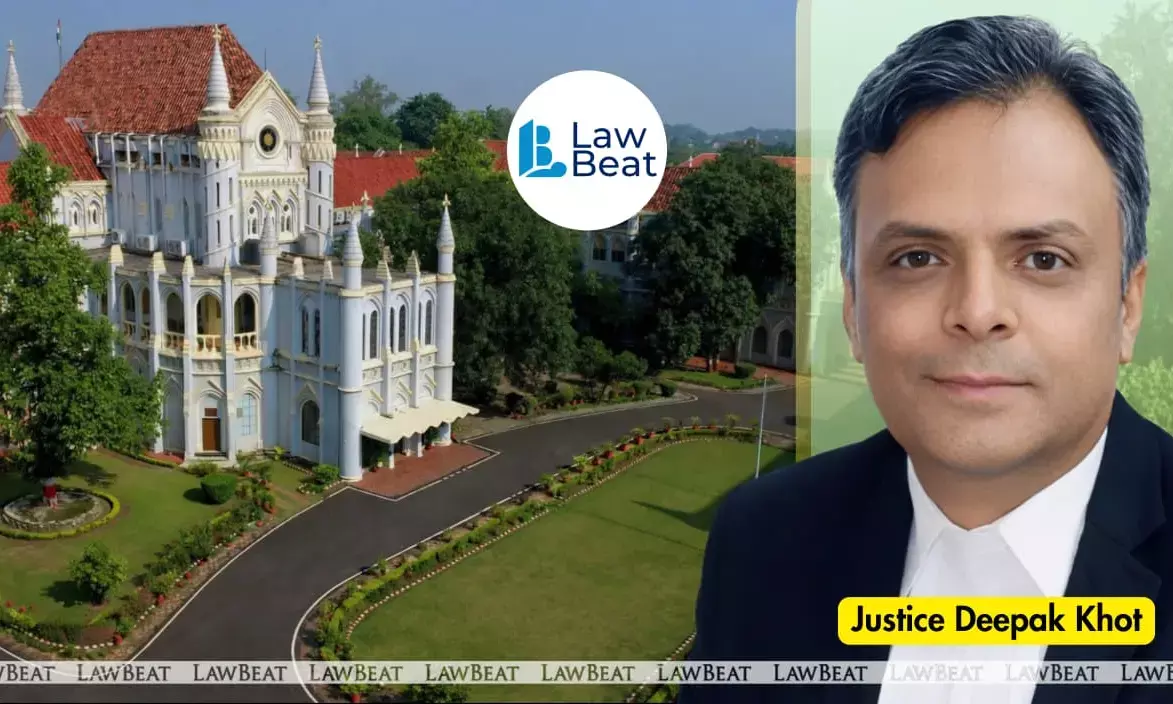
Delay Beyond Statutory Period Cannot Be Excused Merely Due to Wrong Legal Advice: MP High Court
The Madhya Pradesh High Court has reiterated that the strict limitation regime under the Arbitration and Conciliation Act, 1996 cannot be diluted merely because a party pursued a remedy before an incorrect forum after significant delay.
Dismissing an arbitration appeal filed by Ashish and others, Justice Deepak Khot held that the benefit of Section 14 of the Limitation Act is available only when a litigant has acted with due diligence and in good faith from the outset.
The appeal challenged an order of the District Judge, Jabalpur, dated June 26, 2025, which had rejected an application filed under Section 34 of the Arbitration and Conciliation Act seeking to set aside an arbitral award. The appellants had also sought condonation of delay by invoking Section 14 of the Limitation Act, arguing that they had spent considerable time pursuing a writ petition before the High Court under a mistaken understanding of the law.
Appearing for the appellants, Advocate Yash Nitin Nasery contended that the delay deserved to be excluded because the parties had bona fide pursued a remedy before the wrong forum. He submitted that the appellants had initially challenged the arbitral award dated April 12, 2017 through a writ petition, which was eventually withdrawn on May 4, 2023 with liberty to pursue other remedies available under law. Thereafter, they promptly approached the civil court under Section 34 of the Arbitration Act. Reliance was placed on the Supreme Court’s decision in M/s R.K. Transport Company v. M/s Bharat Aluminium Company Limited (BALCO), where time spent before an incorrect forum was considered for exclusion.
The National Highways Authority of India, represented by Advocate Mohan Sausarkar, opposed the appeal. It argued that Section 34(3) of the Arbitration and Conciliation Act prescribes a strict limitation period of three months for challenging an arbitral award, extendable by only thirty additional days. Beyond that period, courts are barred from entertaining such applications. The respondent relied upon the Supreme Court’s landmark ruling in Union of India v. Popular Construction Co., which interpreted the phrase “but not thereafter” in Section 34(3) as an express prohibition against further extension of limitation.
After examining the record, the High Court noted that the arbitral award was passed on April 12, 2017, whereas the writ petition challenging it was filed only on May 16, 2018, more than a year later. The Court found that the appellants had failed to explain this initial delay. Even if they had approached the wrong forum on legal advice, the writ petition itself was not filed within a reasonable period or within the statutory timeline contemplated under the Arbitration Act.
Justice Khot observed that Section 14 of the Limitation Act can assist a litigant only when proceedings before the wrong forum were pursued “with due diligence and in good faith.” The Court emphasised that exclusion of time is not automatic and depends on whether the litigant acted promptly and continuously in pursuing remedies.
Referring to the Supreme Court’s ruling in Popular Construction, the Court quoted: “To hold that the court could entertain an application to set aside the award beyond the extended period under the proviso, would render the phrase ‘but not thereafter’ wholly otiose.”
The Court concluded that the period spent before the writ court could potentially have been excluded had the writ petition itself been instituted within the statutory limitation period prescribed under Section 34(3), along with the permissible grace period of thirty days. However, since the challenge was initiated after more than a year, the appellants could not claim the protection of Section 14.
Finding no illegality, irregularity or infirmity in the district court’s decision, the High Court dismissed the appeal and affirmed the rejection of the application seeking to set aside the arbitral award.
Case Title: Ashish and Others v. National Highway Authority of India
Date of Order: June 16, 2026
Bench: Justice Deepak Khot