
MP High Court Refuses to Reopen 1982 Partition Suit, Upholds Rejection of Will-Based Substitution
Supervisory Jurisdiction Not an Appeal: MP High Court Declines to Re-Appreciate Evidence
In a case that began more than four decades ago, the Madhya Pradesh High Court at Indore has refused to interfere with lower court orders rejecting a man’s claim based on a disputed will. The court made it clear that its powers under Article 227 of the Constitution are limited and cannot be used like an appeal to re-check evidence.
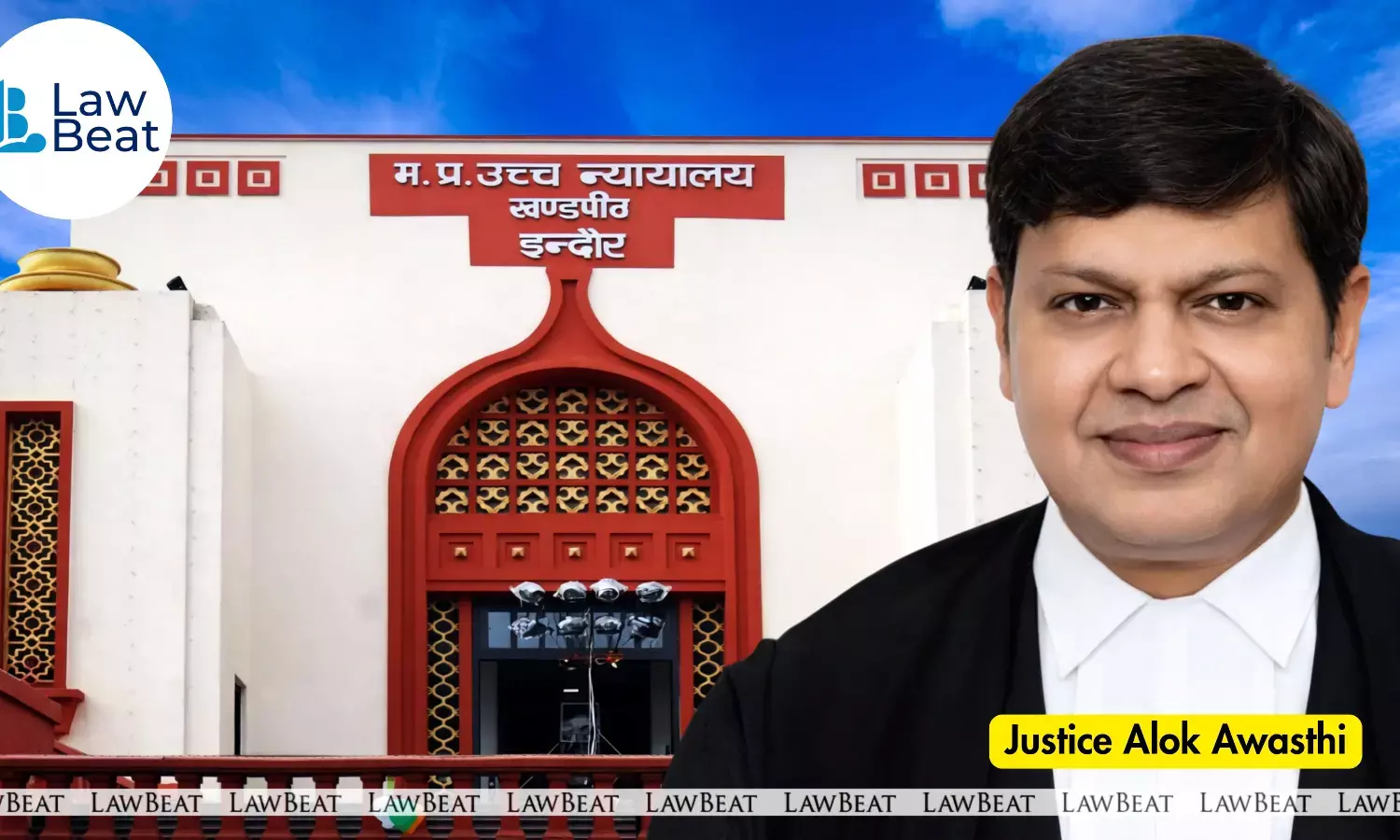
The case, Miscellaneous Petition No. 5657 of 2018, was decided by Justice Alok Awasthi on February 10, 2026. The dispute relates to a civil suit filed in 1982 for partition of joint family agricultural land in Ratlam district.
The original plaintiff, Shankarlal, had filed the suit seeking division of family property. During the pendency of the case, he died in 1992. He was unmarried and had no children. His nephew, Fakirchand, claimed that Shankarlal had executed a will in 1984, leaving all his property to him. On that basis, Fakirchand applied to be brought on record as the legal representative of the deceased plaintiff so that he could continue the case.
However, the trial court rejected his application. The court was not satisfied that the will was genuine. The matter went through multiple rounds of appeals and revisions over the years. Ultimately, the District judge also upheld the trial court’s decision and refused to recognise Fakirchand as the legal representative.
Before the High court, Senior Advocate A.K. Chitale, assisted by Sandeep Kochatta, argued for the petitioners. They contended that at the stage of substitution of legal representatives, only a summary inquiry is required. They relied on Supreme Court judgments to argue that examining one attesting witness is enough to prove a will at that stage.
On the other hand, Senior Advocate A.K. Sethi, assisted by Harish Joshi for respondents No. 2 and 3, and Sukh Lal Gwaliory for the legal representatives of respondent No.1, argued that the lower courts had already examined the evidence carefully. They pointed out that only a copy of the will was produced and not the original. They also highlighted contradictions in the testimony of the witness who claimed to have attested the will.
The High court examined the findings of the District judge. It noted that the witness had admitted differences in thumb impressions on different pages of the will and could not clearly explain who drafted the document or why it was not registered. There were also contradictions between his statement and Fakirchand’s version about who was present when the will was prepared.
Considering these facts, the High court held that the lower courts’ conclusions were based on evidence and could not be called perverse or illegal. The court relied on the Supreme Court’s decision in Shalini Shyam Shetty v. Rajendra Shankar Patil to emphasise that Article 227 is meant to ensure that lower courts act within their jurisdiction. It is not meant to re-examine evidence or correct every factual error.
The court observed that no serious legal mistake or miscarriage of justice had been shown. Therefore, it refused to interfere with the concurrent findings of the trial court and the District judge.
As a result, the miscellaneous petition was dismissed. However, the court granted liberty to the petitioners to file a fresh partition suit, if they choose to do so.
Case Title: Fakirchand S/O Late Dhurji Nai Deceased Thru. LRs Smt. Sundrbai and Others v. Ramchandra S/O Late Nathaji Nai Deceased Thru. LRs Smt. Sampatbai and Others
Date of Judgment: February 10, 2026
Bench: Justice Alok Awasthi