
MP High Court Reinstates Government Advocate, Says Stigmatic Termination Cannot Be Ordered Without Inquiry
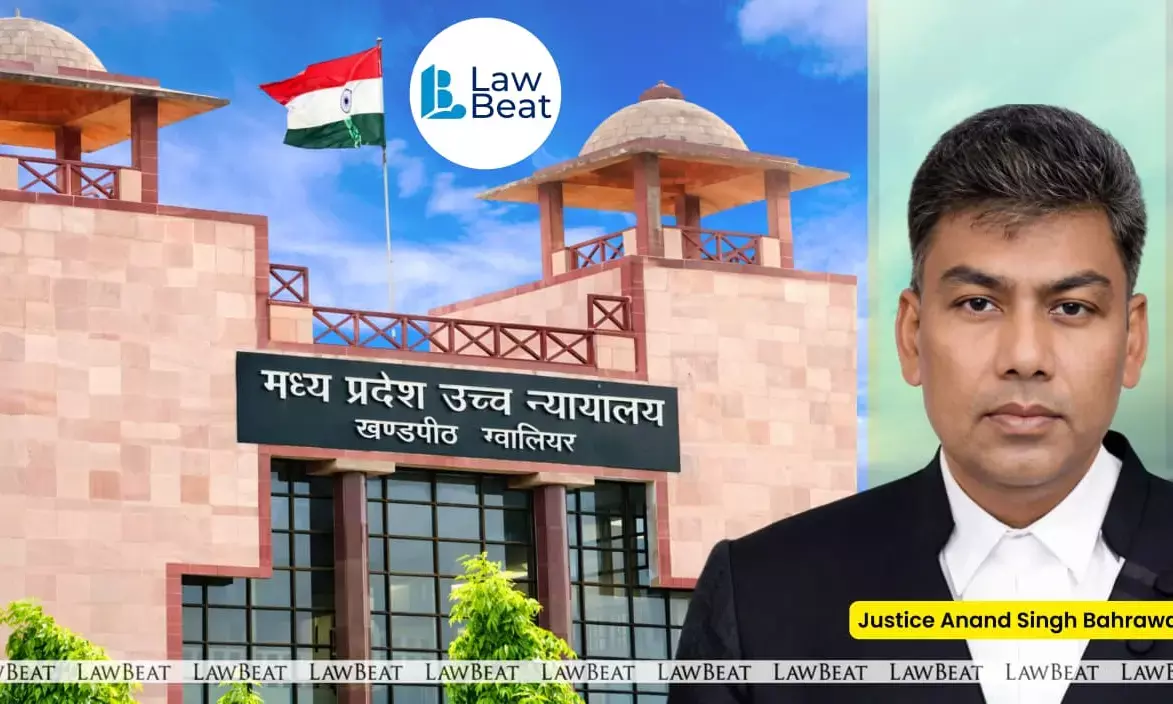
Termination for Alleged Negligence Without Due Process Illegal, Rules MP High Court
The Madhya Pradesh High Court has set aside the termination of an Additional Government Pleader and Additional Government Advocate posted in Shivpuri, holding that a stigmatic order affecting an individual's future career prospects cannot be passed without conducting a regular departmental inquiry and affording a proper opportunity of hearing.
Justice Anand Singh Bahrawat passed the order while allowing a writ petition filed by Manoj Singh Raghuwanshi, whose services were terminated by the State Government in March 2025 on allegations of serious negligence during the conduct of a murder trial. The Court directed the State to reinstate him while reserving liberty to initiate fresh proceedings in accordance with law if deemed necessary.
The case arose from Sessions Trial No. 75 of 2022 relating to a murder case registered at Indar Police Station in Shivpuri district. Raghuwanshi, who had been appointed as an Additional Government Pleader and Additional Government Advocate on June 17, 2021, was representing the State in the prosecution.
According to the petition, the names of certain eyewitnesses, including Shivendra Raghuvanshi, were inadvertently omitted from the list of prosecution witnesses. During the proceedings, the trial court questioned why another eyewitness, Rakesh Kevat, had not been summoned. After the omission came to light, corrective steps were taken and the names of the witnesses were subsequently included and the witnesses examined before the trial court.
However, while dismissing a bail application in November 2022, the trial court directed the Principal Secretary of the Law and Legislative Affairs Department to examine whether the omission was a deliberate attempt to enable the accused to influence witnesses or merely an act of negligence. Following this direction, the State initiated a fact-finding exercise and issued show-cause notices to the petitioner.
Raghuwanshi contended that he had submitted detailed replies explaining that the omission was unintentional and promptly rectified. He further argued that despite the passage of more than three years, no departmental inquiry was ever conducted and no further hearing was granted before his services were terminated through an order that effectively branded him negligent.
Appearing for the petitioner, Advocate Soumya Pawaiya argued that the termination order was stigmatic in nature and therefore could not have been passed solely on the basis of a fact-finding inquiry. Government Advocate Monika Mishra defended the State's action, contending that the impugned order had been issued after considering the inquiry report and the petitioner's explanation.
After examining the record, the High Court found that the termination order expressly referred to "serious negligence" on the part of the petitioner. The Court observed that such language clearly attached a stigma and carried adverse consequences for the petitioner's professional future.
The Court reiterated the settled legal position that where an order of termination is founded on allegations amounting to misconduct, compliance with principles of natural justice becomes mandatory. It noted that no charge-sheet had been issued and no regular departmental inquiry had been conducted in which the petitioner could cross-examine witnesses or defend himself against the allegations.
Relying on several decisions of the Supreme Court and previous judgments of the Madhya Pradesh High Court, the Court emphasized that "if the order of termination is stigmatic in nature, the same entails serious consequences on future prospects of the petitioner and therefore the same ought to have been passed after holding an enquiry."
The Court also underlined the importance of reasoned decision-making by public authorities. Referring to established precedents, it observed that administrative and quasi-judicial orders affecting rights must disclose reasons and cannot be arbitrary, capricious or unsupported by material.
Holding that the impugned order was "stigmatic, non-speaking, and unreasoned" and had been passed without following due process, the Court concluded that it could not be sustained in law.
Accordingly, the High Court quashed the termination order dated March 13, 2025, directed the reinstatement of the petitioner and clarified that the State would remain free to take appropriate action in accordance with law after following the prescribed procedure.
Case Title: Manoj Singh Raghuwanshi v. The State of Madhya Pradesh and Others
Date of Order: June 17, 2026
Bench: Justice Anand Singh Bahrawat