
MP High Court Reserves Verdict On Pleas Seeking Cancellation Of Ex-Judge Giribala Singh’s Anticipatory Bail
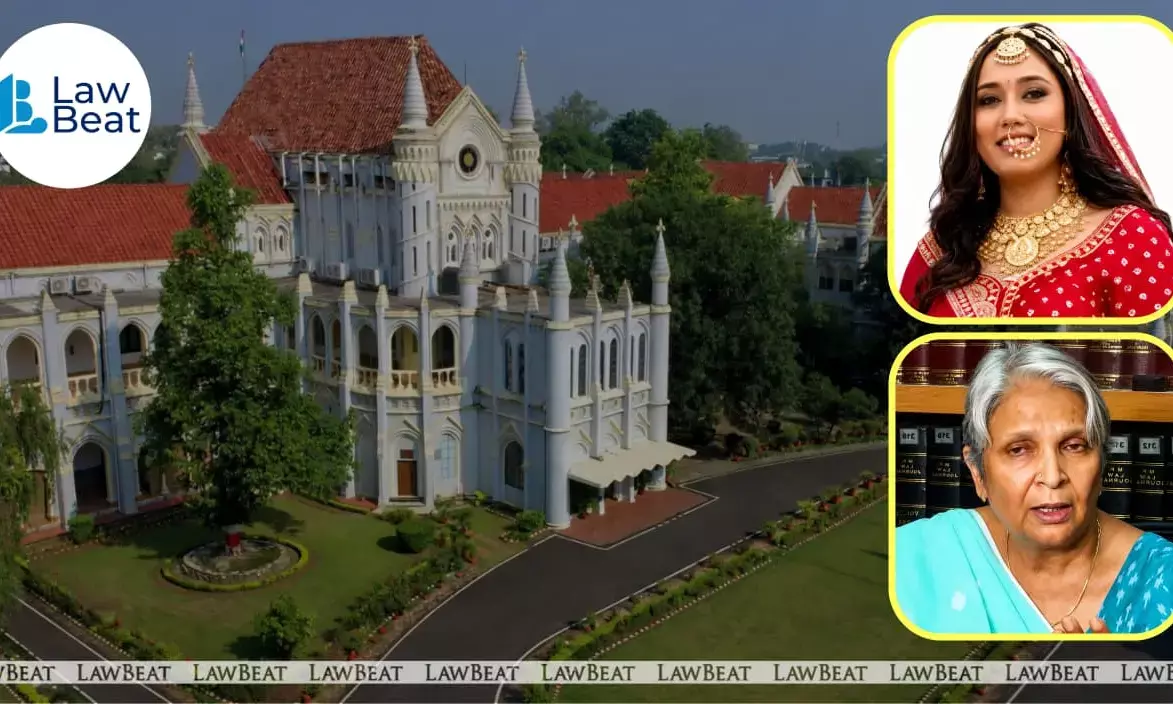
‘Bail Granted Before Investigation Could Begin’: SG Tushar Mehta, Victim’s Family Oppose Relief to Retired Judge in Twisha Sharma Case
The Madhya Pradesh High Court on Wednesday heard detailed submissions from the victim’s family, the State government and retired judicial officer Giribala Singh in a closely watched challenge to the anticipatory bail granted to the former judge in connection with the death of 33-year-old Twisha Sharma, who was found dead at her matrimonial home in Bhopal on May 12.
The matter was heard by Justice Devnarayan Mishra on petitions filed by Sharma’s father and the State seeking cancellation of the anticipatory bail granted to Singh, the deceased’s mother-in-law. The case arises from an FIR registered under provisions relating to dowry death, cruelty and common intention, along with offences under the Dowry Prohibition Act.
Also Read: BCI Suspends Advocate Samarth Singh’s Licence Amid Probe Into Wife Twisha Sharma’s Death
During the hearing, Senior Advocate Siddharth Luthra, appearing for the victim’s family, Solicitor General Tushar Mehta and Advocate General Prashant Singh for the State argued that the trial court extended extraordinary protection at a stage when the investigation had barely commenced and overlooked material indicating harassment and cruelty.
Luthra questioned the manner in which the inquest proceedings were conducted and argued that Sharma’s parents were not meaningfully involved despite the death being unnatural. Referring to WhatsApp communications exchanged between the deceased and her family, he submitted that the chats reflected emotional distress, financial difficulties and allegations relating to the questioning of the paternity of her unborn child.
According to him, the trial court failed to adequately examine these materials while granting anticipatory bail. He further contended that the accused had not joined the investigation even once before obtaining protection and argued that a court dealing with allegations of dowry death should exercise far greater caution before granting pre-arrest relief.
Advocate General Prashant Singh supplemented the challenge by placing a chronology of events before the Court. He argued that anticipatory bail was granted virtually at the threshold of the investigation and that the Sessions Court relied extensively on documents produced by the defence that were not part of the case diary.
According to the State, the order effectively conducted a mini-trial at the bail stage. Singh also referred to the post-mortem report, which recorded multiple ante-mortem injuries, including injuries on the head, neck, wrist and fingers. He submitted that medical opinion did not rule out the possibility of a struggle prior to death and that these circumstances required a comprehensive investigation free from interference.
Also Read: Giribala Singh Maligning Twisha Sharma Constantly, Not Cooperating: SG Tushar Mehta in SC
Solicitor General Tushar Mehta, appearing for the State, strongly criticised the reasoning adopted by the Sessions Court. He argued that anticipatory bail had been granted within hours of the FIR in a case involving the death of a young married woman where statutory presumptions relating to dowry death were attracted.
According to Mehta, the order deprived investigators of the opportunity to determine whether custodial interrogation was required. He further alleged that after securing protection, Singh engaged with media platforms and public discussions in a manner capable of influencing public perception and potential witnesses. Mehta argued that courts are empowered to interfere where bail orders ignore material evidence, rely on irrelevant considerations or suffer from perversity, and submitted that the present case squarely fell within those principles.
Opposing the petitions, Senior Advocate Nitya Ramakrishnan, appearing for Giribala Singh, argued that the challenge was built on assumptions rather than evidence. She submitted that immediately after Sharma was found hanging on the night of May 12, she was rushed to AIIMS Bhopal within minutes, demonstrating that the family’s immediate concern was obtaining urgent medical assistance.
Ramakrishnan also pointed to seizure memos and police records showing that investigators reached the residence promptly, sealed portions of the premises and conducted searches and seizures in Singh’s presence. According to the defence, the former judge signed every seizure memo and cooperated fully with the investigation.
The defence disputed allegations of non-cooperation, arguing that notices allegedly served through WhatsApp at odd hours were nevertheless answered through counsel and by Singh personally. Ramakrishnan further contended that the prosecution’s case rested largely on WhatsApp messages and an uncorroborated allegation of a ₹2 lakh dowry demand. She submitted that financial records instead showed substantial monetary transfers from Singh and her son to the deceased, contradicting the theory of dowry extraction.
According to the defence, the contemporaneous chats reflected marital discord between Sharma and her husband but contained no allegations of dowry harassment or cruelty by Singh. The defence also relied on medical records and counselling sessions to argue that the deceased’s emotional distress stemmed from marital difficulties and circumstances surrounding the termination of her pregnancy rather than coercion by her mother-in-law.
Citing Supreme Court precedents, Ramakrishnan argued that anticipatory bail cannot be set aside merely because a higher court may have arrived at a different conclusion and that no exceptional circumstances existed warranting interference.
After hearing the parties at length, the High Court reserved orders on the challenge to Singh’s anticipatory bail.
Case Title: The State of Madhya Pradesh v. Smt. Giribala Singh with connected matter
Date of Hearing: May 27, 2026
Bench: Justice Devnarayan Mishra