
MP High Court Says Party Should Not Pay For Counsel’s Mistake, Asks Bar Council To Examine Advocates’ Conduct
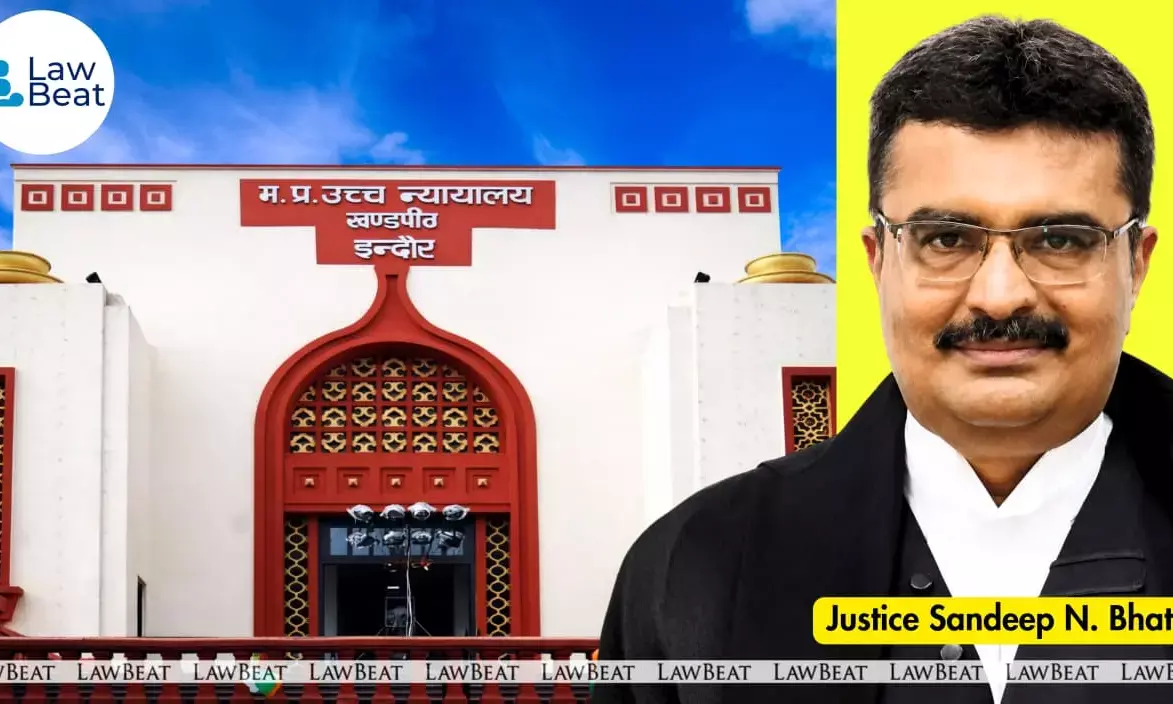
Litigant Cannot Suffer for Lawyer’s Mistake: MP High Court Sets Aside Ex Parte Order, Refers Advocates to Bar Council
The Madhya Pradesh High Court at Indore has set aside ex parte proceedings against a woman litigant, holding that she “should not suffer for the mistake committed by the counsel”, and has asked the State Bar Council to look into the conduct of the advocates involved, saying the matter “amounts to professional misconduct”.
Justice Sandeep N. Bhatt, in an order passed on October 30, allowed a petition under Article 227 of the Constitution and directed the trial court to give a proper hearing.
The petitioner had challenged orders dated February 16, 2026 and September 1, 2026, passed by the Civil Judge, Senior Division, Indore, in Civil Suit No. RCSA/922/2021 and the ex parte proceedings recorded against her on September 23, 2025.
Appearing for her, advocate Raghvendra Singh Raghuvanshi told the Court that the petitioner lives in Chandigarh and had earlier engaged an Indore-based advocate, Rohit Dubey. Citing a WhatsApp chat, he said she constantly enquired about the case, and the answers she received led her to believe nothing more was needed. She was later proceeded against ex parte for non-appearance.
He argued that a litigant should not suffer for her lawyer’s negligence, relying on Supreme Court rulings in Rafiq v. Munshilal, Malkiat Singh v. Joginder Singh and Tahil Ram Issardas Sadarangani. He also pointed out that on the first date of appearance, the earlier advocate raised no objection to a status quo order.
Opposing the plea, advocate Govind Rai Purohit, for the respondent, said the petitioner had already been given one opportunity but remained negligent. He added that the WhatsApp chat was not supported by the certificate required under Section 65B of the Evidence Act, so it need not be considered.
The High Court was not persuaded. It noted that “from the WhatsApp chat, it clearly transpires that the petitioner was consistently following up the matter with her Advocate”. It was undisputed that she, living in Chandigarh, had engaged a lawyer at Indore and acted on his information.
Prima facie, the Court observed, she had followed up “persistently and consistently”, while “for the reason best known to the earlier Advocate, he had given wrong information”. It also found his no-objection to the status quo order “normally strange”.
The Court acknowledged the respondent’s point that no Bar Council complaint or further correspondence with the advocate was on record. Even so, it held that the petitioner could not be punished for the “negligent act or deliberate lacunas” of her counsel.
Invoking its supervisory jurisdiction “to prevent the miscarriage of the justice”, the Court allowed the petition and directed the trial court to hear the petitioner and pass an appropriate order in accordance with law. The petitioner or her advocate must remain present on every date fixed.
On costs, the Court said the respondent was not prima facie at fault, but he had to appear before the trial court and the impugned order became necessary because of the earlier advocate’s inaction. It fixed costs at Rs 5,000.
The Court then turned to the legal profession, saying its “conscience is also shocked to know that Advocates who are representing the parties are not discharging with all integrity and sincerity”. The petitioner was directed to serve a copy of the order on the State Bar Council of Madhya Pradesh, which may take cognisance and, if required, act suo motu against the advocate who earlier appeared for her.
Referring to Section 35 of the Advocates Act, 1961, the Court said it was “high time for the Bar Council to take proper call” against erring counsel who prejudice their clients’ rights. It added that the Bar Council could also examine whether there was any collusion between the parties and the advocate concerned, to maintain “higher standards of the noble professionals”.
The Registry was directed to send a copy of the petition to the Bar Council within seven days.
Case Title: Ku. Jyoti Singh vs. Chetan Lashkari
Order Date: October 30, 2026
Bench: Justice Sandeep N. Bhatt