
MP High Court: State Cannot Use Suo Motu Revision To Undo Orders It Never Appealed
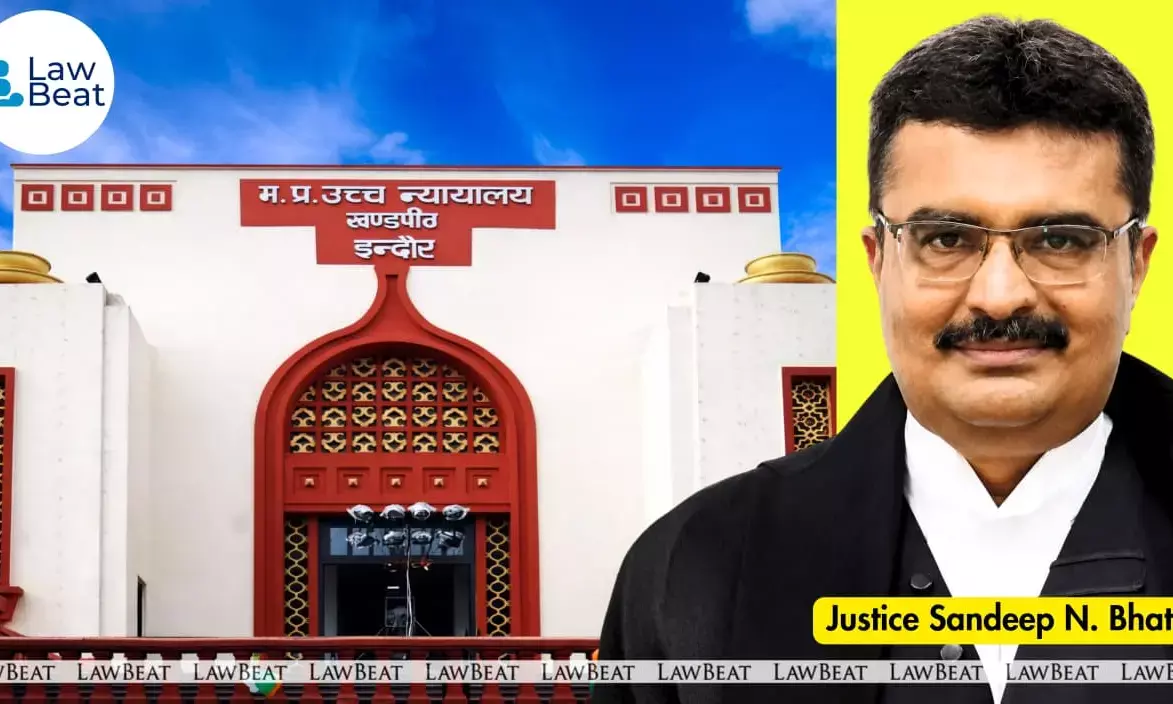
Suo Motu Revision Against Unchallenged Appellate Orders Not Maintainable, Says MP High Court
The Madhya Pradesh High Court at Indore has dismissed a State government petition against a Board of Revenue order that restored the names of a family of cultivators in the records of temple-linked land in Jhabua district, holding that the Board was right to reject a belated suo motu revision against orders the State never challenged.
Justice Sandeep N. Bhatt delivered the order on October 1, after reserving it on September 28, in State of M.P. v. Bhera & Others. The petition challenged the Board of Revenue's order dated March 17, 2011.
At the heart of the dispute is 6.78 hectares of agricultural land in village Sarangi, Tehsil Petlawad, recorded under Khata No. 602. The State said the land belongs to the deity of Shri Laxmi Narayan Temple, with the Collector acting as its Vyavasthapak, or manager. The respondents, Bhera, Mangilal and Dhannibai, are heirs of Chunnilal, who had been recorded as a cultivator in the revenue records from 1959-60 onwards.
Appearing for the State, Deputy Advocate General Shrey Raj Saxena argued that the respondents held the land without any title. Since a deity is a "disabled person" under Section 168(2) of the Madhya Pradesh Land Revenue Code, he said, long possession could never ripen into bhumiswami rights. He added that a revenue court cannot declare title and that the Board had exceeded its jurisdiction. He relied on a coordinate bench ruling in Babulal v. Mandir Shitla Mata, the Supreme Court's decision in Suraj Bhan v. Financial Commissioner, and a High Court ruling in Shiv Kumar Vaishya v. Shubkharan Vaishya.
The case has a long history. In 2003, the Naib Tehsildar ordered the deletion of the respondents' names from the records under Section 115 of the Code. The Additional Collector set that order aside on December 30, 2003, and the Sub-Divisional Officer, in appeal, directed on January 9, 2004 that the names be restored. The State challenged neither of the orders. Instead, acting on a complaint, the Additional Commissioner began suo motu revision proceedings and, on April 7, 2007, reversed both earlier orders. The Board of Revenue quashed that order in 2011.
Defending the Board's decision, Senior Advocate Ajay Bagadia, appearing with advocate Aman Khan for the respondents, argued that the land was never dedicated to the temple. He pointed out that the 1920 records showed two separate accounts: Khata No. 105/1 in the temple's name and Khata No. 105/2 in Chunnilal's name.
He further submitted that the suo motu revision began about one and a half years after the underlying orders, violating the settled rule that such powers must be used within a reasonable time, and that it was triggered by administrative direction rather than an independent opinion. He stressed the limited scope of High Court interference under Articles 226 and 227, relying on Shalini Shyam Shetty v. Rajendra Shankar Patil.
Justice Bhatt noted that the earlier orders of 2003-04 "were never challenged by way of preferring any appeal" and were instead "indirectly reversed" through a suo motu revision in 2007.
Agreeing with the Board, the court held that an inquiry started on the authority's own motion, without any appeal or revision against the appellate order, was not maintainable under Section 50 of the Code. "This finding is absolutely correct and in accordance with law," the court said.
The court took note of the revenue records themselves. "There are two different khata Nos 105/1 and 105/2," it observed, adding that the petitioner was "probably connected with khata no. 105/1" while the respondent was connected with the land in khata no. 105/2. On that count too, it said, the Additional Commissioner's order was rightly found improper.
Concluding that the Board had considered all relevant aspects, the court said it found "no illegality" in the impugned order that would warrant interference under Articles 226 and 227 of the Constitution. The writ petition was accordingly dismissed.
Case Title: State of M.P. vs. Bhera & Others
Date of Order: October 1, 2026
Bench: Justice Sandeep N. Bhatt