
MP High Court Strikes Down 10% Promotion Quota For Clerks To Prosecution Officer Posts
Public Prosecutor Is “Not Like Any Other Govt. Job”: MP High Court Scraps 2002 Promotion Amendment
The Madhya Pradesh High Court at Gwalior has struck down a 2002 amendment that gave clerical staff of the prosecution department a 10 per cent promotion quota for the post of Assistant District Public Prosecution Officer (ADPO), holding it “ultra vires of Articles 14, 16 and 21” of the Constitution.
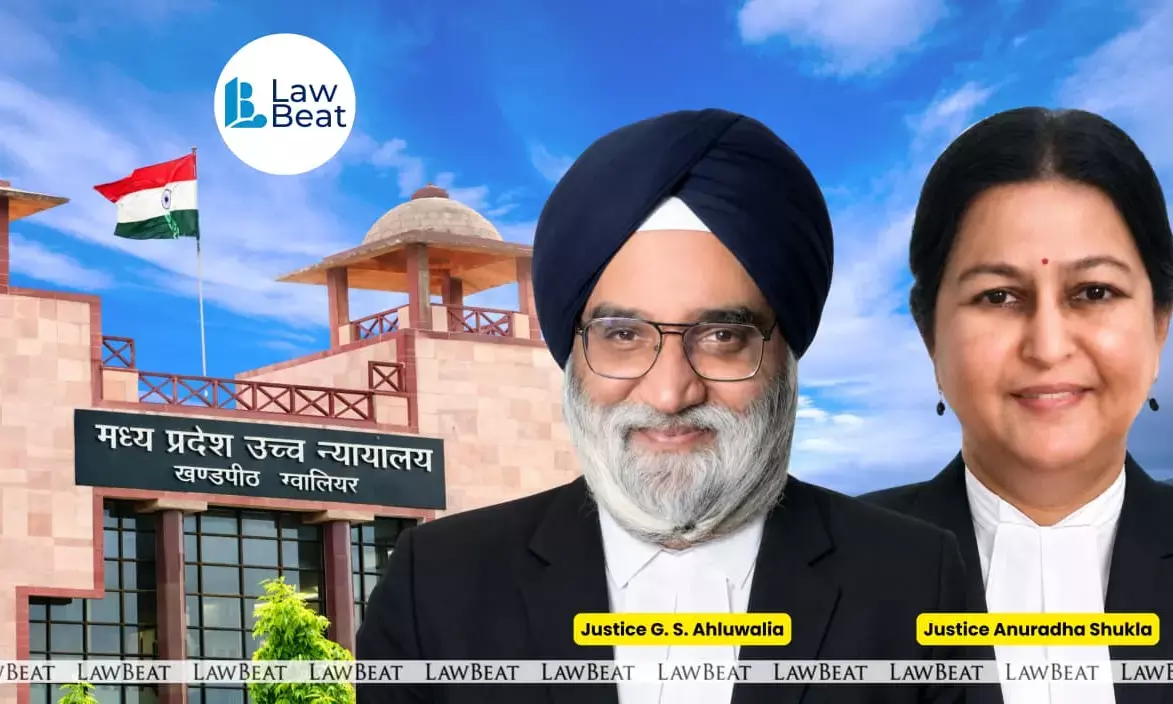
A Division Bench of Justice G.S. Ahluwalia and Justice Anuradha Shukla decided two petitions, W.P. No. 12769/2020 and W.P. No. 27731/2026, on October 29, 2026. Both challenged a notification dated October 14, 2002, which amended Schedules II and IV of the Madhya Pradesh Public Prosecution (Gazetted Services) Recruitment Rules, 1991.
Before the amendment, every ADPO post, a Class II position, was filled by direct recruitment. Afterwards, 90 per cent stayed direct, while 10 per cent could go to CrPC Clerks, Assistant Grade III and Assistant Previous Conviction Detective (APCD) Grade III employees, provided they held an LL.B. degree and had seven years of service.
The first petition was filed by Rohan Sharma, a Gwalior-based advocate who had appeared in the ADPO examinations in 2011 and 2015 without success. Advocate Abhishek Singh Bhadauriya appeared for him. In the second petition, filed by Karan Shrivastava and another, Senior Advocate M.P.S. Raghuwanshi appeared for the petitioners with advocate R.B.S. Tomar.
The petitioners argued that clerical posts involve only office work and have no link with courtroom practice. They said the amendment created a class within a class on the basis of an LL.B. degree, and gave one feeder post two promotion routes, one within Class III and another straight into Class II.
Additional Advocate General Ankur Mody, for the State, relied on the presumption that a law is constitutional. He accepted that the State’s reply was “not very encouraging”, that the objects behind the amendment were not on record, and that one feeder post cannot have two promotional avenues. Advocates D.P. Singh, Prabhakar Singh and Prashant Sharma, appearing for interveners, argued that the challenge came 18 years too late and that the petitioners had no standing.
The court was not persuaded. It described a public prosecutor’s post as “not like any other Govt. Job”, carrying “multiple onerous duties”. CrPC clerks, it found, hold ministerial posts with “no contact either closely or distantly with Judicial decision making.”
On the degree-based distinction, the bench said: “Merely because they hold LL.B. or equivalent degree, would not constitute a separate class requiring separate treatment.” It said the quota would amount to a “backdoor entry to Class II cadre without clearing PSC examination”, giving those who fail the Public Service Commission test another route into the post.
Turning to the Advocates Act, the court observed that an ADPO appearing before a Magistrate must be an enrolled advocate who has cleared the All India Bar Examination, and that promoting government clerks would bypass these requirements. Whether to make them minimum qualifications for direct recruitment was left to the State and to “some other appropriate case”.
A 2019 letter from the Director of Prosecution had flagged the poor performance of promoted ADPOs and sought withdrawal of the quota, which the State rejected in 2021. The court said a provision is not invalid merely because it failed to deliver results, but treated the letter as “authoritative proof” that the quota lacked a reasonable link to its object.
Rejecting the delay objection, the bench held that the validity of a provision gives rise to “a continuous cause of action”, and that dismissing the plea would amount to “perpetuating the illegality”. On standing, it said the petitioner is a practising lawyer aspiring to be an ADPO and that when a statutory provision is under challenge, “the question of Locus Standi becomes secondary.”
Allowing both petitions without costs, it clarified that promotions already granted would stand, since the promotees were not made parties and their promotions were not challenged. It added, however, that “no further promotions to the post of ADPO shall take place.”
Case Title: Rohan Sharma vs The State of Madhya Pradesh and Others with connected matter
Order Date: October 29, 2026
Bench: Justice G.S. Ahluwalia and Justice Anuradha Shukla