
MP High Court Upholds Charges In Alleged Christianity Conversion Through Cash, Education Promises Case
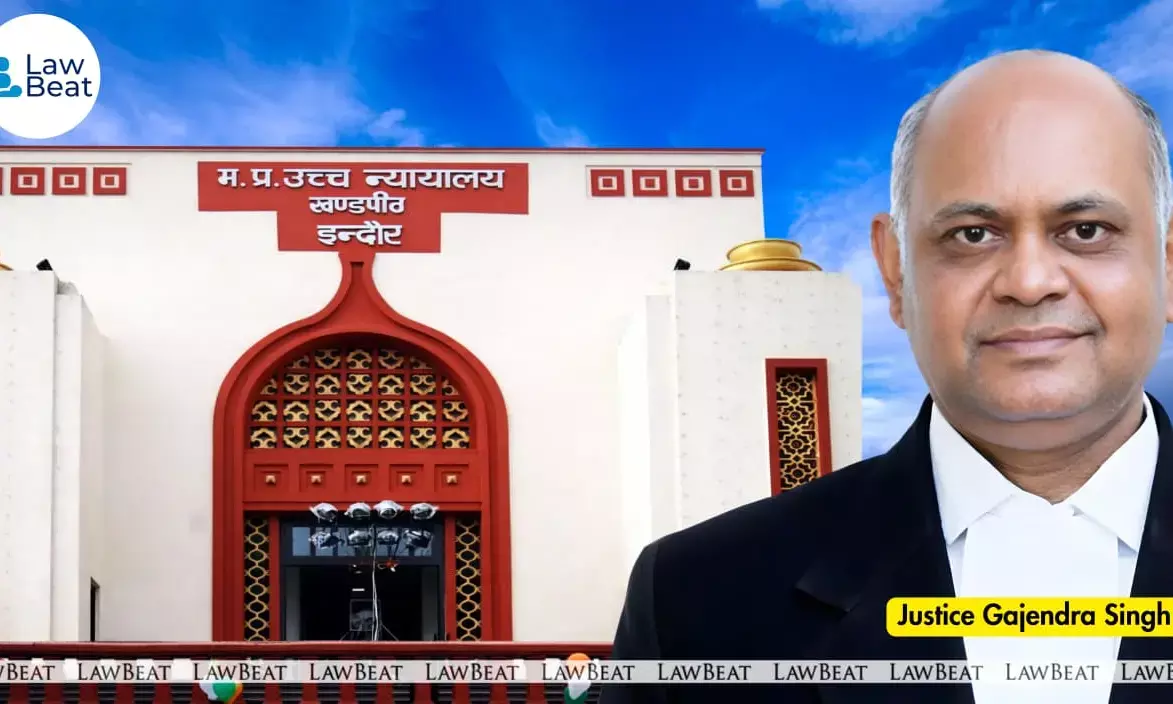
MP HC: Allegations of Promoting Christianity Through Financial Incentives Must Go to Trial
The Madhya Pradesh High Court has refused to interfere with charges framed against three persons accused of attempting to induce villagers to convert to Christianity through promises of money, education and medical treatment, holding that the material collected during investigation disclosed a prima facie case under the Madhya Pradesh Freedom of Religion Act, 2021.
Justice Gajendra Singh dismissed a criminal revision petition filed by Jagram, Manju Singh and Kiran, who had challenged an order of a trial court framing charges against them under Sections 3 and 5 of the Madhya Pradesh Freedom of Religion Act, 2021, along with Section 61(2) of the Bharatiya Nyaya Sanhita, 2023. The petitioners were represented by advocate Lokesh Mehta, while the State was represented by Government Advocate Jai Gopal Chouksey.
The case arose from a complaint lodged on June 20, 2025, by Gajraj Singh, a resident of Village Chaubara Jageer in Dewas district. According to the complaint, a meeting was organised at the house of Bhaggu Jiaji where several villagers, including women and children, had gathered. The complainant alleged that certain individuals were promoting Christianity and encouraging people to abandon their existing faith.
The complaint further alleged that the speakers claimed followers of Christianity would receive free medical treatment, quality education for their children and Rs.50,000 if they adopted the religion. It was also alleged that derogatory remarks were made about Hindu deities and practices during the gathering. Based on the complaint, police registered a case and later filed a chargesheet after recording witness statements and seizing materials allegedly used during the meeting, including publicity material, a loudspeaker and a motorcycle.
Before the High Court, the petitioners argued that mandatory provisions of the Freedom of Religion Act had not been followed. They contended that the complaint did not satisfy the requirements of Section 4 of the Act and also raised objections regarding alleged non-compliance with Section 10. They further argued that the allegations of allurement were vague and unsupported by evidence.
Rejecting these submissions, the Court referred to settled principles governing discharge and framing of charges. It reiterated that at the stage of framing charges, courts are not expected to conduct a detailed examination of evidence or hold a mini trial. The Court relied on Supreme Court precedents which clarify that if the available material creates a grave suspicion about the involvement of the accused, charges can be framed and the matter should proceed to trial.
The High Court noted that the complainant himself claimed to be present at the meeting where the alleged inducements were made. In these circumstances, the argument regarding non-compliance with Section 4 could not be accepted. The Court also observed that declarations contemplated under Section 10 are to be made by persons intending to convert their religion and that no charge had been framed under Section 10(4). Therefore, the challenge based on Section 10 was found to be unsustainable.
Importantly, the Court held that the allegations contained in the complaint, if accepted at face value, would prima facie fall within the definition of “allurement” under Section 2(a) of the 2021 Act. It further found that the investigation material indicated the involvement of the accused persons and others allegedly connected with the meeting and the equipment used for publicity.
The ruling does not determine guilt or innocence. Instead, it underscores that factual issues, the credibility of witnesses and the defence raised by the accused must be tested during trial through evidence and cross-examination before the court.
Emphasising the limited scope of scrutiny at the charge stage, the Court observed that “the Court is only required to ascertain whether a prima facie case is made out and not to appreciate the evidence as if conducting a trial.” Holding that sufficient material existed to proceed against the accused, the Court dismissed the revision petition and allowed the prosecution to continue before the trial court.
Case Title: Jagram and Others v. The State of Madhya Pradesh
Date of Order: June 29, 2026
Bench: Justice Gajendra Singh