
MP High Court: Wife Can Claim Permanent Alimony Even After Divorce Decree
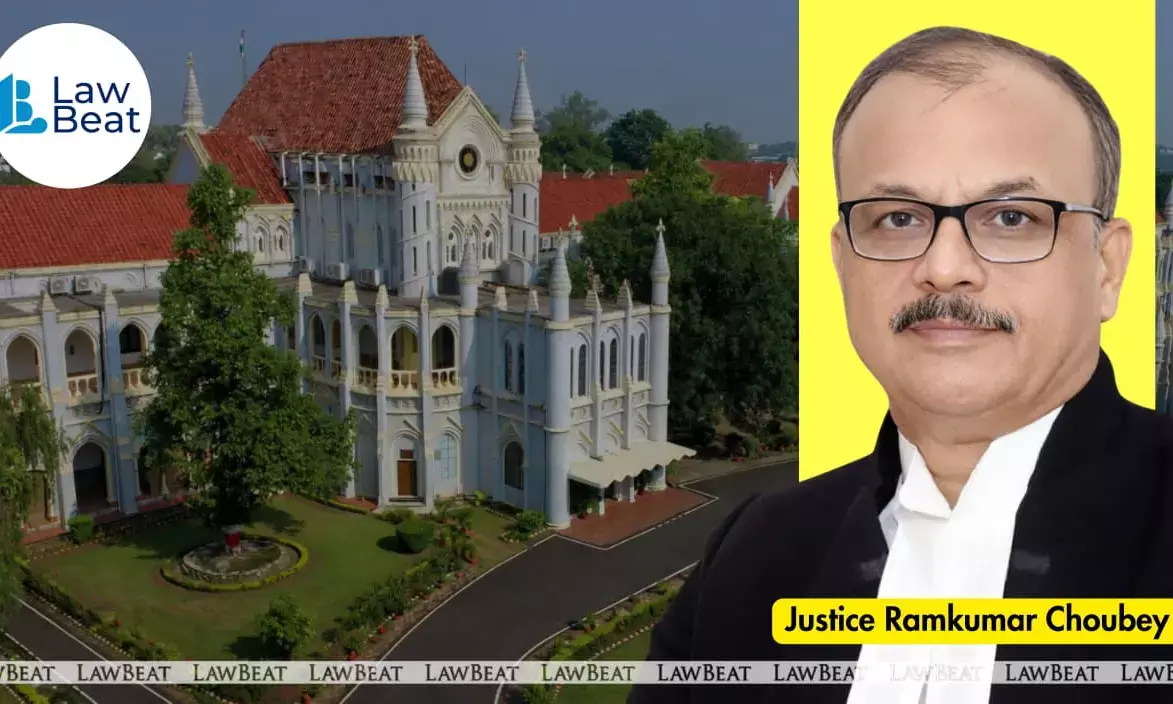
Passing Of Divorce Decree No Bar To Alimony Claim Later, Holds MP High Court
The Madhya Pradesh High Court has held that a wife's right to claim permanent alimony under the Hindu Marriage Act does not automatically lapse simply because a divorce decree has already been passed against her, clarifying that such a claim can still be pursued before the matrimonial court after the marriage has ended.
Justice Ramkumar Choubey made the observation while disposing of a miscellaneous appeal filed by Ushabai against Lalit Bisen, arising from a matrimonial dispute before the Second Additional District Judge, Waraseoni, in Balaghat district. The appeal was filed under Order 43 Rule 1(d) CPC, challenging a 2016 order dismissing her application to set aside an ex-parte divorce decree.
The couple's matrimonial proceeding had originally been initiated by the husband under the Hindu Marriage Act, 1955, and it culminated in an ex-parte judgment and decree dated July 9, 2015. The wife later moved an application under Order IX Rule 13 of the CPC, seeking to have that ex-parte decree set aside, but the application was dismissed by the trial court on July 5, 2016, prompting the present appeal.
At the hearing, counsel Pradeep Kumar Naveria, appearing for the appellant-wife, informed the court that the husband had already remarried after obtaining the divorce decree. Given the age of the parties and the circumstances involved, he submitted that the wife was no longer interested in contesting the divorce itself. However, he pointed out that the trial court, while passing the decree, had never considered her claim for alimony, and urged that the matter be sent back to the matrimonial court for that limited purpose.
Advocate Rahul Kumar Tripathi, representing the respondent-husband, told the court that his client had already transferred some property to the couple's daughter and was regularly paying Rs 5,000 a month towards maintenance under an existing order passed under Section 125 of the Code of Criminal Procedure. He submitted that if the wife was not challenging the divorce and only wanted alimony, she could approach the matrimonial court independently for that relief.
Since the wife's counsel had categorically given up the challenge to the divorce decree, the court held that there was no longer any need to remit the matter for restoration or fresh adjudication of the divorce proceedings. What remained was the pending, unresolved question of alimony.
The court then turned to Section 25(1) of the Hindu Marriage Act, which allows either spouse to seek permanent alimony and maintenance "at the time of passing any decree or at any time subsequent thereto." Relying on this Court's earlier decision in Surajmal Ramchandra Khati vs. Rukminibai, the bench noted that the phrase "on application made to it" cannot be read narrowly, and does not require a spouse to have filed a separate, formal application at the time of the original proceedings. The provision, the court said, exists to protect the interests of the spouse against whom the decree has been passed.
The bench also drew further support from an older 1967 ruling of the Gujarat High Court in Patel Dharamshi Premji vs. Bai Sakar Kanji, which had similarly held that a person need not continue to hold the status of "wife" or "husband" at the time of applying for alimony, and that such a claim could be raised even after the decree granting divorce had already been passed.
"In view of the aforesaid legal position, the fact that a decree of divorce has already been passed does not, by itself, preclude the appellant from seeking the relief of permanent alimony under Section 25 of the Hindu Marriage Act," the court held, adding that the matrimonial court remained fully competent to decide such an application after hearing both sides.
Disposing of the appeal, the court granted Ushabai liberty to file a fresh application for alimony under Section 25 before the matrimonial court at Waraseoni, which will now have to examine and decide her claim on merits, in accordance with law.
Case Title: Smt. Ushabai vs. Lalit Bisen
Date of Order: September 7, 2026
Bench: Justice Ramkumar Choubey