
MV Act|No Grace Period After Licence Expiry Post 2019 Amendment: Delhi High Court
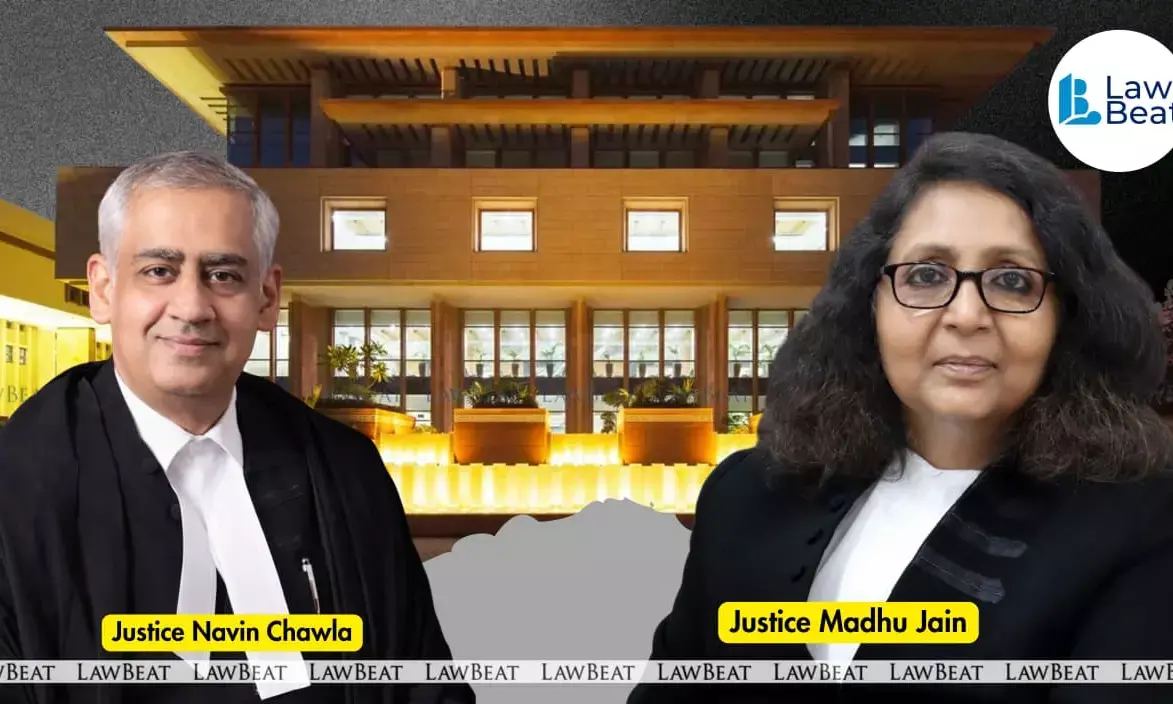
Delhi High Court rules that driving licences cease to be valid immediately upon expiry under the amended Motor Vehicles Act, impacting recruitment eligibility.
The Delhi High Court has clarified that following the enactment of the Motor Vehicles (Amendment) Act, 2019, a driving licence does not remain valid beyond its date of expiry, and any subsequent renewal takes effect only from the date of renewal, not retrospectively.
The ruling came in a writ petition filed by the Delhi Police challenging an order of the Central Administrative Tribunal, which had directed that a candidate be allowed to join the post of Constable Driver despite not possessing a valid driving licence on the prescribed cutoff date.
A Division Bench comprising Justice Navin Chawla and Justice Madhu Jain examined the statutory framework under Sections 14 and 15 of the Motor Vehicles Act, 1988 as amended in 2019. The Court held that the legislative intent behind the amendment was clear in removing the earlier legal position that allowed a 30-day grace period after expiry of a driving licence.
“A plain reading of the amended provisions makes it abundantly clear that the Legislature has consciously deleted the earlier statutory grace period of thirty days. Under the unamended regime, the license continued to remain effective for thirty days post expiry and renewal within that period related back to the date of expiry. However, after the Amendment Act was enforced, this legal position no longer survives. The proviso to Section 14 of the pre amendment Act, granting an automatic extension to the license for a period of thirty days, also stands omitted by the Amendment Act,” the Court observed.
The case arose from a recruitment process conducted by the Staff Selection Commission for the post of Constable Driver Male, which required candidates to possess a valid Heavy Motor Vehicle driving licence as on July 29, 2022, the closing date for submission of applications.
The respondent’s licence had expired on July 10, 2022. Although he applied for renewal on July 15, 2022, the licence was renewed only on August 5, 2022, after the cut off date. The Tribunal had accepted his argument that the renewal application was filed within the earlier statutory period and should therefore relate back to the date of expiry.
Rejecting this reasoning, the High Court held that such an interpretation was no longer tenable under the amended statutory regime. It emphasised that the omission of the grace period was a deliberate legislative act and must be given full effect.
The Court relied on the decision of the Supreme Court of India in Telangana State Level Police Recruitment Board v. Penjarla Vijay Kumar, which held that after the 2019 amendment, there is no automatic continuation of a driving licence beyond its expiry. The Supreme Court had underscored that the change is substantive and not merely procedural, and that a person becomes legally incompetent to drive immediately upon expiry of the licence unless it is renewed.
Applying this principle, the High Court held that the respondent did not possess a valid licence on the crucial date and therefore failed to meet the essential eligibility condition for appointment.
The Court also rejected the argument that administrative delays in processing renewal applications should not prejudice the candidate. It held that eligibility criteria in recruitment processes are mandatory and cannot be relaxed on equitable grounds.
“We also do not find merit in the submission of the respondent that as he had applied for renewal, the administrative delays should not prejudice him. It is well settled that eligibility conditions as on the cutoff date are sacrosanct and cannot be diluted on equitable considerations. To hold otherwise would amount to rewriting the recruitment Notice”, the Court ruled.
Further, the Bench dismissed the plea based on legitimate expectation, noting that the offer of appointment was provisional and subject to verification of documents. It clarified that mere participation in the selection process or clearance of earlier stages does not create a vested right to appointment.
“The respondent’s submission that the license was verified at earlier stages of the recruitment process is also misconceived, … verification at an intermediate stage does not estop the petitioners from enforcing eligibility conditions at the stage of final scrutiny,” the Court held.
Concluding that the Tribunal had erred in applying a pre-amendment legal position and adopting a beneficial interpretation contrary to the statute, the High Court set aside the Tribunal’s order and allowed the writ petition filed by the Delhi Police.
Case Title: Delhi Police & Anr. v. Sudheer Kumar
Bench: Justice Navin Chawla and Justice Madhu Jain
Date of Judgement: 25.03.2026