
Namaz At ‘Restricted’ Site: Allahabad High Court Quashes Criminal Case Against Two Students
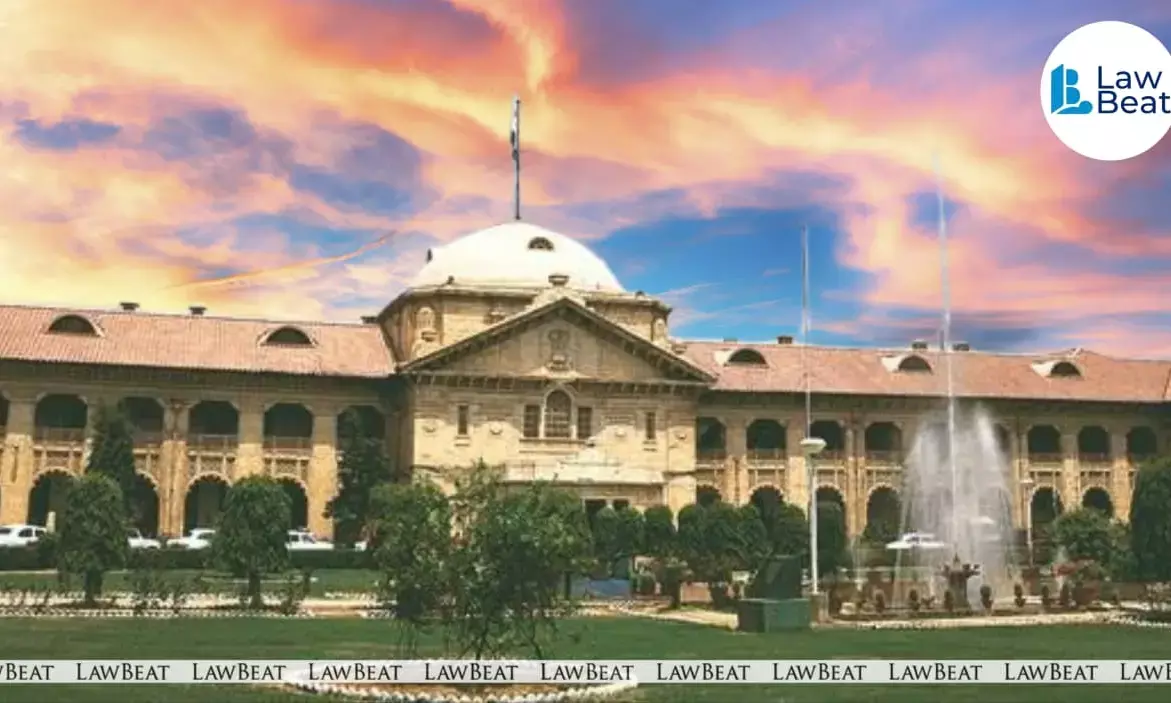
The Allahabad High Court quashed criminal proceedings against two men accused of violating prohibitory orders by offering Namaz at a restricted site in Sant Kabir Nagar.
The Allahabad High Court recently quashed criminal proceedings against two men accused of violating prohibitory directions by offering Namaz at a restricted site in Sant Kabir Nagar, holding that their prosecution in the facts of the case was unwarranted.
The order was passed by the bench of Justice Saurabh Srivastava on an application filed under Section 528 of the Bharatiya Nagarik Suraksha Sanhita (corresponding to Section 482 of the CrPC) seeking quashing of a 2019 case arising out of an incident of 2017, registered at Police Station Khalilabad under Sections 143 and 188 of the Indian Penal Code [corresponding to Section 189 (2) and Section 223 of the BNS].
The proceedings challenged before the high court included a charge sheet dated August 29, 2017 and a summoning order dated May 27, 2019 issued by the Civil Judge (Junior Division)/Judicial Magistrate, Sant Kabir Nagar. The magistrate had taken cognizance upon submission of the charge sheet and summoned the applicants to face trial.
According to the prosecution case, the local administration had notified certain places as not permissible for offering Namaz in order to maintain law and order. The applicants, along with other co-accused, allegedly insisted on performing Namaz at one such site despite the restriction, leading to the registration of an FIR.
Appearing for the applicants, Senior Counsel Anil Srivastava, assisted by Adv Mohd. Shamim, submitted that both accused had virtually no criminal history and were students. It was argued that they were implicated merely because they sought to offer prayers in accordance with their faith, and that continuation of the trial for what were described as petty offences would seriously affect their future prospects, particularly as one of them was preparing for higher competitive examinations.
On earlier directions of the court, the state placed specific instructions clarifying that there was hardly any criminal history against the applicants. However, it maintained that the restriction on offering Namaz at the particular site had been imposed to preserve peace and communal harmony, and that the applicants had violated those administrative directions.
After hearing both sides, court confined itself to examining the case of the two applicants and not the other co-accused. It noted that their implication was essentially based on their intention to perform Namaz at a place temporarily disallowed by the administration.
Court observed that in a secular democratic setup, as reflected in the Preamble to the Constitution, citizens of every faith are guaranteed the right to practise their religion according to their rituals.
At the same time, court underlined that in a society with a mixed cultural fabric, citizens are required to follow reasonable directions issued by the administration in the larger interest of maintaining law and order and social harmony.
Balancing these considerations, court held that continuation of criminal proceedings against the two applicants was not justified in the circumstances. It therefore quashed the entire proceedings, including the charge sheet and summoning order, insofar as they related to the applicants.
However, while granting relief, court issued a caution. Both applicants were warned to comply in future with any specific restrictions or instructions issued by the local administration in the interest of maintaining peace and harmony while performing religious rituals.
Case Title: Azeem Ahmad Khan Alias Abeem Ahmad And Another vs. State of U.P. and Another
Order Date: February 17, 2026
Bench: Justice Saurabh Srivastava