Naming Someone In A Suicide Note Is Not Enough To Prove Abetment, Says MP High Court
"Naming a Person Cannot Automatically Result in Criminal Liability”: MP High Court on Suicide Note
The Madhya Pradesh High Court at Jabalpur has quashed an FIR for abetment of suicide of a 14-year-old boy against his grandfather and maternal uncle, holding that merely finding their names in a suicide note does not make out the offence, and that the victim’s age alone cannot replace proof of instigation or intentional aid.
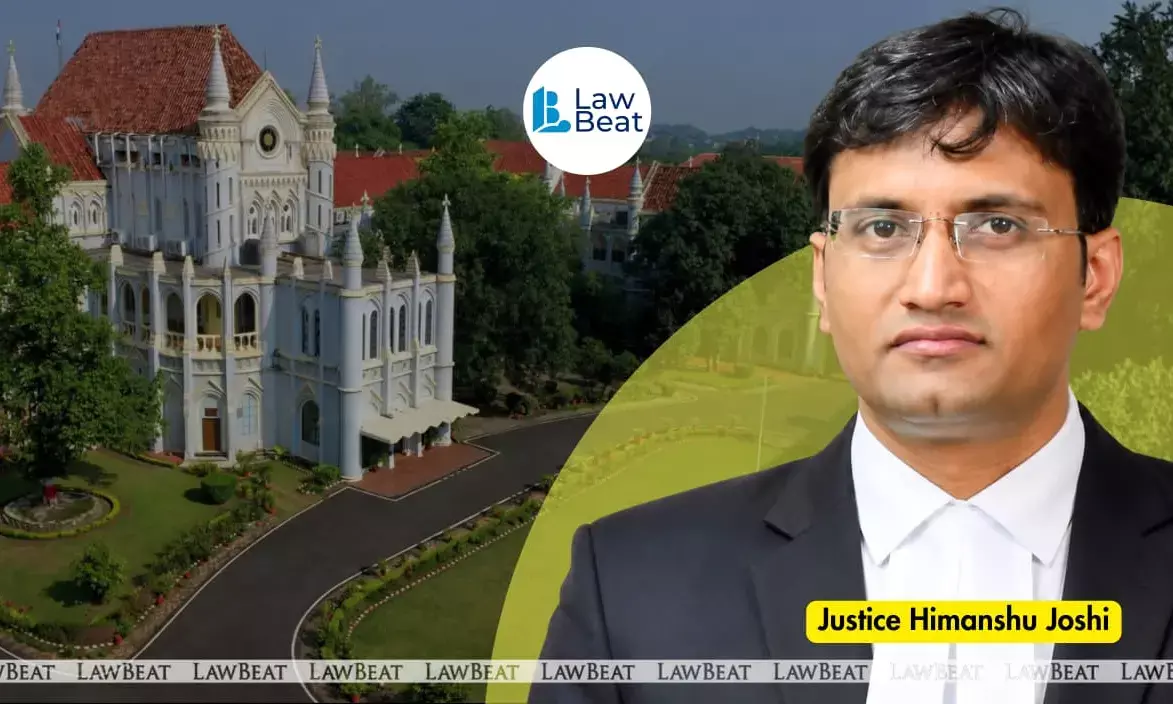
Justice Himanshu Joshi, on 23 September 2026, allowed a petition under Section 528 of the Bharatiya Nagarik Suraksha Sanhita (BNSS) (Section 482 CrPC) filed by Ram Prakash Tiwari and Manish Tiwari. They sought quashing of Crime No. 468/2025, registered at Police Station Amanganj, Panna, under Section 107 read with Section 3(5) of the Bharatiya Nyaya Sanhita (BNS) (Section 305 and 34 of IPC).
According to the prosecution, the Block Medical Officer, CHC Amanganj, informed the police on 9 August 2025 that the boy had been brought to the hospital dead. A paper stated to be a suicide note was allegedly recovered from his pocket. After recording statements of his parents and relatives, the police concluded that he died by suicide because of harassment allegedly caused by the applicants, and the FIR was registered on 23 August 2025. The applicants deny the allegations, claiming the boy took his life after a quarrel over worship expenses and that they were falsely implicated.
Appearing for the applicants, Advocate Jagdish Prasad Singrol argued that even on a face-value reading, the ingredients of abetment were “conspicuously absent”. The note, he submitted, contained no specific allegation of instigation or aid, and there was no overt act, no earlier complaint and no proximate link to the death.
Panel Lawyer Neetu Pashine, appearing for the State, opposed the plea, arguing that the deceased was a minor, the note and statements sufficed to proceed, and their evidentiary value could not be tested under Section 528 of the BNSS (Section 482 CrPC).
The court framed the question as whether the material, even if accepted in its entirety, discloses the basic ingredients of abetment. Though Section 107 of the BNS (Section 305 IPC) covers abetment of suicide of a child, it observed, the prosecution must still show the requisite act of instigation or intentional aid. In the court’s words, “The fact that the deceased was a minor, by itself, cannot dispense with the requirement of establishing a legally cognizable act attributable to the accused.”
Relying on Supreme Court rulings in Ramesh Kumar v. State of Chhattisgarh, Amalendu Pal v. State of West Bengal, M. Mohan v. State and Mahendra Awase v. State of Madhya Pradesh, the bench reiterated that abetment requires a positive act with a proximate nexus to the suicide, and that mere harassment is not enough. It also cited Kiran Deshmukh v. State of Madhya Pradesh, where the Supreme Court held that a bare reference to an accused’s name in a suicide note cannot prima facie sustain the offence.
Applying this, the court found that although the prosecution relied substantially on the note and family statements, no specific act was attributed to either applicant. The note, it observed, contained no factual narration linking their alleged conduct to the boy’s decision. The court held, “Naming a person, without particulars of instigation, intentional aid or a proximate act having nexus with the suicide, cannot automatically result in criminal liability.”
On the family’s statements, the bench said allegations of harassment lacking particulars of “nature, manner and timing” cannot by themselves constitute the offence. While a meticulous appreciation of evidence is not expected at the Section 528 (Section 482 CrPC) stage, it said, material that fails to disclose basic ingredients even at face value warrants use of inherent jurisdiction.
Holding that continuing the case would “amount to abuse of the process of law”, the court allowed the petition and quashed the FIR and all consequential proceedings against the two applicants.
Case Title: Ram Prakash Tiwari and Others vs. The State of Madhya Pradesh and Others
Order Date: September 23, 2026
Bench: Justice Himanshu Joshi