
No Bar on Fresh Compassionate Appointment After Cancellation of Earlier One: MP High Court
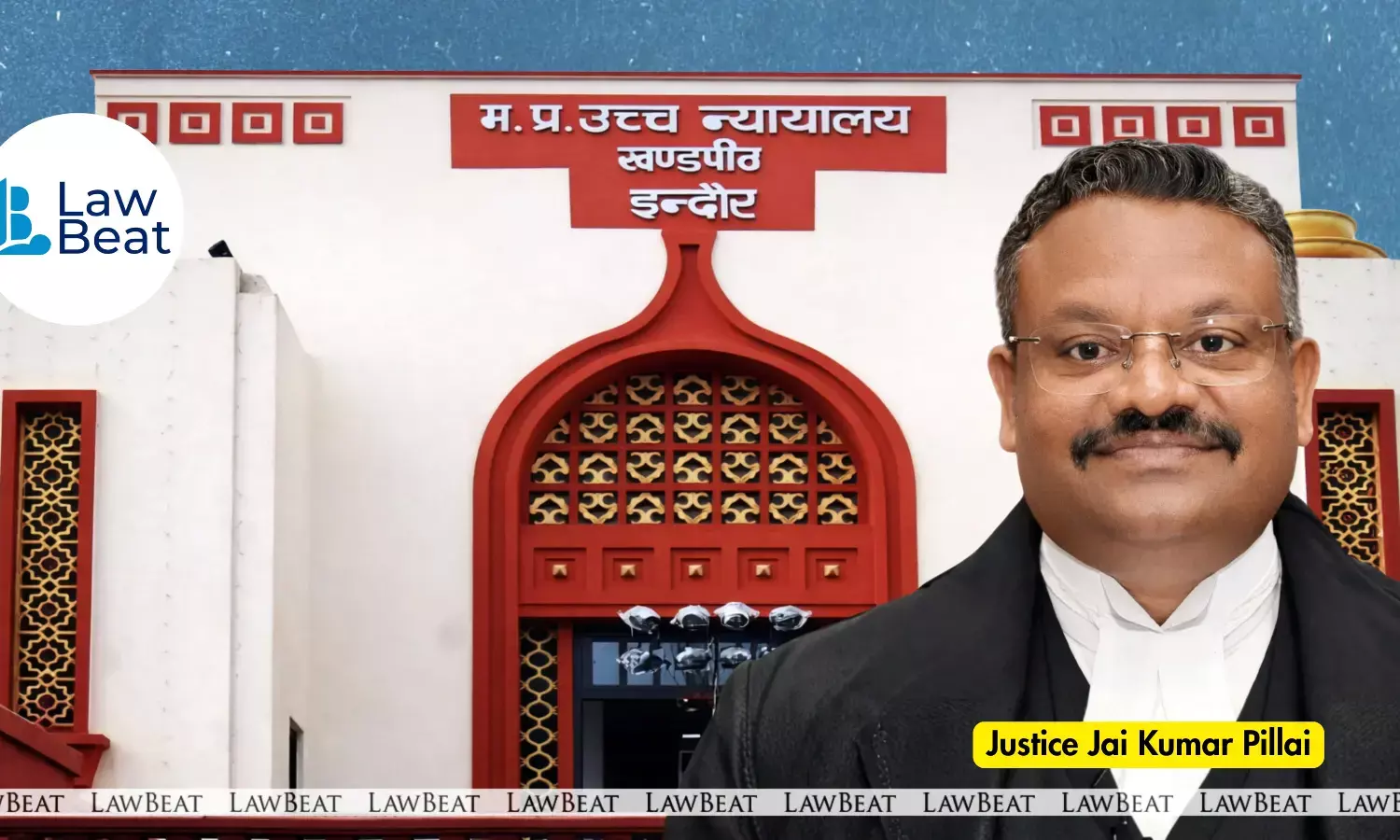
MP High Court Directs Reconsideration of Compassionate Appointment After 13-Year Delay
The Madhya Pradesh High Court at Indore has set aside an order rejecting a woman’s claim for compassionate appointment, holding that the authorities erroneously assumed that the benefit had already been availed by her family, when in fact no appointment ultimately fructified. The Court ruled that procedural lapses on the part of the State cannot be used to defeat a dependent’s legitimate claim under the compassionate appointment policy.
Justice Jai Kumar Pillai allowed a writ petition filed by Priyanka Pandey challenging a communication dated October 30, 2023, by which her claim for compassionate appointment was rejected on the ground of alleged ineligibility under Clauses 3, 13.1 and 13.2 of the State’s Compassionate Appointment Policy dated August 18, 2008.
The petitioner’s father, Late Sitaram Pandey, was working as a Revenue Inspector and died in harness on December 10, 2010, leaving behind his widow, one son, one unmarried daughter and one married daughter. Following his death, the petitioner’s brother, Sanjeev Pandey, applied for compassionate appointment in January 2011, well within the stipulated period of seven years prescribed under the policy. After scrutiny, he was appointed and sent for training for the post of Patwari commencing July 2014.
However, after the commencement of training, police verification revealed that the petitioner’s brother had been fined Rs.100 in two minor cases under Section 13 of the Gambling Act in 2008 and 2009. On the basis of this report, the authorities cancelled his compassionate appointment by an order dated January 8, 2015. Aggrieved, he approached the High Court in 2016, though the petition ultimately came to be withdrawn in May 2023.
Meanwhile, in October 2016, the petitioner’s mother applied for compassionate appointment for her daughter, Priyanka Pandey, submitting all requisite documents and affidavits of the dependents. The authorities, however, deferred consideration of the petitioner’s case, repeatedly stating that it would be examined after a final decision in the brother’s matter. Despite the withdrawal of the earlier writ petition, the petitioner’s application was eventually rejected in 2023, citing the seven-year limitation period and the bar contained in Clauses 13.1 and 13.2 of the policy.
Before the Court, counsel for the petitioner, Shri Prasanna R. Bhatnagar, argued that the rejection was arbitrary and contrary to the policy, particularly since the family had continued to face financial hardship after the death of the sole breadwinner. It was contended that the brother was never validly appointed, as his appointment was cancelled, and therefore the policy provisions barring reappointment or transfer of compassionate appointment had no application. It was further submitted that the delay was entirely attributable to the authorities themselves.
Opposing the plea, State counsel Ms. Swati Ukhale argued that compassionate appointment had already been granted once within the family and could not be transferred or reconsidered in favour of another dependent. The State also relied on the seven-year limitation clause to justify rejection of the petitioner’s claim.
The Court, however, found the State’s reasoning to be fundamentally flawed. It observed that the initial application for compassionate appointment was made within the prescribed time limit and that even the subsequent application filed in 2016 fell within seven years of the employee’s death. Significantly, the Court noted that character verification, which the policy mandates prior to appointment, was conducted only after the brother had already been appointed and sent for training, a lapse clearly attributable to the authorities.
Justice Pillai held that once the brother’s appointment stood cancelled, it could not be said that any member of the family had actually been appointed on compassionate grounds. Consequently, Clauses 13.1 and 13.2, which apply only where an appointment has already been granted or transferred, were held to be inapplicable. Relying on Supreme Court jurisprudence on compassionate appointment, the Court emphasised that while such appointments are not a vested right, administrative delay and procedural errors cannot be used to deny legitimate consideration under the policy.
Terming the rejection order as legally unsustainable, the High Court quashed the impugned communication and directed the competent authority to reconsider the petitioner’s application strictly in accordance with the policy and the Court’s observations, within a period of sixty days.
Case Title: Priyanka Pandey v. The State of Madhya Pradesh and Others.
Judgment Date: 29.01.2026
Bench: Justice Jai Kumar Pillai