
No Caste Names on Temple Festival Invites: Madras High Court
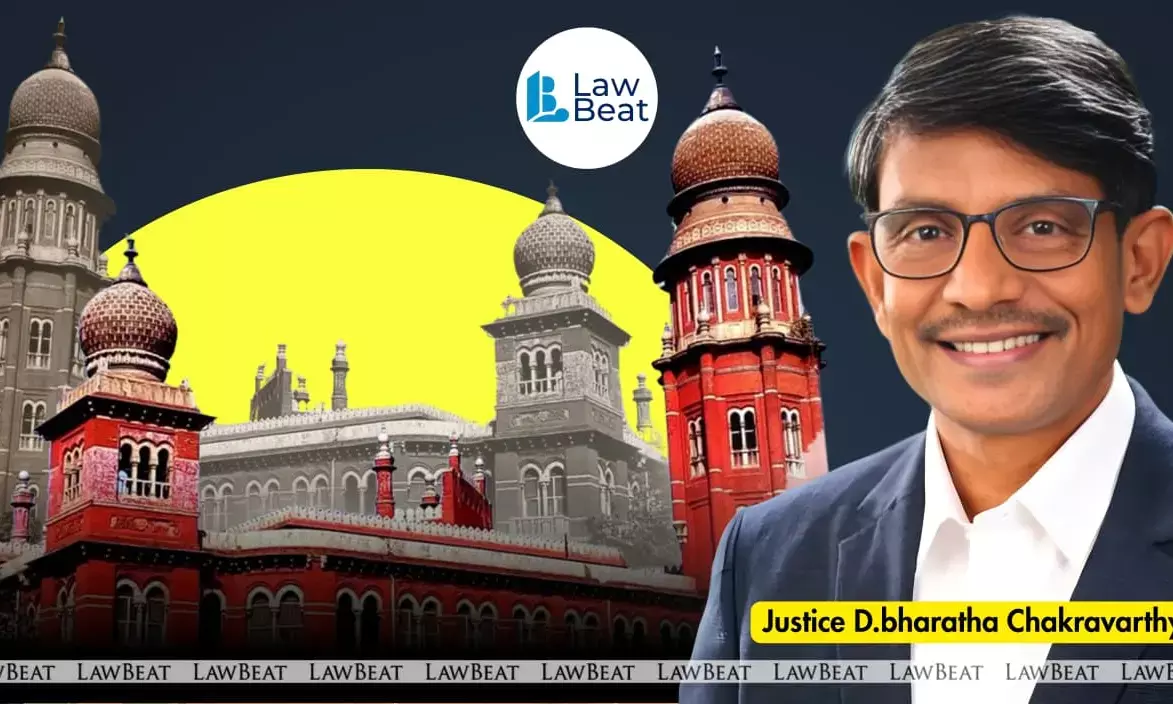
Madras High Court directed that temple invitations issued by Hindu Religious and Charitable Endowments Department-administered institutions must not carry caste suffixes from future festivals
The Madras High Court has directed that from the next festival onwards, Arulmigu Kandhasamy Thirukovil at Thiruporur in Chengalpattu district shall not print caste suffixes in its festival invitations, holding that a temple administered under the Hindu Religious and Charitable Endowments Department cannot permit practices that propagate caste.
The direction means that only the personal names of Ubayatharars, who are devotees who sponsor specific rituals or events during temple festivals and whose names are printed in the invitation as recognition, can be published, without any caste identification.
The bench of Justice D. Bharatha Chakravarthy passed the order on February 17, 2026, while disposing of a writ petition filed by N. Samaran in connection with the forthcoming Masi Brahmochavam 2026 of Arulmigu Kandhasamy Thirukovil, Thiruporur.
The petitioner had approached the court under Article 226 of the Constitution seeking a direction to the Commissioner and other officials of the Hindu Religious and Charitable Endowments Department (HR&CE Department) to prohibit the use of caste names in the invitations for the festival. He further sought a direction that only persons duly authorised by the temple’s Executive Officer be permitted to act as “Sri Padhamthangis” and carry the idol during the procession.
During the hearing, it was pointed out that in the invitations issued for the festival, some Ubayatharars had their caste names printed along with their personal names. Court noted that a division bench of the high court had already passed an order in W.P.(MD) No.1697 of 2025 directing that caste names be avoided in temple invitations.
The Additional Advocate General also brought to the court’s attention an order of the Supreme Court where, on a particular occasion, it was directed that the name be printed as “Adi Dravidar” instead of “Oorar.” On reading both orders, court observed that the underlying objective was to avoid caste discrimination.
Although the state submitted that the temple itself was not using caste names and that the names were given by Ubayatharars along with caste suffixes, court held that in view of the bivision Bench ruling, such suffixes must be avoided.
However, since the invitations for the current year’s festival had already been printed and circulated and the festival was scheduled to commence on February 20, 2026, court declined to issue directions for the present year.
Issuing prospective directions, court ordered that from the ensuing festival onwards, whenever any Ubayatharar furnishes his name with a suffix indicating caste, the suffix alone must be dropped and only the personal name printed in the pamphlets. The prayer to leave the matter open to the discretion of the Ubayatharar or temple authorities was rejected.
Court emphasised that caste exists only in the minds of people and that Article 14 of the Constitution enshrines equality. Observing that the endeavour of every authority should be to annihilate caste rather than perpetuate it, court held that a festival conducted with the involvement of a government department such as the HR&CE Department cannot be allowed to propagate or advertise caste identities.
On the second limb of the petition relating to “Sri Padhamthangis,” court declined to frame any rules or direct the formulation of a standard operating procedure. It observed that during temple processions, able-bodied devotees normally volunteer to carry the idols and that micromanaging the issue through court directions could open a “Pandora’s box".
The matter was therefore left to be managed by the Executive Officers and Trustees in the best interests of devotees and temple rituals.
With these directions, the writ petition was disposed of without costs.
Case Title: N.Samaran vs The Commissioner, Hindu Religious and Charitable Endowments Department and Others
Order Date: February 17, 2026
Bench: Justice D. Bharatha Chakravarthy