
No Compensation Without Affidavit: MP High Court Directs SC/ST Victim To Promise She Won't Compromise Case
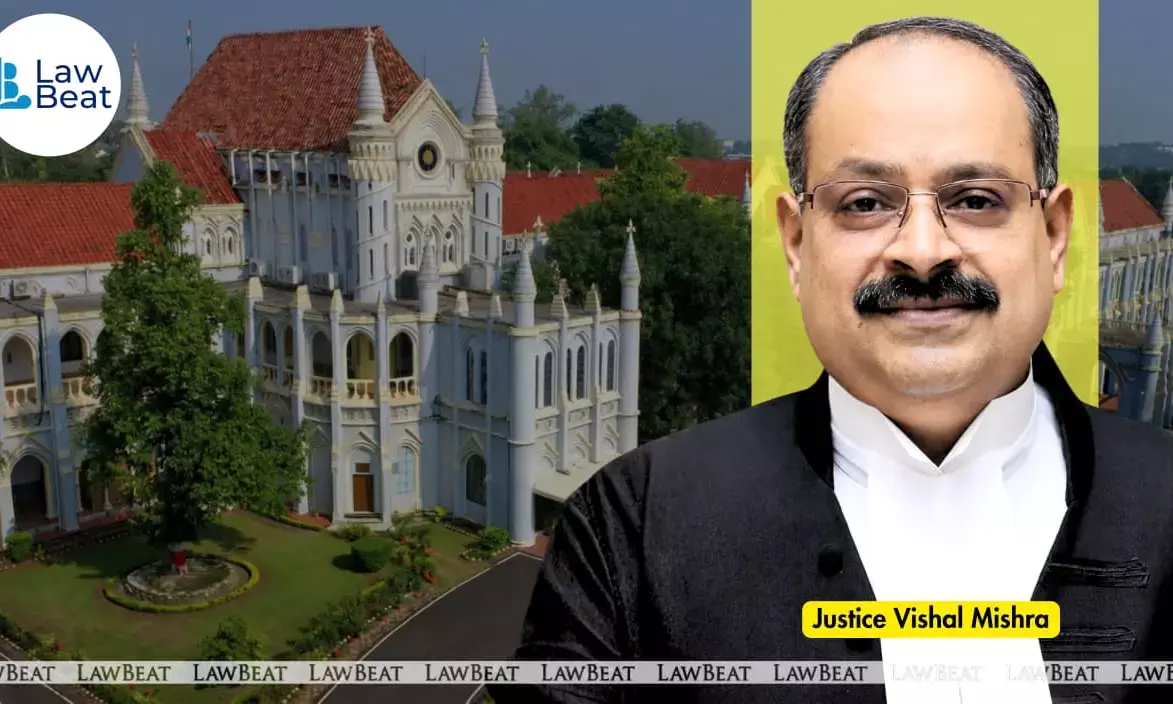
MP High Court Says Victim Must Contest Case, Not Turn Hostile, to Claim Compensation
Observing that compensation paid under the Scheduled Castes and Scheduled Tribes (Prevention of Atrocities) Act comes from the public exchequer and cannot be misused, the Madhya Pradesh High Court has directed a rape survivor belonging to a Scheduled Tribe community to furnish an affidavit stating that she will not turn hostile or enter into a compromise with the accused before receiving compensation under the law.
Justice Vishal Mishra passed the order while hearing a petition filed by a victim seeking release of compensation to which she claimed entitlement under Clause 44(i) of the Scheduled Castes and Scheduled Tribes (Prevention of Atrocities) Rules, 1995. The petitioner was represented by Advocate R.P. Mishra, while the State was represented by Panel Lawyer Jubin Prasad.
The petitioner approached the High Court seeking release of 75 per cent of the compensation amount out of ₹5 lakh prescribed under the Rules. According to the plea, an FIR was registered at Khamariya Police Station in Jabalpur district in September 2022 for offences under Sections 376, 376(2)(n) and 506 of the Indian Penal Code, along with Sections 3(1)(w)(i) and 3(2)(va) of the SC/ST Act. A chargesheet was subsequently filed before the trial court in December 2022.
The victim contended that under Clause 44(i) of the Rules, victims of such offences are entitled to compensation in stages. She argued that since the chargesheet had already been filed, she was entitled to receive 75 per cent of the compensation amount. The petition stated that although she was eligible for the benefit, only ₹75,000 had been paid and her request for the remaining amount had not been considered by the authorities.
Opposing the plea, the State argued that in several cases victims receive compensation and later either compromise with the accused or turn hostile during trial, resulting in acquittals. The State therefore suggested that compensation should be released only after the victim undertakes that she will continue supporting the prosecution and will not enter into any compromise with the accused. It further submitted that if such an undertaking is breached, the compensation amount should be returned to the government because it is paid from public funds.
After examining the record, the Court noted that the FIR and chargesheet were undisputed and that the offences alleged attracted Clause 44(i) of the Rules, under which compensation of ₹5 lakh is payable to the victim in different stages of the criminal process.
The Court took note of the State's concern regarding misuse of compensation and observed that the amount paid to victims is drawn from public resources. Referring to the issue, the Court remarked that "The public exchequer cannot be misused for the purpose of compliance of provisions of Rules, 1995."
Accordingly, Justice Mishra directed the petitioner to submit an affidavit before the concerned authorities affirming that she would neither enter into a compromise with the accused nor turn hostile before the trial court and would contest the criminal proceedings initiated on her complaint.
The Court further ordered that no compensation amount shall be disbursed unless such an affidavit is filed. It directed that if the affidavit is submitted within 15 days, the authorities must consider the victim's application and release the admissible benefits within 30 days thereafter.
Importantly, the Court held that if the victim subsequently turns hostile, the compensation received would have to be refunded to the State within 30 days of the trial court's judgment. Failing such repayment, authorities would be free to recover the amount in accordance with law.
The Court also observed that where a victim turns hostile or enters into a compromise, the trial court may consider taking cognisance against the victim for allegedly registering a false and frivolous case against the accused. With these directions, the writ petition was disposed of.
Case Title: Victim v. The State of Madhya Pradesh and Others
Date of Order: June 18, 2026
Bench: Justice Vishal Mishra