
No Criminal Offence Made Out: Madhya Pradesh High Court Discharges Accused In Property Dispute
Civil Remedy Was Enough: Madhya Pradesh High Court Quashes IPC 420, 406 Charges In Property Dispute
The Madhya Pradesh High Court has quashed criminal proceedings arising out of a property dispute, holding that the case was essentially civil in nature and that continuing the criminal trial would amount to an abuse of process of law.
Deciding two connected petitions, the Court discharged the accused persons of offences under Sections 420, 406 and 120B of the IPC, observing that the ingredients of cheating and criminal breach of trust were not made out even if the complaint was accepted at face value.
The case stemmed from a private complaint filed by one Smt. Meena, who alleged that she had entered into an agreement dated January 4, 2007 for the purchase of a flat along with adjoining land for Rs.9.21 lakh. According to her, despite paying Rs.4,76,000 and receiving possession, the original sellers, Bhanu Kumar Joshi and Jyoti Joshi, subsequently executed a sale deed in favour of Dr. Sushila Verma. This led to registration of an FIR and eventual framing of charges by the trial court, which was affirmed in revision, prompting the present petitions.
Senior Advocate Shri C.L. Yadav, appearing with Shri O.P. Solanki for Dr. Sushila Verma, and Shri Ashish Gupta for the co-accused, argued that no dishonest intention could be attributed to the accused persons. They pointed out that possession had already been handed over to the complainant, and that Dr. Verma was a bona fide purchaser. It was further submitted that a civil suit for specific performance was already pending between the parties, and thus, criminal proceedings were unwarranted.
On the other hand, Shri Amar Singh Rathore, appearing for the complainant, along with Shri Hemant Sharma for the State, opposed the petitions, contending that evidence had already been led before the trial court and that the complaint disclosed sufficient grounds to proceed.
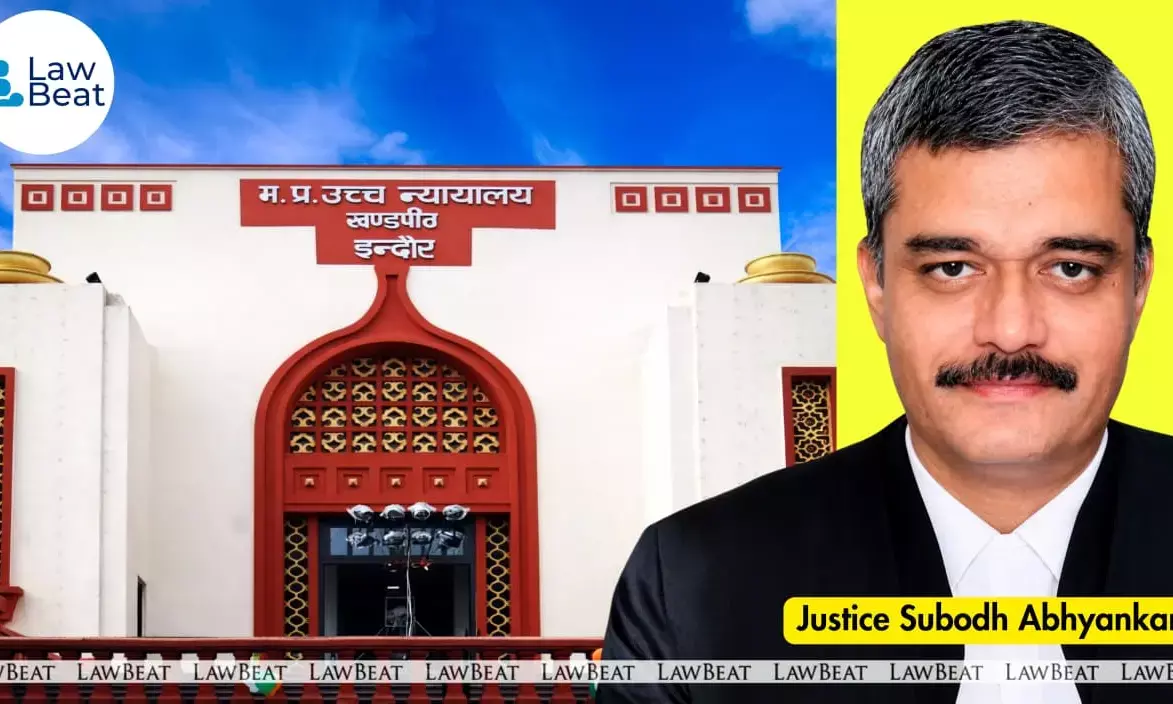
Justice Subodh Abhyankar, however, found merit in the petitioners’ submissions. The Court noted that under the agreement, the entire sale consideration was to be paid within eight days, a condition that admittedly remained unfulfilled as only part payment was made even after a month. This, the Court held, was a crucial factor undermining the complainant’s allegations.
Significantly, the Court underscored that the complainant had already invoked civil remedies by filing a suit for specific performance. While acknowledging that civil and criminal proceedings can coexist in certain circumstances, the Court clarified that “the present is not the case where the complainant could avail both the remedies simultaneously,” adding that “the only remedy… was to file a civil suit and which remedy she has already availed.”
Addressing the argument that evidence had already been recorded, the Court held that such developments do not preclude judicial scrutiny at the threshold. It observed, “it would be unjust for the court to relegate the petitioners to contest the trial in which even the ingredients of the offences alleged are not made out.”
The Court also took note of the prolonged pendency of the matter, which stretched over 15 years, attributing the delay to systemic reasons rather than any fault of the accused. It cautioned against allowing procedural delays to prejudice substantive rights, particularly when the foundational elements of criminal liability were absent.
Concluding that permitting the trial to continue would amount to misuse of judicial process, the Court set aside the orders of the trial and revisional courts and discharged all the petitioners.
Case Title: Smt. Dr. Sushila v. The State of Madhya Pradesh and Anr. with other connected matter
Date of Order: April 16, 2026
Bench: Justice Subodh Abhyankar