
No Demolition Action Against Mosque Near PM’s Residence Till Waqf's Representation Decided; Access Remains Restricted: Centre Tells Delhi HC
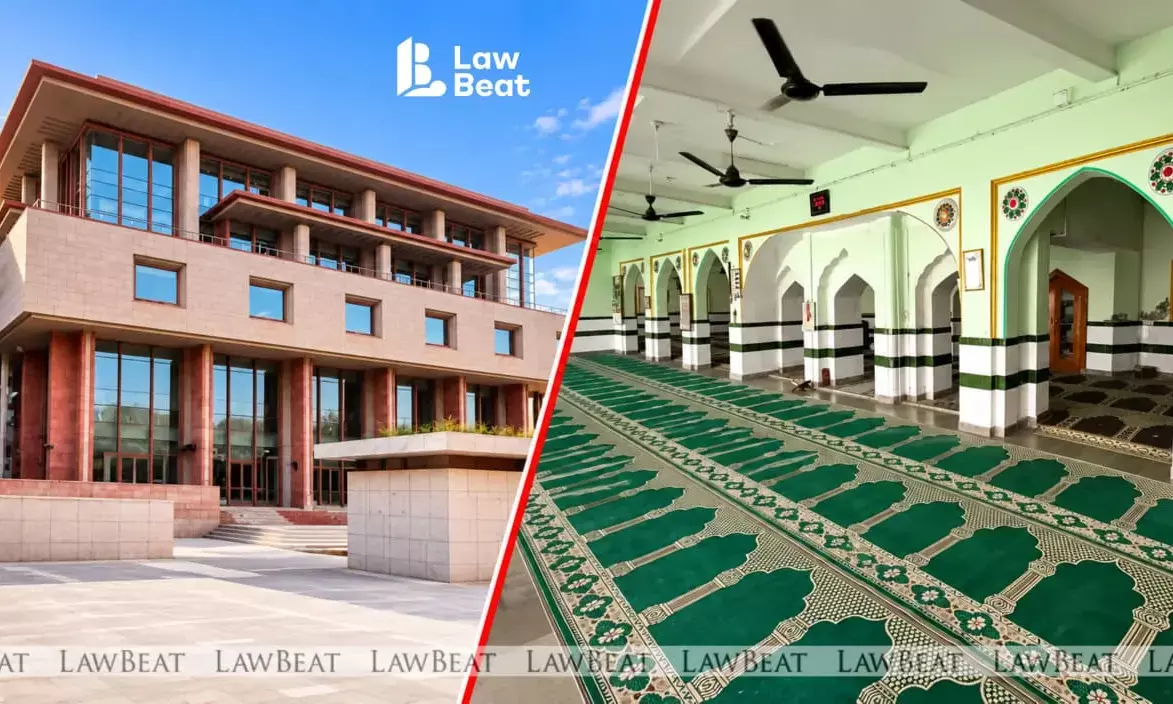
The Delhi High Court on Thursday recorded the Union government’s statement that no coercive action would be taken against a mosque situated within the Jaipur Polo Ground area near the Prime Minister’s residence while the authorities consider a representation concerning the religious structure.
Justice Anish Dayal was hearing a petition filed by a worshipper seeking protection against the apprehended demolition of the mosque, restoration of access for worshippers and enforcement of the Delhi Waqf Board’s statutory obligations.
Appearing for the Union government, Central Government Standing Counsel Ashish Dixit told the Court that the authorities would consider the representation submitted by the Delhi Waqf Board to the Land and Development Office (LNDO) within four weeks and respond in writing.
The Court recorded the Centre’s statement that, in the meantime, no coercive action would be taken against the mosque. Dixit made the statement on instructions in the presence of Kunal Bhaskar, Deputy LNDO.
The Court also recorded the Centre’s submission that access to the area would not be permitted at this stage because demolition work was underway nearby and movement could potentially cause injuries.
The matter was listed for December 16.
Access To Mosque Remains Restricted Over Safety Concerns
The petitioner’s counsel, Advocate Sufyan Siddiqui, sought restoration of ingress and egress to the mosque, submitting that worshippers had been prevented from entering the premises.
Dixit told the Court that demolition work was continuing in the surrounding area and that allowing people to enter could expose them to safety risks. He added that access was not being allowed even to the temple situated in the same area.
Recording the Centre’s submission, Justice Dayal noted that access could not be allowed at this stage in view of the ongoing demolition work and the potential risk of injury.
The Court recorded Dixit’s statement that “ingress and egress may not be allowed at this stage” because demolition work was underway in the area and movement could potentially result in injury to people.
It also recorded the Centre’s statement that no person was being allowed access to the area, including those seeking to visit the temple.
Siddiqui disputed the claim that demolition work was still underway, submitting that photographs taken that morning showed that the demolition had already been completed.
The Court directed the concerned parties to file status reports, along with photographs, regarding the demolition work and the situation at the site.
Waqf Board’s Representation To Be Decided Within Four Weeks
Dixit submitted that the authorities would consider the Delhi Waqf Board’s representation expeditiously and sought four weeks to complete the process. He also argued that the Board had already approached the authorities under Section 32 of the Waqf Act.
The Court recorded the Centre’s statement that the representation would be considered within four weeks and that a written response would be submitted to the Court.
Siddiqui objected to the suggestion that the worshipper’s petition was unnecessary, arguing that worshippers had a legal right to perform religious practices and could independently approach the Court for protection.
Justice Dayal clarified that the Court had not entered into the merits of the dispute. He also asked Siddiqui to confine his submissions to the relief sought in the writ petition, observing that the matter was not a public interest litigation.
“This is not a PIL. If you want to go for a PIL, please go to the Chief’s Bench” the judge said.
The Court noted that the Waqf Board had already approached the authorities and that the Centre had stated that its representation would be considered.
Petitioner Disputes Claim That Demolition Is Continuing
Advocate Siddiqui objected to the Centre’s submission that demolition work was still underway, maintaining that the work had concluded and that photographs taken that morning supported his contention.
The Court took note of the objection and directed the concerned parties to file status reports with photographs. It also recorded the Centre’s position that access remained restricted because of the demolition work and the potential safety risks.
The petitioner additionally sought restoration of electricity and water connections to the mosque. However, the Court did not grant this relief during the hearing.
Siddiqui also requested that the imam and his family members, who reside at the site, be allowed to enter the premises. Justice Dayal asked him to remain within the scope of the petition.
Mosque Claimed To Be Notified Waqf Property
The petitioner has claimed that the mosque was notified as Waqf property in 1977 and recognised as a Grade-II heritage structure under a 2009 notification.
During the earlier hearing, Siddiqui argued that the mosque was not covered by previous proceedings concerning the clearance of settlements in the wider Jaipur Polo Ground area. He contended that its Waqf notification and heritage status raised separate legal questions.
The Court had also examined the role of the Delhi Waqf Board and the status of representations submitted to the authorities. The Board had informed the Court that it submitted a representation to the LNDO and other authorities on October 19, which was yet to be decided.