
No Enforceable Right in ‘May Extend’ Clause, Rules Madhya Pradesh High Court
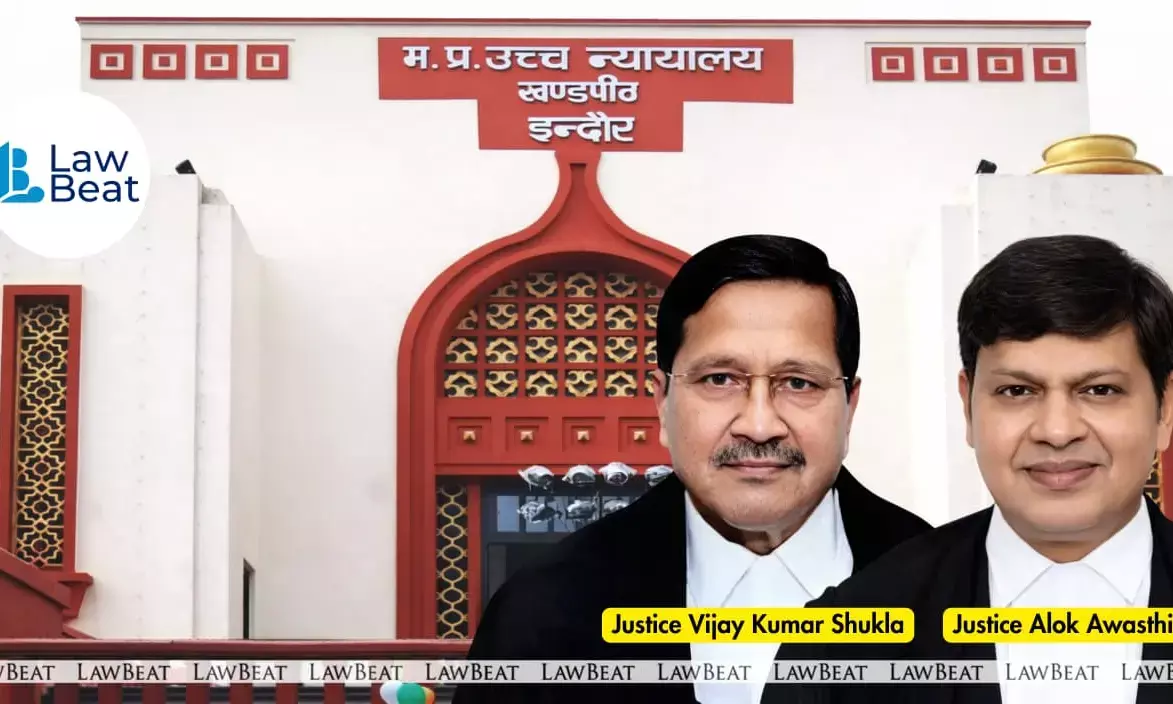
“No Right to Extension If Clause Is Discretionary: MP High Court Dismisses Contractor’s Plea”
The Madhya Pradesh High Court has clarified that a clause permitting extension of a government contract does not create an enforceable right in favour of a contractor, especially where such extension is contingent on discretion and mutual consent.
Dismissing a writ petition filed by a catering services firm, the Indore Bench underscored that participation in a fresh tender process without protest disentitles a bidder from later seeking continuation of the earlier contract.
The division bench of Justice Vijay Kumar Shukla and Justice Alok Awasthi was hearing a plea filed by M/s Star Foods Associates, which had challenged the initiation of a fresh tender for kitchen and food supply services at ESIC Model Hospital, Indore. The petitioner firm argued that it had been awarded the contract in July 2024 and had been continuously providing services since August 2024, including during the extended period up to January 31, 2026. Even beyond that date, it claimed to have continued supplying food without interruption.
Appearing for the petitioner, Advocate Kanishka Gupta contended that Clause 22 of the tender document clearly envisaged an extension of the contract for a further period of one year. He submitted that this created a legitimate expectation in favour of the petitioner, particularly in light of its continued satisfactory performance. According to the petitioner, the authorities ought to have extended the contract instead of issuing a fresh tender in February 2026.
On the other hand, Advocate Shalabh Sharma, representing the respondents, argued that the clause relied upon by the petitioner was not mandatory in nature. He submitted that the provision merely enabled the authority to extend the contract, subject to certain conditions, and did not impose any obligation to do so. It was also pointed out that the petitioner had participated in the fresh tender process but failed to secure the contract, thereby weakening its claim for extension.
The court, after examining the contractual clause in question, agreed with the respondents. It reproduced Clause 22, which stated that the contract period “may further be extended by 1 year subject to observance of satisfactory performance by the competent authority and mutual consent of both the parties.” Interpreting this provision, the bench observed that the use of the word “may” clearly indicated discretion rather than compulsion.
In its reasoning, the court held that “the words ‘may’ and ‘mutual consent’ makes clear that the said clause is not making an obligation on the competent authority to extend the contract for period of one year mandatorily.” It further noted that the extension of the contract was conditional not only upon satisfactory performance but also upon agreement between both parties, thereby negating any unilateral right of extension.
Importantly, the bench also took note of the petitioner’s conduct in participating in the fresh tender process. It observed that once the petitioner chose to take part in the new bidding process without raising any objection, it could not subsequently claim a right to continuation of the earlier contract after being declared unsuccessful. The court remarked that such participation amounted to acquiescence in the process.
The court ultimately concluded that no legal infirmity existed in the decision to initiate a fresh tender. It held that the petitioner had failed to establish any right to extension under the contract and that the plea was devoid of merit. Accordingly, the writ petition was dismissed.
However, the bench left a limited window open for the petitioner, observing that the dismissal of the present petition would not preclude it from raising any legally permissible objections to the fresh tender process itself, if available under law.
Case Title: M/S. Star Foods Associates v. The Union of India and Others
Date of Order: March 17, 2026
Bench: Justice Vijay Kumar Shukla and Justice Alok Awasthi