
No Equitable Right Over Education Funded by Alleged Maoist Money: Madras High Court Rejects Student's Plea
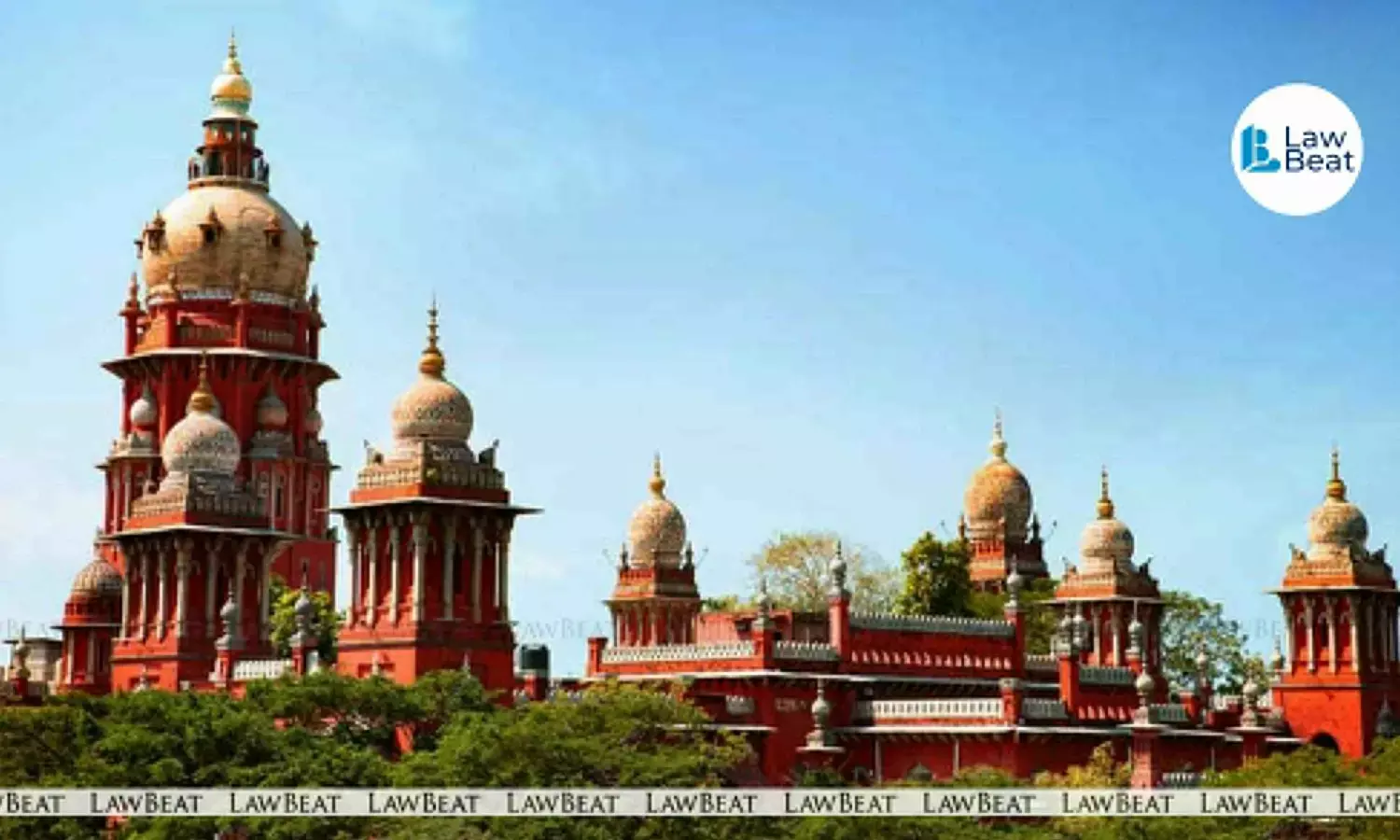
Madras High Court upholds withholding of MBBS certificates after NIA seizure.
Holding that a student cannot claim an equitable right flowing from funds allegedly raised for a banned Maoist organisation, the Madras High Court recently refused to direct a private medical college to issue MBBS completion and degree certificates.
Court was dealing with a case where the National Investigation Agency (NIA) had seized Rs 1.13 crore paid towards the student's medical education. According to the NIA, the money was traceable to extorted funds allegedly collected for the Communist Party of India (Maoist). As a result, court declined to order the release of the certificates.
A division bench of Chief Justice Sushrut Arvind Dharmadhikari and Justice G. Arul Murugan upheld a single judge's order denying relief to a Bihar-based medical graduate whose fees paid to Chettinad Academy of Research and Education were appropriated by the NIA during its investigation into an alleged Maoist funding network.
Court noted that the NIA charge sheet had arrayed the student's brother, Tarun Kumar, and paternal uncle, Pradyuman Sharma, as accused and described them as key operatives involved in raising extorted funds for the banned outfit. According to the investigation, the money transferred to the medical college towards the student's education was directly traceable to those funds.
While acknowledging that the student herself was not an accused in the case, the Bench held that she could not "assert an equitable right to benefit from the fruits of a crime" and that the college could not be compelled to release her certificates after the entire fee amount had been seized as allegedly tainted money.
The appeal challenged an April 1, 2024 order of a single judge dismissing her writ petition seeking a direction to the college and authorities to issue her Course Completion Certificate and MBBS Degree Certificate without insisting on repayment of the fees.
The student had secured admission to the MBBS course through the regular centralized admission process and successfully completed the five-year course as well as the Compulsory Rotatory Resident Internship (CRRI). During her tenure, fees amounting to Rs 1,13,70,500 were paid to the institution.
However, during investigation, the NIA allegedly found that the funds used to pay the fees were derived from money extorted on behalf of CPI (Maoist), which is a proscribed terrorist organisation under Indian law. Acting under the Unlawful Activities (Prevention) Act, the agency issued a production-cum-seizure notice and appropriated the entire amount from the college.
Following the seizure, the college treated the student's account as unpaid and withheld her certificates.
Can educational certificates be withheld for non-payment of fees?
Before the division bench, counsel for the appellant argued that educational certificates are not marketable commodities and cannot be retained by educational institutions for recovery of dues. Reliance was placed on a series of judgments holding that there can be no general lien over educational certificates.
Court agreed that the legal principle is well settled that colleges cannot retain certificates merely to recover fees or damages and must pursue appropriate legal remedies instead.
The bench observed that the principle generally applies to disputes involving unpaid fees, bond obligations or similar contractual issues between students and institutions.
Why did the court distinguish this case from earlier rulings?
Court said the present dispute stood on a fundamentally different footing because it involved allegations of terrorist funding, seizure of criminal proceeds and national security concerns.
"This case at hand presents an extraordinary and intricate factual matrix involving national security, terrorist funding, and criminal asset seizure under the Unlawful Activities (Prevention) Act, 1967," the bench observed.
Referring to the NIA charge sheet, court recorded that the student's brother and uncle had been accused of raising extorted funds for a banned terrorist outfit and that the investigation traced the fees paid to the medical college directly to those funds.
The bench held that once the NIA seized and appropriated the entire fee amount, the student's account with the institution legally reverted to an unpaid status. The college had already utilized its infrastructure, faculty and resources to impart medical education and could not be compelled to bear the financial burden after losing the entire amount.
"Forcing the institution to release the certificates when it has effectively received zero clean currency for her education would be a gross miscarriage of equity and justice," court said.
What remedy did the court leave open?
Rejecting the appeal, the bench said that if the student maintained that the funds were legitimate, she could approach the competent special court seeking release of the seized amount from the NIA.
Alternatively, it said, she remained free to deposit the requisite fees through "clean, untainted means" and claim her certificates from the institution.
Finding no error in the single judge's order, court dismissed the appeal and confirmed the earlier decision.
Case Title: Puja Kumari v. Union of India & Others
Order Date: June 17, 2026
Bench: Chief Justice Sushrut Arvind Dharmadhikari and Justice G. Arul Murugan