
No Flaw Found In Digital Answer Sheet Checking: MP High Court Dismisses Students' Petitions
MP High Court Backs Online Evaluation Process, Suggests Reforms for Greater Transparency
The Madhya Pradesh High Court has upheld the digital evaluation system adopted by Madhya Pradesh Medical Science University (MPMSU), Jabalpur, while dismissing petitions filed by two students seeking revaluation of their answer sheets after being dissatisfied with their examination results.
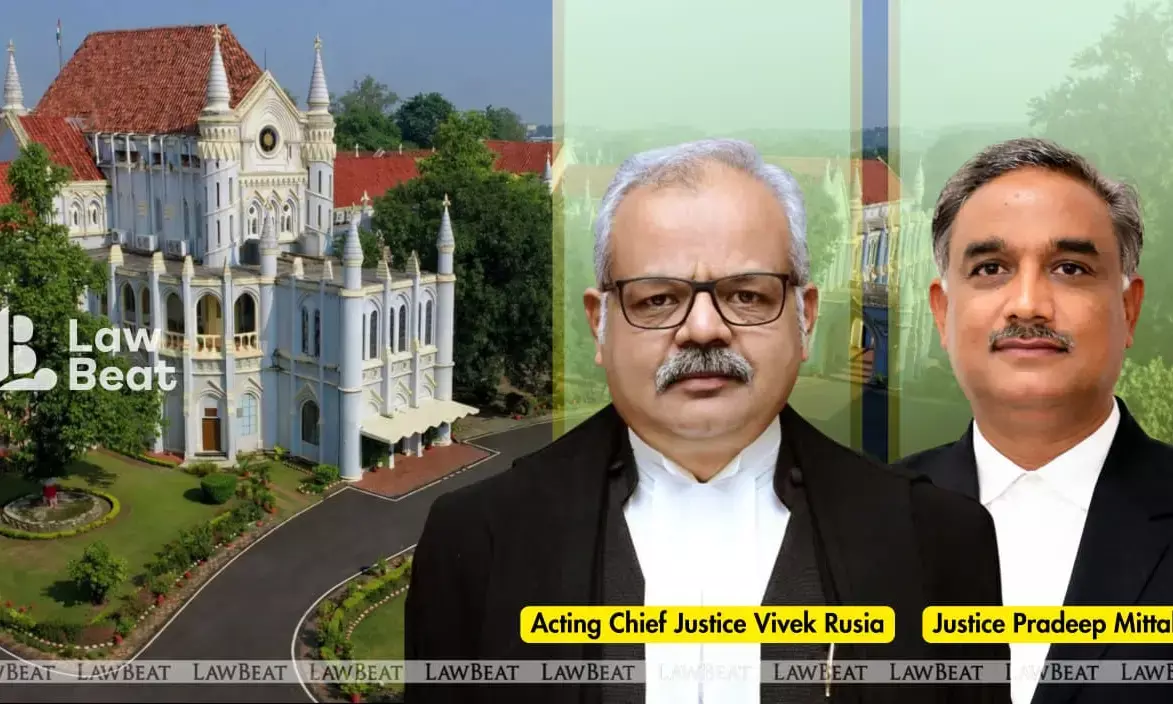
A Division Bench of Acting Chief Justice Vivek Rusia and Justice Pradeep Mittal examined the university's end-to-end digital answer-sheet evaluation process and concluded that there was no flaw in the system warranting judicial interference. At the same time, the Court suggested several improvements to enhance transparency and reduce confusion among students.
The petitions were filed by Premlata Tiwari, an M.Sc. Nursing student, and Amarjeet Bhardwaj, a BHMS student, who alleged that certain answers in their answer sheets had been marked as correct by evaluators but were not awarded corresponding marks.
Premlata Tiwari had challenged her result in the subject Psychiatric (Mental Health) Nursing of the M.Sc. Nursing Second Year Final Examination, 2025. She secured an aggregate of 458 out of 600 marks but failed in the concerned subject after obtaining only 22 marks in the theory exam. After re-verification yielded no change, she sought copies of her answer sheet under the Right to Information Act and approached the High Court claiming that several answers had been marked correct but no marks were awarded.
Similarly, Amarjeet Bhardwaj, a final-year BHMS student, contended that answers to certain questions in his examination paper were marked correct but did not fetch marks, resulting in a compartment in the subject.
During the hearing, the Court noticed that the answer sheets had been evaluated digitally rather than through conventional physical assessment. This prompted the Bench to seek a detailed explanation from the university and its technology partner, Mindlogicx Infratech Limited, regarding the functioning of the digital evaluation mechanism.
The university informed the Court that it follows a dual-valuation system under which scanned answer sheets are anonymously evaluated by two different examiners. The higher of the two scores is ultimately considered for result preparation. The institution further maintained that the process is designed to eliminate human interference and ensure fairness.
Mindlogicx Infratech Limited, represented through counsel and supported by an affidavit from its Director, explained the software architecture and evaluation workflow. The company stated that answer sheets are scanned, anonymised, digitally allocated to evaluators and assessed through a secure online platform. The system records audit trails and does not permit submission of an evaluation unless every page has been reviewed.
To independently verify the students' allegations, the Court directed the university to have the disputed answer sheets evaluated afresh by independent experts. The exercise ultimately reinforced the original assessment. In Premlata Tiwari's case, the third evaluator awarded 23 marks out of 75, virtually identical to the original score. In Amarjeet Bhardwaj's case, the independent valuation resulted in even fewer marks than those originally awarded.
Rejecting both petitions, the Court held that there was no scope for enhancement of marks and no defect in the digital evaluation system. It observed, “There is no flaw in the system of checking the answer sheets digitally through Outsourced agency. The answer sheets of both petitioners were correctly checked, and there is no scope of increase of the marks in it.”
The Bench further noted that the relief sought by the petitioners was “totally misconceived” and dismissed both writ petitions with costs of ₹5,000 each.
However, before concluding the matter, the Court recommended several improvements to the digital evaluation process. It observed that confusion arose because evaluators sometimes used symbols such as ticks and crosses inconsistently with the marks awarded. The Court strongly recommended evaluation through touch-screen devices using digital pens so that markings resemble conventional answer-sheet checking and clearly indicate why marks have been awarded or deducted.
Case Title: Premlata Tiwari v. The State of Madhya Pradesh and Others with connected matter
Date of Order: June 15, 2026
Bench: Acting Chief Justice Vivek Rusia and Justice Pradeep Mittal