
‘No Occasion’ For Judicial Officers’ Inquiry: Allahabad HC On Caste Discrimination Probe At National Law University
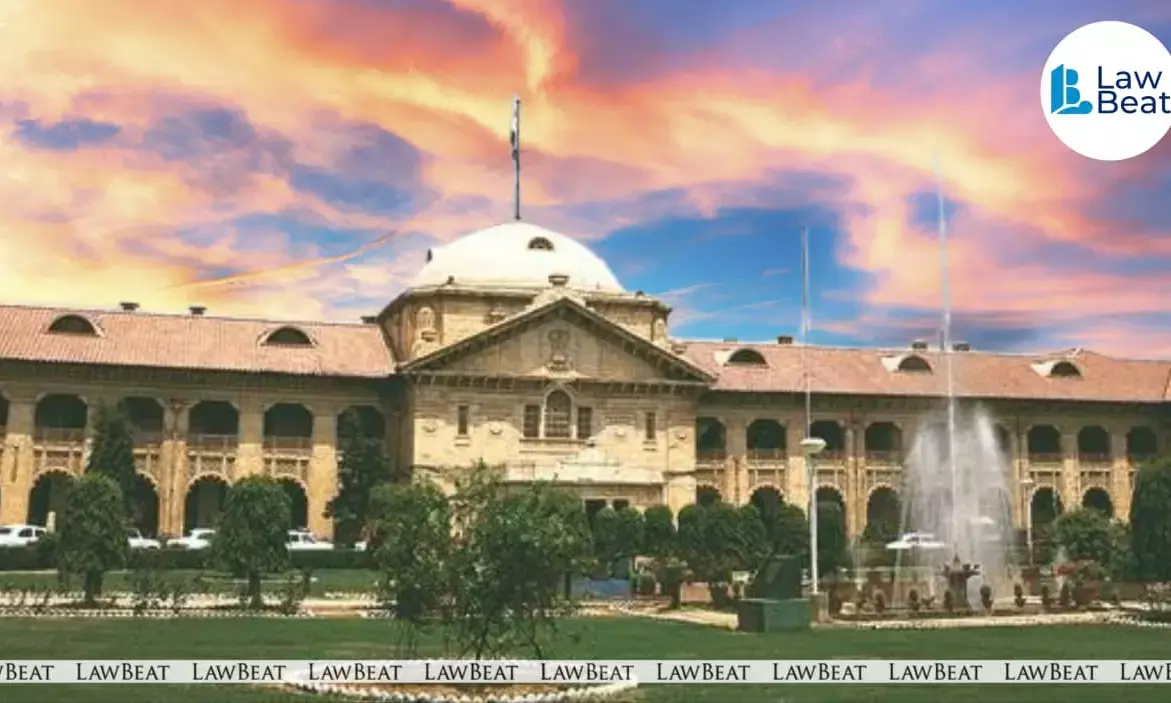
Allahabad High Court stays judicial probe into alleged caste discrimination at NLU.
The Allahabad High Court has stayed further proceedings on a petition concerning allegations of caste-based humiliation and discrimination at Dr Rajendra Prasad National Law University, Prayagraj, observing prima facie that the inquiry should have been conducted through the university's Equal Opportunity Cell rather than by Judicial Officers.
A division bench of Justices Siddhartha Varma and Kunal Ravi Singh passed the order on September 23 while hearing a special appeal against an earlier order directing two Judicial Officers from Prayagraj to inquire into allegations made by two students of the university.
Court has listed the appeal as a fresh case on September 29 and directed that if the judicial inquiry report has already been prepared, it be placed before the court in a sealed cover.
What were the allegations of caste discrimination?
The matter arose from a petition filed by a PhD research scholar and a fifth-semester BA LL.B. student. The student had alleged that he was subjected to stricter evaluation because of his caste and had sought an independent review of his answer scripts.
He had also alleged caste-related remarks by a faculty member who was serving as Head of the Department of Law and Warden of the Boys' Hostel. The allegations included a remark questioning why he needed reservation despite coming from a "good family". The student had sought confidentiality, apprehending that raising the allegations could affect his academic environment and future opportunities.
In its September 16 order, the single judge had made it clear that the allegations had not been established and that the order should not be treated as a finding that they were true. Court said the allegations were serious and therefore required examination by an impartial agency.
The single judge consequently directed the university Vice-Chancellor to constitute an independent committee to re-evaluate the student's answer sheets. The committee was to exclude the original evaluator, while the concerned faculty member was to have no role in its constitution or functioning. The student's and original evaluator's identities were also to be masked from the committee, which was not to be told the marks originally awarded.
Separately, two Judicial Officers were directed to inquire into whether SC/ST students had been subjected to caste-based humiliation or discrimination by the concerned faculty member or any other university employee, and whether complaints had been dealt with in accordance with applicable regulations. They were also empowered to call for university records and record statements.
Why has the high court stayed the judicial inquiry?
The special appeal was filed by the university functionary against the direction for an inquiry by Judicial Officers.
Before the division bench, it was argued that the university already had an Equal Opportunity Cell and that the students themselves had sought an inquiry through that mechanism, provided the concerned functionary was excluded because of the alleged conflict of interest. The argument was that there was therefore no need to hand over the inquiry to outsiders.
The university, however, submitted that it had agreed to the judicial-officer inquiry during the earlier hearing in order to ensure fairness and transparency. The students' counsel also told the bench that while they had originally sought an inquiry under the Equal Opportunity Cell Regulations, they had not opposed the proposal for a judicial-officer inquiry after the university agreed to it.
The division bench said it was prima facie of the view that there was "no occasion" for an inquiry by Judicial Officers when an Equal Opportunity Cell was already available in the university.
"Even if the allegations are of a serious nature," the bench said, the university's power to examine them through an appropriately constituted Equal Opportunity Cell "ought not to have been taken away".
The bench observed that dealing with such situations fell within the university's domain, particularly as it was responsible for looking into the welfare of its students and dealing with situations as they arose.
What happens to the inquiry report?
The division bench noted that the judicial inquiry report was due to be submitted on September 24. Since the court was prima facie of the view that the judicial-officer inquiry should not have been ordered in the first place, it stayed further proceedings in the underlying writ petition until the next hearing.
However, rather than directing that any report already prepared be disregarded, the bench ordered that if the report had been prepared, it should be placed before the court in a sealed cover for consideration on September 29.
The bench also deferred consideration of a separate request seeking a stay of other directions contained in the earlier order, saying that the issue could be examined at the next hearing. The case has accordingly been listed for September 29.
Case Title: Dr Deepak Sharma v. State of U.P. and 6 Others
Order Date: September 23, 2026
Bench: Justice Siddhartha Varma and Justice Kunal Ravi Singh