
“No One Is Stopping You From Praying Five Times A Day”: Bombay HC Refuses Permission To Offer Namaz At Mumbai Airport
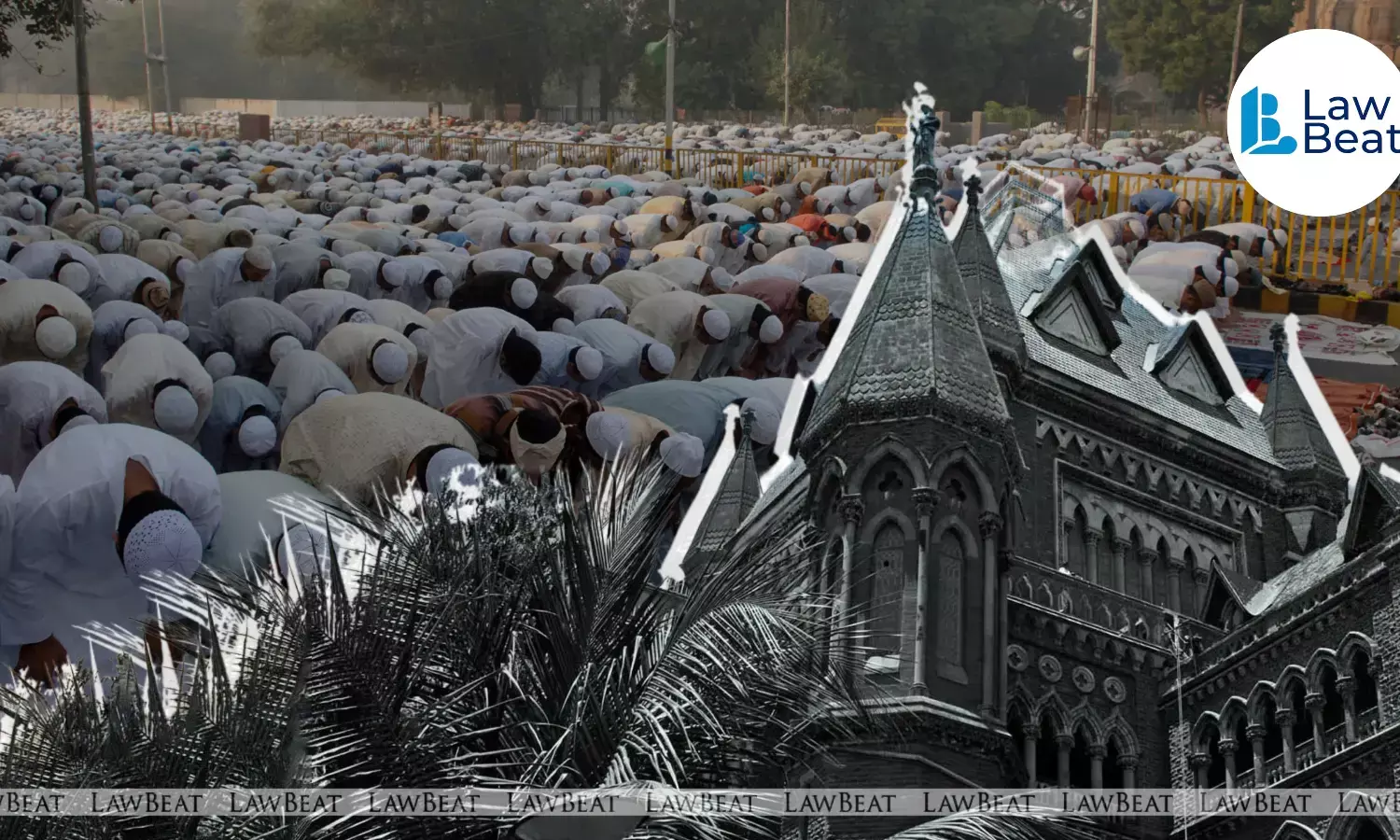
Bombay High Court declines plea seeking permission to offer Namaz at Mumbai’s Chhatrapati Shivaji Maharaj International Airport, citing security concerns.
The Bombay High Court on Thursday declined to permit Muslim drivers and passengers to offer Namaz within the premises of the Chhatrapati Shivaji Maharaj International Airport (CSMIA), including during the holy month of Ramadan, observing that security considerations at an international airport cannot be compromised.
The Court emphasised that while individuals are free to practise their religion, such rights cannot override security concerns in sensitive locations like airports where the safety of passengers and visitors is paramount.
A division bench comprising Justice B.P. Colabawalla and Justice Firdosh Pooniwalla refused to grant the relief sought by the petitioners after considering a report submitted by the Maharashtra Government highlighting security concerns.
The bench held that in view of the threat perception flagged by multiple security agencies and airport authorities, it was not inclined to allow the petitioners to offer Namaz at the airport premises, even for a limited duration during Ramadan.
The petitions were filed by members of the Auto-Taxi, Ola-Uber Men’s Union who sought permission for Muslim drivers and passengers to offer Namaz at a shed located near the airport premises.
The petitioners contended that the space had earlier been used by Muslim drivers to offer prayers and that they should be allowed to continue doing so, particularly during Ramadan when prayers assume special religious significance.
During the hearing, the Maharashtra Government submitted a report through Additional Government Pleader Jyoti Chavan stating that multiple authorities had examined the issue before arriving at the decision to deny permission.
The report indicated that seven alternate sites were examined by officials including the Chief Security Officer of the airport, the local police, and the Anti-Terrorism Cell. However, according to the report, none of the proposed sites were considered feasible because of security concerns associated with the movement of passengers, vehicles and VVIPs in and around the airport.
"The report specifically says that the authorities have explored seven alternate sites but none of them were feasible in view of the security reasons. This report is prepared and signed by various authorities right from the Chief Security Officer, the Anti-Terorrism Cell head, the Senior Inspector, the Inspector and so on. Still you want to say all these officers are targeting you? For what?" Justice Colabawalla said.
The State further emphasised that the location where the petitioners sought permission to offer Namaz was situated near entry and exit points frequently used by passengers and dignitaries. Allowing congregational prayers at such a sensitive site, the State argued, could create vulnerabilities from a security standpoint.
After perusing the report and hearing the parties, the bench observed that airports are high-security zones where the safety of every passenger must remain the foremost concern.
The court noted that people from all religions travel through the airport and that security arrangements cannot be altered in a manner that could potentially affect passenger safety.
The bench also rejected the petitioners argument that they were being unfairly targeted or singled out.
Referring to the report submitted by the authorities, it was observed that several officials across different agencies had independently examined the matter and arrived at the conclusion that permitting prayers at the site could pose security risks.
During the proceedings, counsel appearing for one of the petitioners, Advocate Satish Talekar, pointed out that there were two temples dedicated to Lord Hanuman within the airport premises. He argued that these structures were also allegedly unauthorised and that the petitioners were therefore being discriminated against if they were not allowed to offer prayers at the shed.
Rejecting this plea, Justice Colabawalla added, "No one is stopping you from praying five times a day... You can just walk in some Masjid and offer Namaz there; No one is going to stop you there..But here at airport premises when the authorities are saying that there are threat issues and security issues, we cannot allow you here.. If we allow you here today, tomorrow you will say you want to offer Namaz in the middle of some flyover, can we permit you then? No that cannot be done."
The bench also took note of the fact that the airport is currently undergoing redevelopment.
In this context, the court observed that permitting gatherings in areas affected by ongoing construction could also create safety hazards.
They remarked that if an untoward incident were to occur due to such activities, the responsibility for the consequences would become a serious concern.
At the same time, the Court indicated that the petitioners could make a representation to the appropriate authorities requesting the allocation of a suitable space at the airport once redevelopment work is completed.
The bench noted that the authorities are best equipped to assess security considerations and determine whether any designated area could be provided in future.
During the hearing, the State also raised concerns that permitting such requests could create similar demands from followers of other religions seeking to conduct religious practices in public spaces.
The State argued that allowing such permissions in sensitive locations could open a “pandora’s box” of similar claims, thereby complicating security and administrative arrangements.
The bench ultimately held that courts must exercise caution in matters involving security assessments made by specialised agencies. It observed that passing directions from the bench without considering the practical implications could have significant consequences outside the courtroom.
In light of the security concerns highlighted by the State and airport authorities, the Court declined to grant the relief sought by the petitioners and refused to permit the offering of Namaz at the airport premises.
Case Title: Auto-Taxi, Ola-Uber Men’s Union v. Adani Airport Holdings Limited
Bench: Justice B.P. Colabawalla and Justice Firdosh Pooniwalla
Date of Judgment: 05.03.2026