
No UPI Fees Under ₹2,000: Govt Bars Charges On UPI, RuPay Debit Cards
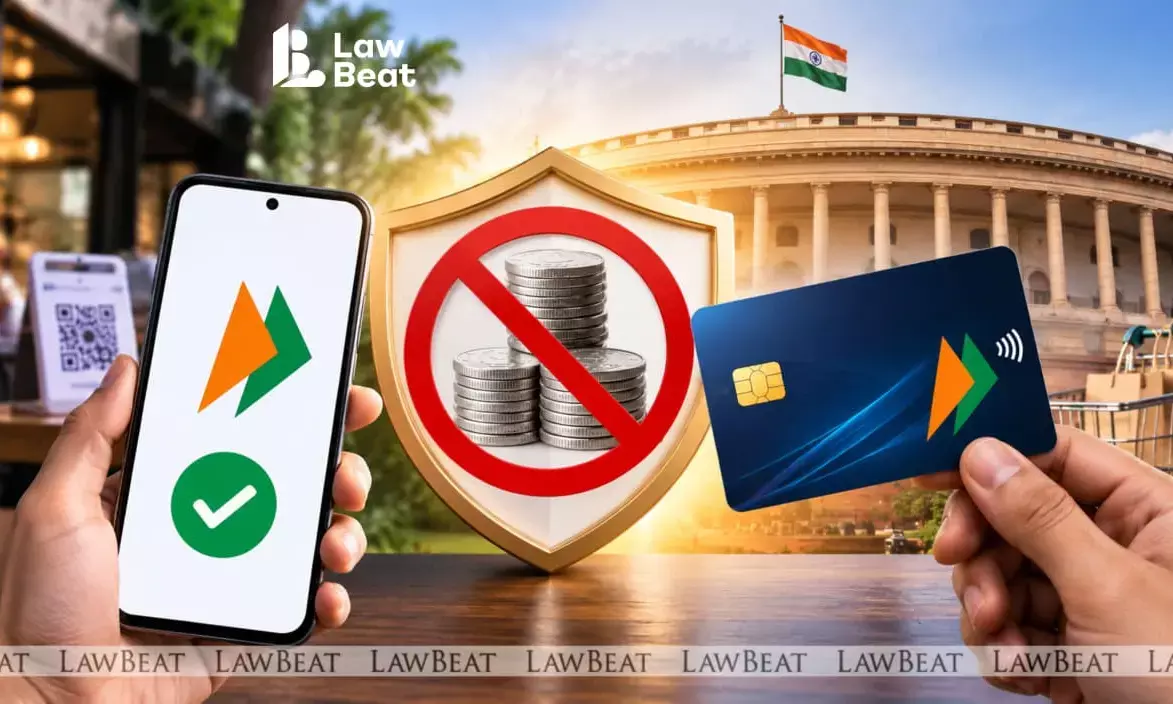
Government Bars Charges on UPI Payments Up to Rs 2,000, RuPay Debit Cards
The Central Government has now formally barred banks and payment system providers from charging users for UPI transactions up to Rs 2,000 and for payments made through RuPay-powered debit cards, while leaving room for a separate fee structure on higher-value merchant transactions in the future.
A notification issued by the Finance Ministry specifies these two categories as protected electronic payment modes on which no bank or system provider can impose, directly or indirectly, any charge on a person making or receiving a payment, extending the same protection to RuPay debit card payments as well. The notification effectively draws a line: transactions within the Rs 2,000 threshold stay free, while anything above it is no longer automatically shielded by blanket statutory protection.
The development follows Parliament's passage of the Taxation and Other Laws (Amendment) Bill, 2026, in August, which empowered the government to specify which electronic payment modes would continue to enjoy protection from charges. When the Bill was introduced, it triggered apprehension that UPI, long marketed as a free service, might eventually come with a price tag. Finance Minister Nirmala Sitharaman moved to calm those fears at the time, stating that the amendment was "only an enabling provision" and assuring that ordinary consumers "would not have to pay UPI charges."
The government had also indicated that any Merchant Discount Rate, if it is eventually introduced, would apply only to a limited category of merchant transactions above a specified value threshold, and would be levied on merchants rather than on consumers making the payments. An MDR, in simple terms, is the fee a bank or payment service provider charges a merchant for processing a digital payment.
Importantly, this notification does not mean that every UPI transaction above Rs 2,000 will now attract a charge. What it does is fix Rs 2,000 as the ceiling below which transactions remain untouched. Any MDR for higher-value merchant payments would need to be introduced through a separate policy framework, and the government has reiterated that person-to-person UPI transfers, regardless of the category, will continue to remain free of cost.
For banks and payment service providers, an MDR on select high-value merchant transactions could open a fresh revenue stream as UPI volumes climb steadily. For ordinary users, the assurance remains that small-value digital payments, the kind most Indians use daily for groceries, transport, or utility bills, will not become chargeable.
The scale involved explains why any tinkering with UPI draws close attention. Operated by the National Payments Corporation of India, UPI is recognised as the world's largest retail fast-payment system by transaction volume, per a 2025 International Monetary Fund report. In August alone, the platform processed 24.51 billion transactions worth Rs 29.82 trillion, with Google Pay and PhonePe together accounting for roughly three-fourths of that monthly volume.
While the notification settles the question of what happens up to Rs 2,000, it leaves open the more consequential question of what comes next for larger merchant transactions.
The distinction between person-to-person transfers and merchant payments is likely to matter going forward. Everyday UPI usage, sending money to a friend, paying rent, splitting a bill, falls squarely within person-to-person transfers, which the government has repeatedly said will stay free regardless of value.