
No Writ Relief In Contract Dispute With Alternate Remedy: Madhya Pradesh High Court
MP High Court Refuses to Entertain Plea Against Contract Termination, Cites Alternative Remedy
The Madhya Pradesh High Court has refused to entertain a writ petition filed by M/s Prabha Exim Pvt. Ltd., holding that when a contract provides for a clear dispute resolution mechanism, parties must ordinarily exhaust such alternative remedies before invoking writ jurisdiction under Article 226 of the Constitution.
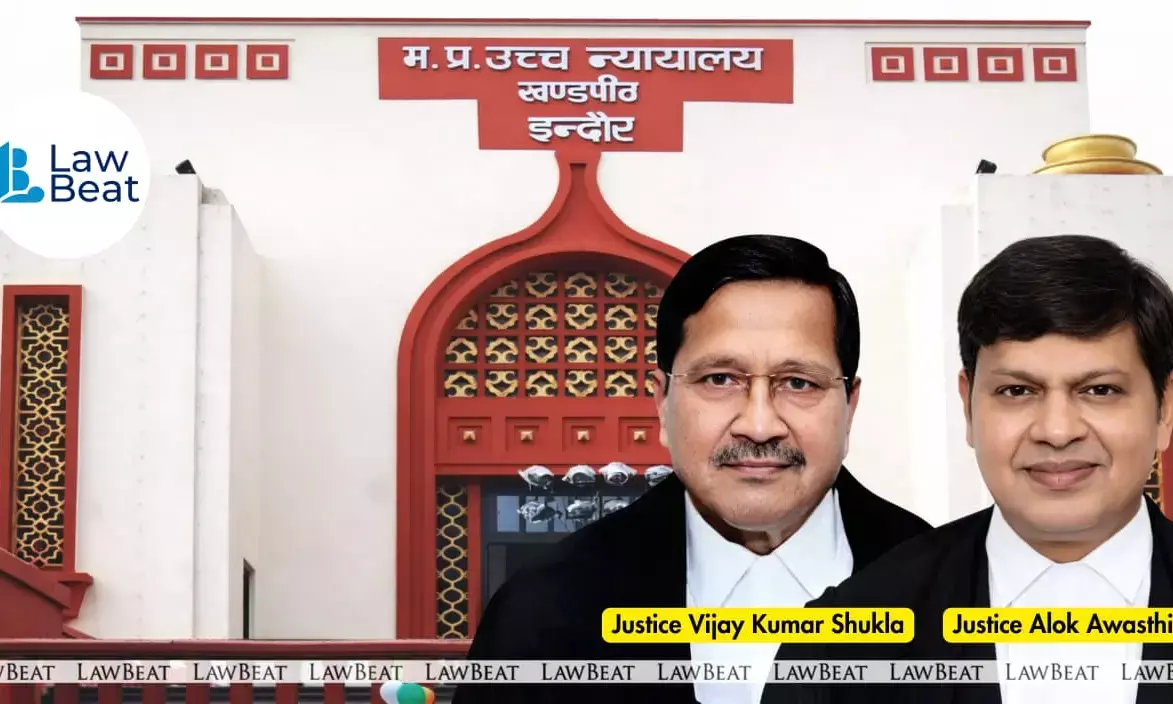
The division bench comprising Justice Vijay Kumar Shukla and Justice Alok Awasthi dismissed the petition, noting that the dispute arose out of contractual obligations and involved contested questions of fact that could not be adjudicated in writ proceedings.
The petitioner company had approached the court challenging an order dated March 17, 2026, by which its contract was rescinded by the respondent authorities. Appearing for the petitioner, Senior Counsel Ashok Kumar Garg, along with Advocate Bhavya Garg, argued that the impugned action was arbitrary and violative of principles of natural justice. It was contended that the reply submitted by the petitioner to the show-cause notice had not been duly considered and that the termination of the contract was unjustified in law.
On the other hand, counsel for the State, Pradyumna Kibe, raised a preliminary objection regarding the maintainability of the writ petition. It was argued that the contract itself contained a detailed dispute resolution clause, which provided an efficacious alternative remedy. The State maintained that the competent authority had passed the order only after issuing a show-cause notice and considering the response, thereby complying with due process.
The court examined Clause 12 of the contract, which lays down a structured dispute resolution system. As per the clause, disputes are first required to be raised before the competent authority within a stipulated time frame, followed by an appellate mechanism, and eventually a reference to the Madhya Pradesh Arbitration Tribunal under the Madhya Pradesh Madhyastham Adhikaran Adhiniyam, 1983. The bench observed that such a mechanism constitutes a complete code for redressal of contractual disputes between the parties.
Addressing the petitioner’s reliance on the Supreme Court judgment in Unitech Limited v. Telangana State Industrial Infrastructure Corporation, the court clarified that while there is no absolute bar on the exercise of writ jurisdiction even in contractual matters, such jurisdiction is discretionary and must be exercised cautiously. The bench held that the facts of the present case did not warrant deviation from the general rule of relegating parties to alternative remedies.
The court further noted that the authority passing the impugned order was competent and that the order had been issued after following due procedure, including issuance of a show-cause notice and consideration of the petitioner’s reply. As regards the petitioner’s contention that relevant documents and site access were not provided in time, the court found that these were disputed questions of fact that could not be effectively adjudicated in writ proceedings.
In a significant observation, the Bench stated that it was “not inclined to interfere in a contractual matter where remedy of dispute resolution system is provided,” emphasizing judicial restraint in such cases. The court reiterated that writ jurisdiction is not intended to supplant contractual remedies, particularly when parties have consciously agreed to a specific mechanism for dispute resolution.
Consequently, the petition was dismissed on the ground of availability of an alternative efficacious remedy. However, the court clarified that any observations made in the order would not prejudice the petitioner’s case if it chooses to avail the remedies provided under the contract.
Case Title: M/S. Prabha Exim Pvt. Ltd. Through its Director Akash v. The State of Madhya Pradesh and Others
Date of Order: March 23, 2026
Bench: Justice Vijay Kumar Shukla and Justice Alok Awasthi