
‘Not Our Domain’: Allahabad HC Says No General Mandamus to Stop Alleged Insults to Hindu Deities, Texts
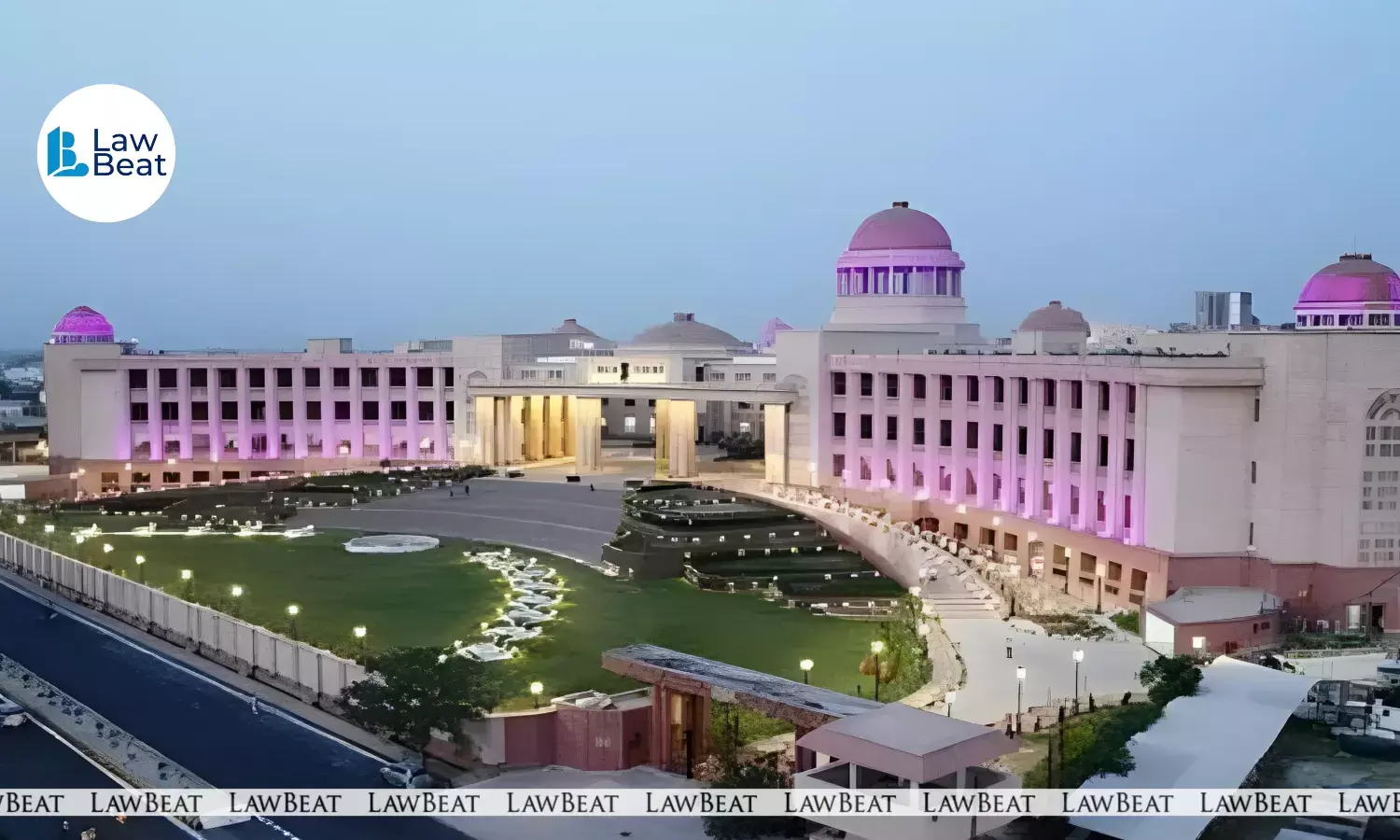
Allahabad High Court bench of Justice Rajan Roy and Justice Indrajeet Shukla refuses broad direction to protect Hindu religious texts against desecration
The Allahabad High Court, Lucknow Bench, on December 4, 2025 disposed of a public interest litigation seeking sweeping directions to the Union and State Governments to prevent alleged denigration and desecration of Hindu deities and religious scriptures, holding that the prayers amounted to a request for a general mandamus which the court cannot issue.
The bench of Justice Rajan Roy and Justice Indrajeet Shukla said the petitioners had not challenged any specific incident or action and had instead sought broad, omnibus directions requiring the State to prevent future occurrences of burning or insulting sacred Hindu texts and to safeguard the honour of deities. Since no individual wrongdoer or private party was named, court noted that the petition lacked the concreteness needed for judicial intervention in the form of enforceable writs.
"We are of the opinion that implementation of the existing laws is in the domain of the executive and making of new laws or amending the existing laws so as to make them effective lies within the domain of the legislature," court said.
The PIL was filed by Hindu Front for Justice through its national convenor Sharad Chandra Srivastava and others. They asked the court to command government authorities to take “effective and forceful steps” to prevent the denigration, dishonour and disfigurement of Hindu deities and to ensure that incidents such as the burning or insulting of religious books including the Ramcharitmanas, Manusmriti, Bhagavad Gita and Valmiki Ramayana do not recur.
The petitioners also sought directions requiring the State to review the existing penal provisions dealing with religious insult, namely Sections 295, 295A, 298, 153A, 153B and 505 of the IPC (corresponding to Sections 196, 298, 299, 300 and 302 of the Bharatiya Nyaya Sanhita).
Another prayer sought a direction to the Government to comply with Article 7 of the UN Declaration on the Elimination of All Forms of Intolerance and of Discrimination Based on Religion or Belief, to which India is a signatory.
Court recorded that petitioners contended that although statutes exist to address such acts, they were ineffective in practice. However, after examining the petition’s pleadings and annexures, the bench noted that multiple examples of alleged desecration cited by the petitioners had already been made the subject of separate writ petitions filed earlier, many of which were pending or disposed of. The present PIL, court observed, did not pertain to any incident-specific grievance requiring judicial intervention.
Therefore, since the petitioners’ reliefs sought broad preventive measures without tying them to an identifiable dispute, court held that it would not be appropriate to entertain the prayers within the contours of PIL jurisdiction.
Disposing of the petition, the bench granted liberty to the petitioners to approach the concerned Ministry or Department of the Union or State Government that may have a role in addressing their grievances. The authorities, it said, may consider such representation and take appropriate action in accordance with law.
Case Title: Hindu Front For Justice Thru. National Convenor Sharad Chandra Srivastava And 8 Others Vs. Union Of India, Thru. Secy. Ministry Of Home Affairs, Govt Of India ,New Delh,i And 5 Others
Order Date: December 4, 2025
Bench: Justice Rajan Roy and Justice Indrajeet Shukla