
Parents’ Income Decisive, Husband’s Earnings Irrelevant In OBC Status: Madhya Pradesh High Court
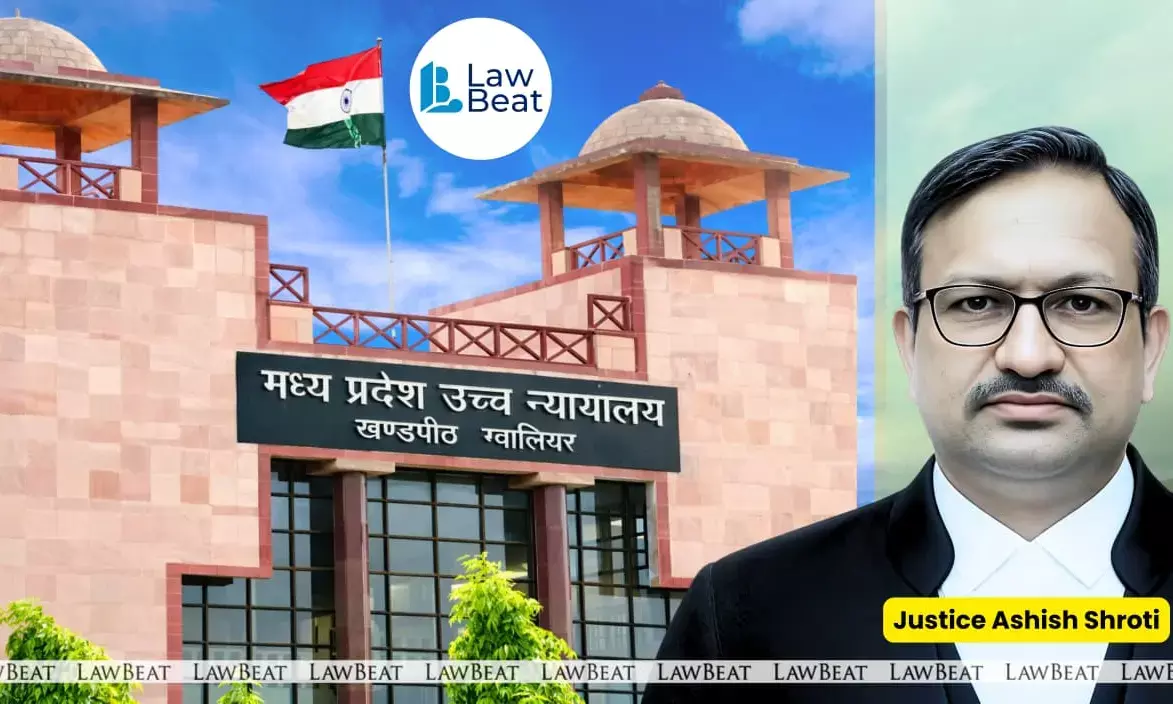
OBC Creamy Layer Depends on Parents, Not Spouse Income: MP High Court
The Madhya Pradesh High Court has clarified that the determination of ‘creamy layer’ status for Other Backward Class (OBC) candidates must rest primarily on the income and social position of their parents, and not on the earnings or status of a spouse, while dismissing a petition challenging the appointment of a law faculty member through the Public Service Commission.
In doing so, the Court rejected a claim for retrospective seniority made by a petitioner who had alleged that another candidate was wrongly appointed under the OBC (women) category despite belonging to the creamy layer.
The bench of Justice Ashish Shroti, in its order dated April 2, 2026, held that the challenge was legally untenable and did not warrant interference.
The dispute arose from a 2017 recruitment process for Assistant Professor (Law) posts, where 158 vacancies were notified, including 19 reserved for OBC candidates and 6 specifically for OBC women. The petitioner and the selected candidate both applied under this category. While the selected candidate scored marginally higher and secured a place in the merit list, the petitioner was placed just below her and initially remained on the waiting list.
Although the petitioner was eventually appointed in 2023 during the pendency of the case, the core grievance shifted to claiming seniority from 2021, the date on which the selected candidate had been appointed. The petitioner argued that the selected candidate ought to have been excluded from the OBC category as her family income exceeded the prescribed creamy layer threshold.
It was contended that the selected candidate’s husband, a Civil Judge, and her own earnings as a guest faculty member pushed the family income beyond the permissible limit, thereby disentitling her from reservation benefits. However, the Court found this argument to be fundamentally flawed in law.
Relying on established constitutional principles and government circulars, the Court underscored that “the income of his parents alone is required to be seen” for determining creamy layer status, and that “the income of his husband… and/or his own income is not relevant for the said purpose.”
The Court further noted that the only exception where a spouse’s income may become relevant is when the spouse holds a Class-I post. In the present case, the husband of the selected candidate, though a Civil Judge Class-I, was clarified to be holding a Class-II post, thereby excluding even this limited consideration.
The judgment extensively traced the evolution and purpose of the creamy layer doctrine, reiterating that its objective is to prevent socially advanced sections within OBCs from cornering reservation benefits. Quoting landmark Supreme Court rulings, the Court observed that “non-exclusion thereof would amount to discrimination and violation of Articles 14 & 16,” emphasizing that equality requires differential treatment of unequals.
Importantly, the Court also clarified that financial criteria alone are not determinative and that the assessment of creamy layer status is “basically to be determined based upon the social status of the candidate.”
On facts, the Court accepted the respondent’s submission that her parents did not fall within any exclusionary category. Her father had served as a Class-III employee and her mother was a homemaker, thereby placing her squarely outside the creamy layer as per applicable guidelines.
Given these findings, the Court held that the appointment of the selected candidate was lawful and did not suffer from any infirmity. Consequently, the petitioner’s claim for retrospective appointment and seniority was rejected.
“The objection raised by petitioner is not acceptable,” the Court concluded, adding that the respondent “was entitled to and has rightly been given the benefit of her status as an OBC candidate.”
Dismissing the writ petition, the Court reaffirmed that reservation jurisprudence must remain anchored in its core objective ensuring that benefits reach genuinely disadvantaged sections, without being diluted by misplaced interpretations of income criteria.
Case Title: Smt. Sunita Yadav v. The State of Madhya Pradesh and others
Date of Order: April 2, 2026
Bench: Justice Ashish Shroti