
PM Modi Degree | No Public Interest In Seeking PM's Degree When Qualification Has No Bearing On Election: Gujarat HC
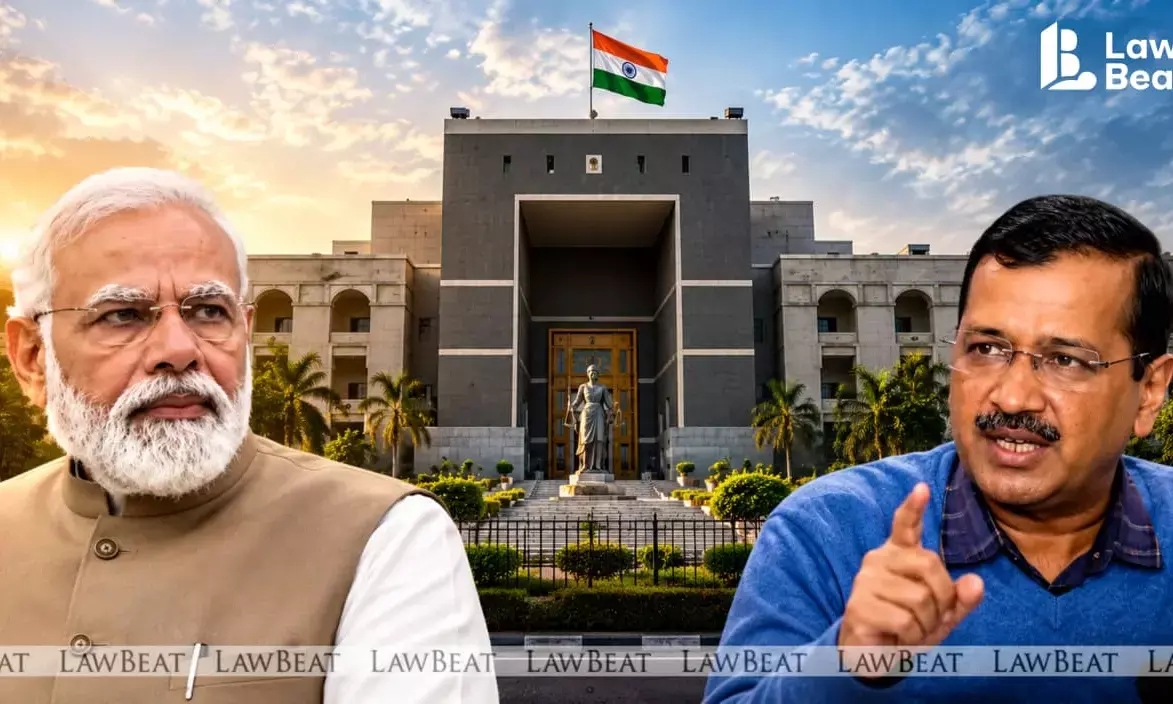
The Gujarat High Court has held that there is "no public interest much less larger public interest" in seeking information about the educational qualification of the Prime Minister of India when such qualification has no bearing on his election to the constitutional post.
A Division Bench of Chief Justice Sunita Agarwal and Justice D.N. Ray made the observation while dismissing AAP convenor Arvind Kejriwal's appeal against the March 31, 2023 judgment of a Single Judge, which had quashed a 2016 direction of the Central Information Commission (CIC) requiring Gujarat University to provide information concerning Prime Minister Narendra Modi's educational degree. The Bench also declined to interfere with the ₹25,000 cost imposed on Kejriwal by the Single Judge.
The Division Bench held that educational qualification documents, including degrees and marksheets, constitute "personal information" and are also information held by universities and examining bodies in a "fiduciary capacity".
Such information is therefore protected under Sections 8(1)(j) and 8(1)(e) of the Right to Information Act, 2005, subject to the statutory requirement of larger public interest where applicable.
The Court specifically rejected the proposition that the fact that the information concerns the Prime Minister automatically brings it within the ambit of "public interest" or "larger public interest".
"No public interest much less larger public interest would require seeking of information of the educational qualification of the Prime Minister of India, who is an elected representative of the people and when his educational qualification has no bearing on his election to the Constitutional post" Court held.
The Court further noted that the CIC had not recorded any reason explaining why disclosure of the information was necessary in terms of the exemptions under Section 8(1)(e) and 8(1)(j) of the RTI Act.
'Public Curiosity Cannot Be Equated With Public Interest'
The Bench also considered the CIC's reasoning that there was considerable public curiosity about the Prime Minister's educational qualifications.
The High Court noted that "curiosity cannot be equated with public interest" and that merely because members of the public may be interested in particular information does not mean that disclosure of that information satisfies the public-interest test under the RTI Act.
The Court referred to the distinction between something being "of interest to the public" and something being "in the public interest". It noted that the justification advanced before the Single Judge, that information concerning a candidate contesting elections should be available for public scrutiny, did not establish the requisite public interest.
The Bench further observed that the mere fact that information concerning the Prime Minister's degree was already available in the public domain did not determine the question of disclosure under the RTI Act. What was relevant was whether the information fell within the statutory exemptions and whether the requirements for overriding those exemptions had been satisfied.
Educational Qualification Has No Bearing On Election To PM's Post
A significant part of the judgment concerned the absence of any educational qualification requirement for occupying elected constitutional offices.
The Court noted that there is no prescribed educational qualification for contesting electoral positions under law. It consequently found no public-interest basis for compelling disclosure of the Prime Minister's educational qualification when the qualification itself has no bearing on his election to the constitutional post.
The Bench also considered the constitutional principle behind the absence of degree-based qualifications for elected office. The judgment referred to the Constituent Assembly debates concerning universal adult franchise and the decision not to restrict democratic participation on the basis of literacy or educational qualifications.
The Court distinguished this from a situation where an educational qualification is legally prescribed for a particular office. It noted that where a qualification is prescribed and its existence is in doubt, disclosure could stand on a different footing because it could then have a direct bearing on eligibility.
Degree Records Protected Under RTI Act
The Division Bench examined the scope of Sections 8(1)(e) and 8(1)(j) of the RTI Act.
It held that educational documents such as degrees and marksheets are personal information of an individual. Universities and examining bodies hold such records in a fiduciary capacity on behalf of their students. The Court relied upon the Supreme Court's decisions in K.S. Puttaswamy and Subhash Chandra Agarwal while considering the relationship between the right to privacy and the right to information.
The Court observed that the protection accorded to personal information under the RTI framework is connected with the constitutional right to privacy under Article 21. It said the public-interest test requires consideration of the purpose of the right to information, the right to privacy and the possible consequences of an invasion of personal information.
The Bench ultimately held that the information directed to be disclosed by the CIC was exempt personal information and that Gujarat University could not be compelled to disclose it.
CIC Could Not Treat Kejriwal's Letter As RTI Application
The High Court also found a separate procedural defect in the CIC proceedings. The case originated from a second appeal concerning information relating to Kejriwal's Electoral Photo Identity Card. During those proceedings, Kejriwal submitted a written response referring to the issue of information concerning Modi's educational qualifications.
The CIC treated that response as an RTI application made by Kejriwal in his capacity as a citizen and proceeded to direct the Delhi University and Gujarat University to search for and provide information concerning Modi's degrees.
The Division Bench held that this approach was contrary to the procedure prescribed by Section 6(1) of the RTI Act.
Under Section 6(1), a person seeking information is required to make an application to the concerned Public Information Officer, in the prescribed manner, specifying the particulars of the information sought and accompanying the application with the prescribed fee.
The Court therefore held that there was no question of the CIC entertaining such a request at the second appellate stage in a proceeding in which the concerned university was not even a party.
Kejriwal Had Challenged ₹25,000 Cost
Before the Division Bench, Kejriwal's counsel, Senior Advocate Abhishek Manu Singhvi, initially confined the appeal to the observations made by the Single Judge regarding Kejriwal's conduct and the consequential ₹25,000 cost.
It was argued that Kejriwal had not filed an RTI application seeking Modi's degree and that the CIC itself had taken the matter up "suo motu" on the basis of his letter. Counsel also disputed the Single Judge's observation that Kejriwal had persisted with the matter despite the degree being available on the university's website.
The Court, however, found no merit in the challenge to the observations or the cost imposed by the Single Judge.
The University, represented by Solicitor General Tushar Mehta, had urged the Court to examine the merits of the RTI issue as well. The Division Bench accordingly considered the validity of the CIC's 2016 order and rendered its findings on the disclosure issue.
Background: How The Dispute Began
The controversy dates back to April 2016, when Kejriwal, then Delhi Chief Minister, wrote to the CIC during proceedings concerning information about his own Electoral Photo Identity Card.
In his response, he raised the issue of information relating to Modi's educational qualifications and questioned why information concerning the Prime Minister's degree was not being disclosed. The CIC subsequently treated his response as an RTI application and directed Delhi University and Gujarat University to search for and provide information concerning Modi's degrees.
Gujarat University challenged the CIC's direction before the Gujarat High Court.
On March 31, 2023, the Single Judge allowed the University's petition, quashed the CIC's order and imposed ₹25,000 in costs on Kejriwal.
Kejriwal subsequently sought review of that judgment and later approached the Division Bench.
In the present appeal, the Division Bench of Chief Justice Sunita Agarwal and Justice D.N. Ray has now dismissed the challenge and confirmed the Single Judge's judgment. The operative portion of the judgment records that the Bench found no error warranting interference and dismissed the appeal, with no further order as to costs.