
“Possibility Of Reform Cannot Be Ruled Out”: Gujarat HC Upholds Life Sentence In Minor Rape-Murder Case
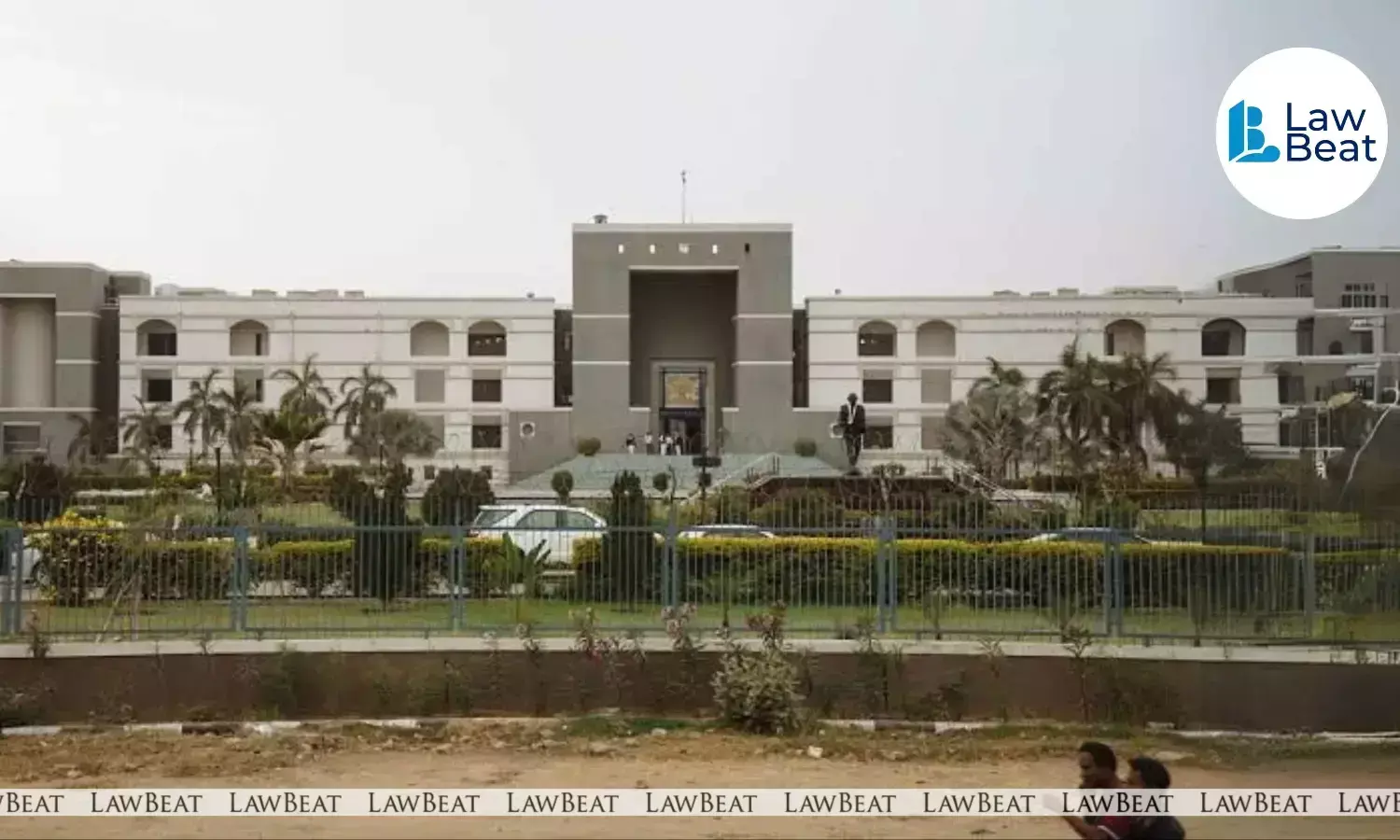
Gujarat HC Dismisses Appeal In Minor Rape-Murder Case, Says Convict Not Beyond Reform
The Gujarat High Court has upheld the conviction and life sentence of a man for the rape and murder of a 13 year old girl in Dahod district, observing that although the offence was extremely serious and involved a helpless minor, the circumstances of the case did not justify the imposition of the death penalty.
The Court held that life imprisonment was an appropriate punishment as it balanced the objectives of punishment, deterrence and the possibility of reform, particularly considering that the convict was around 27 years old at the time of the offence and had no prior criminal record.
A division bench of Justice Ilesh J. Vora and Justice R.T. Vachhani dismissed a criminal appeal filed by the convict challenging the judgment of the Dahod Sessions Court which had convicted him under Sections 376 and 302 of the Indian Penal Code.
The Court affirmed the trial court’s decision, holding that the prosecution had successfully established an unbroken chain of circumstantial evidence proving the guilt of the accused beyond reasonable doubt and that the sentence imposed was appropriate in the facts of the case.
The case arose from an incident that took place on 08.04.2013, in village Uchvania in Dahod district.
On the night of the incident, a marriage ceremony was being held at the residence of a villager where the victim, a minor girl aged about 13 years, had gone to attend a traditional “Vana Ceremony” conducted as part of wedding festivities in the region.
According to the prosecution, the ceremony concluded around 12:30 a.m., after which the accused took the minor girl with him to a nearby field. There, he forcibly committed sexual intercourse with her without her consent. When the victim shouted for help, the accused smothered her to silence her, resulting in her death.
The next morning, the victim’s body was discovered in a nearby field with visible injuries and signs of sexual assault.
The victim’s father lodged a First Information Report at Dahod Rural Police Station the same day, following which the police initiated investigation.
The investigating authorities prepared the inquest panchnama, conducted a scene of offence panchnama, seized relevant articles including blood-stained soil and clothing, and sent the body for post-mortem examination.
Several biological samples including vaginal swabs, blood samples and clothing were also collected and forwarded to the Forensic Science Laboratory.
Upon completion of investigation, a chargesheet was filed against the accused and the matter was committed to the Sessions Court for trial.
During the trial, the prosecution examined multiple witnesses including the complainant, medical officers, forensic experts and witnesses present at the marriage ceremony.
The prosecution case relied primarily on circumstantial evidence, including the testimony of witnesses who had seen the accused taking the victim away shortly before her death.
Witnesses who were present at the marriage ceremony stated that the accused had caught hold of the victim’s hand and forcibly taken her away from the house around midnight. The next day, her body was discovered in a nearby agricultural field.
The High Court noted that this “last-seen” evidence constituted a crucial link in the chain of circumstances.
The Court found that the testimony of these witnesses remained consistent even during cross-examination and there was no reason to doubt their credibility.
The bench further observed that the medical evidence strongly corroborated the prosecution case.
The post-mortem report recorded multiple ante-mortem injuries on the victim’s body, including injuries to her private parts, rupture of the hymen and presence of semen. The cause of death was determined to be asphyxia due to smothering.
The Court also relied on forensic evidence collected during the investigation.
Blood stains and biological samples collected from the scene of the offence and from the victim’s clothing were analysed by the Forensic Science Laboratory and provided scientific support to the prosecution’s version of events.
The High Court observed that when considered together, the last-seen evidence, medical findings, forensic reports and recovery of incriminating material formed a continuous and complete chain of circumstances pointing solely towards the guilt of the accused.
Addressing the issue of sentence, the Court noted that the offence was undoubtedly grave as it involved the rape and killing of a minor child. At the same time, the bench observed that the convict was approximately 27 years old at the time of the incident and had no previous criminal record.
The Court further observed that although the victim’s young age and the breach of trust involved in the incident were aggravating circumstances, the materials on record did not demonstrate such extreme depravity or irredeemability as to justify the death penalty.
The Court held that the possibility of reform could not be ruled out and therefore life imprisonment was an appropriate sentence in the circumstances.
Accordingly, the Court concluded that the trial court had correctly appreciated the evidence on record and that no grounds were made out to interfere with the conviction or sentence.
The appeal was therefore dismissed and the conviction and sentence imposed by the Sessions Court were affirmed.
Case Title: Mukeshbhai Gorchandbhai Chamka v. State of Gujarat
Bench: Justice Ilesh J. Vora and Justice R.T. Vachhani
Date of Judgment: 03.03.2026