
Post-Marriage Dowry Demand Is Punishable Even Without Prior Agreement: MP High Court
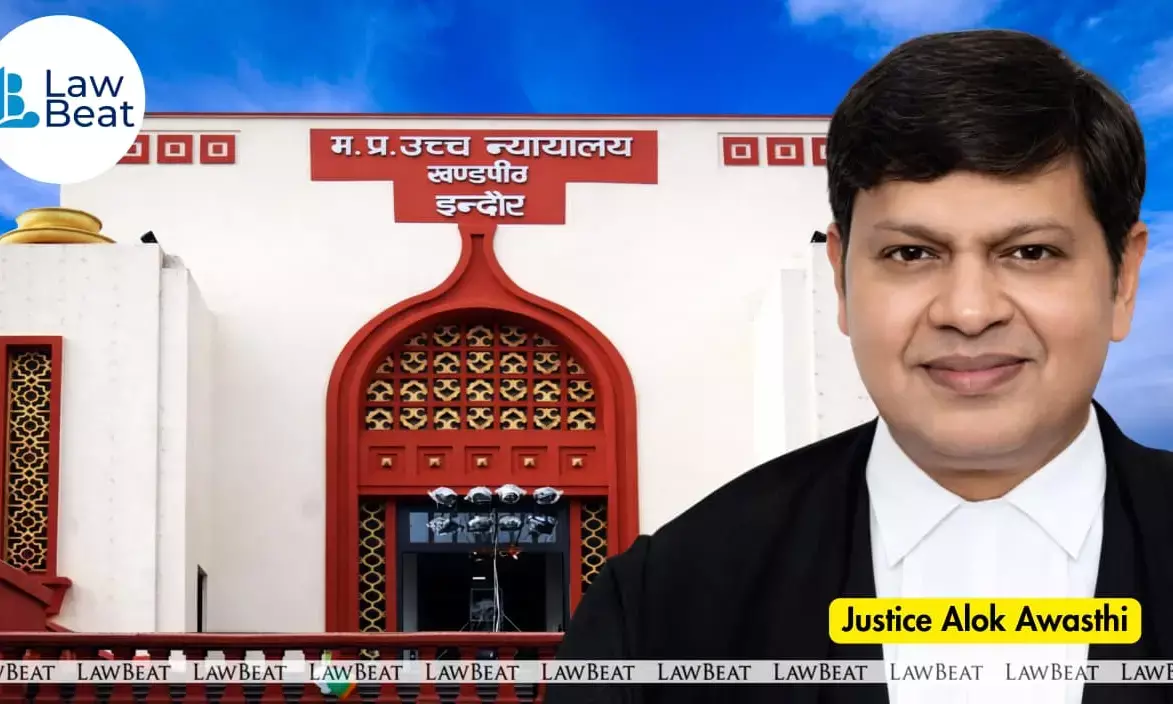
No Need to Prove Grave Injury for Dowry Cruelty, Rules MP High Court
The Madhya Pradesh High Court at Indore has restored a husband’s conviction in a 2007 dowry harassment case, holding that a dowry demand made after marriage is punishable even if no amount was fixed before the wedding, and that such cruelty does not require proof of grave injury or an attempt at suicide.
Justice Alok Awasthi set aside a Sessions Court judgment that had acquitted Akhilesh Daga and his father Ramkumar Daga. The Court affirmed the trial court’s conviction of Akhilesh under Section 498-A of the Indian Penal Code and Section 4 of the Dowry Prohibition Act, with one year’s rigorous imprisonment and a fine of Rs 1,000 under each provision.
The appeal was filed by Deepti Beesani through her father and power of attorney holder, Rajendra Beesani. According to the prosecution, her parents gave jewellery, household articles and Rs 17 lakh in cash at the time of the marriage. She alleged that she was harassed and beaten for bringing Rs 17 lakh instead of the expected Rs 25 lakh, and was thrown out of the house when the balance of Rs 8 lakh was not paid. An FIR was lodged on August 6, 2007.
The trial court convicted both men in 2017, but acquitted them of criminal intimidation and criminal breach of trust. In 2019, the Sessions Court overturned the conviction, citing the absence of any pre-marriage dowry agreement, inconsistent descriptions of the Rs 17 lakh and the family’s financial strength.
Senior Advocate Vivek Singh, assisted by Advocate Piyush Parashar, argued for Deepti that the lack of a prior bargain cannot defeat a later demand. He submitted that “greed has no limits, no matter how rich someone is.”
Senior Advocate Avinash Sirpurkar, assisted by Advocate Yogesh Kumar Gupta, defended the acquittal for the respondents, pointing to discrepancies in witness accounts. Government Advocate Ambuj Patel appeared for the State.
The High Court found the Sessions Court’s approach legally flawed. Dowry, it noted, covers property given or agreed to be given at, before or any time after marriage. “The expression ‘demand’ is itself the material act contemplated by Section 4 of the Dowry Act,” the Court said, adding that no amount needed to be formally fixed before the marriage.
On proof, the Court held that oral evidence was enough. “There is no rule that the demand of money as dowry can be proved only by producing the documentary evidence,” it observed. Deepti’s account was supported by her mother, brother, father and her father’s friend Manoj Goel, who said he was present when the demand was made at Indore on April 18, 2007. Minor variations in statements recorded years later could not wipe out this testimony, the Court said, noting that the FIR itself contained the Rs 25 lakh allegation.
The Court also rejected the Sessions Court’s view that cruelty must be grave enough to drive a woman to suicide. The two limbs of the Explanation to Section 498-A operate separately, it said, and harassment aimed at forcing an unlawful demand for property is enough. “The law does not require a woman alleging matrimonial cruelty to lodge a separate complaint every time an act of harassment occurs,” it added.
On the seized jewellery, recovered from a joint bank locker in Mumbai on the accused’s own disclosure, the Court relied on Smt. Rashmi Kumar v. Mahesh Kumar Bhada. “Merely because such ornaments are kept in the custody of the husband or in a joint bank locker, their ownership does not become joint,” it held, ordering the jewellery to be handed over to Deepti.
Ramkumar Daga died on March 19, 2024, so the appeal abated against him, as criminal liability does not survive death. Akhilesh’s bail bond was discharged and he was directed to surrender before the trial court within seven days, failing which the trial court must send him to jail. His acquittal on the intimidation and breach of trust charges remains untouched.
Case Title: Deepti Beesani through POA Holder Rajendra Beesani vs. The State of Madhya Pradesh and Others
Judgment Date: October 13, 2026
Bench: Justice Alok Awasthi