
Pregnancy, Motherhood Cannot Become Barrier to Education: Madras High Court
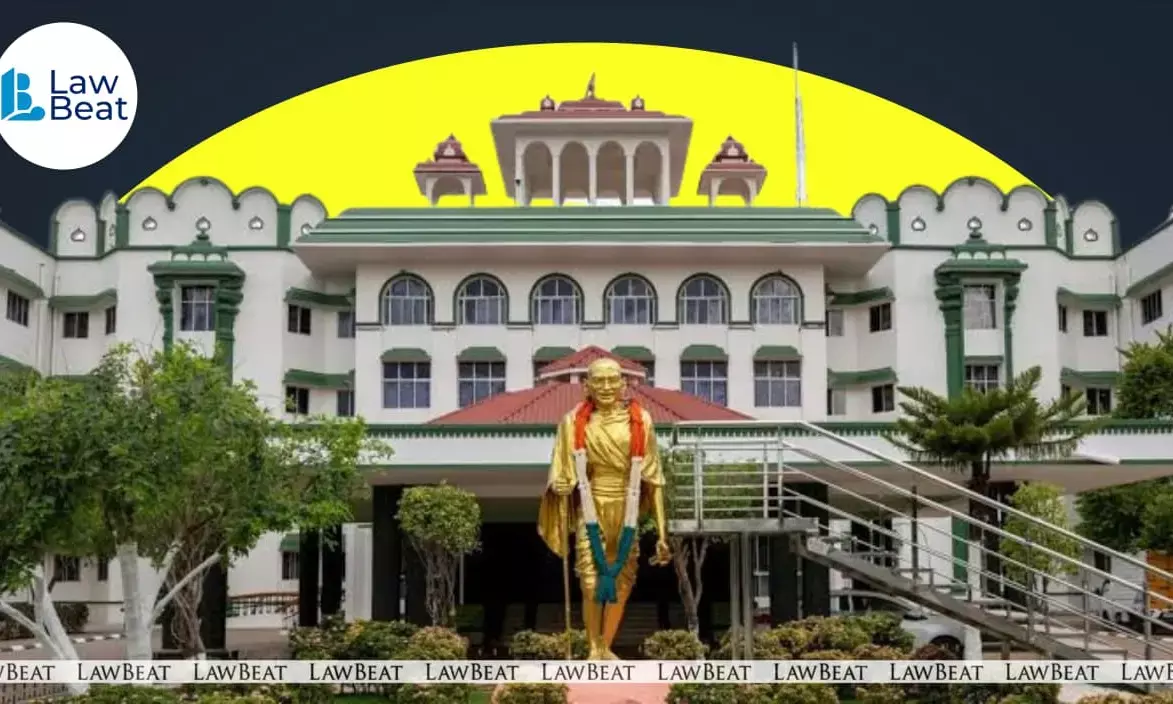
Madras High Court allows pregnant LL.M student to submit delayed dissertation.
The Madras High Court has held that academic regulations cannot be enforced in a manner that ignores the realities of pregnancy, childbirth and motherhood, while granting relief to an LL.M. student who was unable to submit her dissertation within the prescribed period due to pregnancy and post-natal responsibilities.
Allowing the plea filed by R. Sangeetha, the bench of Justice Hemant Chandangoudar directed the Tamil Nadu Dr. Ambedkar Law University and Government Law College, Madurai, to permit her to pay the dissertation fee, accept her dissertation, allow her to participate in the viva voce examination and issue the degree certificate if she successfully completes all academic requirements.
Sangeetha had enrolled in the LL.M. course during the academic year 2019-20. Though she was initially denied permission to appear for examinations due to shortage of attendance and had to seek re-admission in 2020-21, she completed all theory papers in 2022.
However, she could not complete the final requirement of the course - submission of a dissertation - within the stipulated period.
Sangeetha told the court that she conceived in March 2024 and delivered a girl child on December 7, 2024. Owing to pregnancy, childbirth and the responsibility of caring for a newborn, she could not submit her dissertation before the expiry of the period prescribed under university regulations.
The University opposed Sangeetha's plea, contending that she was governed by the "N+2" rule adopted pursuant to University Grants Commission (UGC) guidelines. Under the rule, an LL.M. student admitted in 2019-20 was required to complete the programme within four years. Since Sangeetha had not done so by 2024, the institution argued that there was no provision permitting acceptance of a dissertation beyond the prescribed period.
Justice Chandangoudar observed that while universities undoubtedly have the power to prescribe academic standards, eligibility conditions and timelines, courts can intervene where a rigid application of regulations results in manifest injustice.
"Academic regulations cannot be applied in a manner that completely ignores exceptional circumstances, particularly those arising out of biological and social realities faced by women students," court said.
Why did the court grant relief?
Court noted that Sangeetha had already completed all theory examinations and was not seeking exemption from any academic requirement. She only sought an opportunity to complete the final component of the course.
Referring to medical records, court found that she had conceived before the expiry of the permissible period and that the delay was directly attributable to pregnancy, childbirth and post-natal responsibilities.
"The period immediately preceding childbirth and the post-natal period are matters of undeniable physical, medical and emotional significance," court observed, adding that a woman undergoing pregnancy and caring for a newborn child cannot be treated on the same footing as an ordinary student for strict application of academic timelines.
Court also relied on a 2021 UGC communication encouraging higher educational institutions to provide maternity and child-care benefits to women students, including extensions of academic timelines where necessary.
It further referred to Allahabad High Court's decision in Saumya Tiwari vs State of UP and others (2021) recognising pregnancy and childbirth as valid grounds for academic accommodation.
What directions were issued?
Holding that denial of relief would render several years of academic effort futile and cause disproportionate hardship, court directed the authorities to permit Sangeetha to pay the dissertation fee through offline mode, accept her dissertation, evaluate it in accordance with regulations and allow her to participate in the viva voce examination scheduled for June 2026.
Court clarified that academic standards would remain unaffected because Sangeetha would still have to submit the dissertation, undergo evaluation and satisfy all requirements for award of the degree.
At the same time, Justice Chandangoudar cautioned that the order had been passed in the peculiar facts of the case and should not be treated as a precedent where similar exceptional circumstances are absent.
Case Title: R. Sangeetha v. The Registrar, The Tamil Nadu Dr. Ambedkar Law University & Others
Bench: Justice Hemant Chandangoudar
Judgment Date: June 18, 2026.