
Refusing Burial Access To SC Community Attracts SC/ST Act Charges: Madras High Court
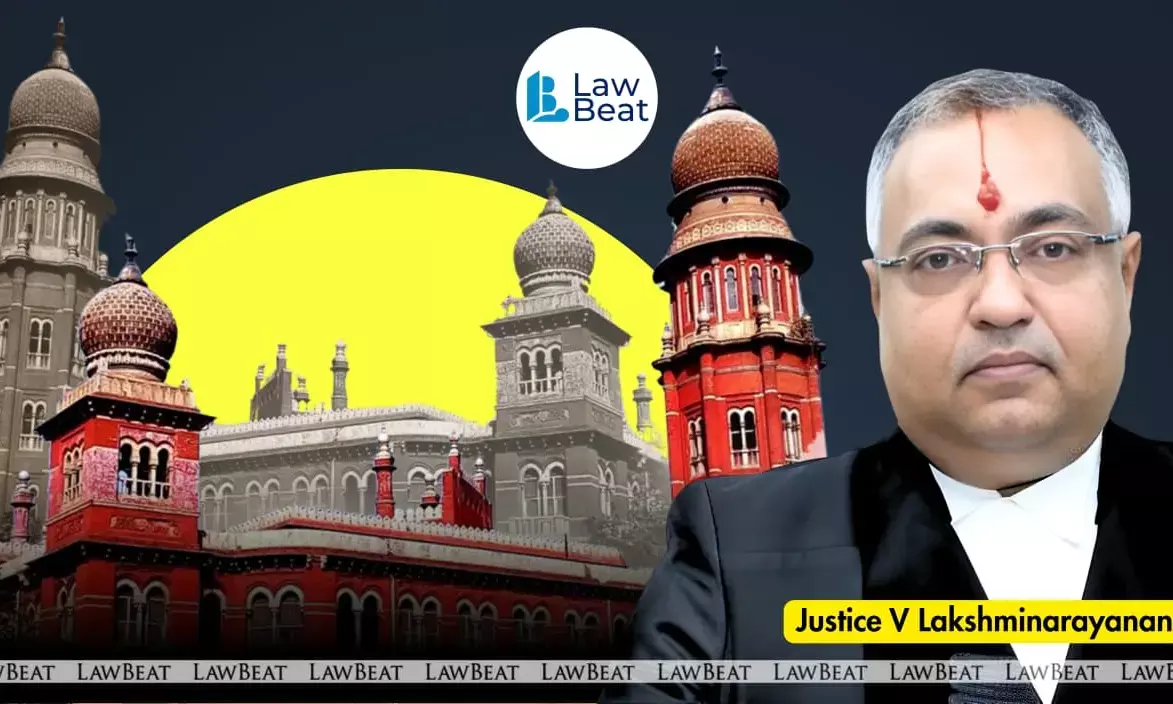
The Madras High Court directed authorities in Erode district to act against those responsible for levelling graves used by members of the Arunthathiyar community.
The Madras High Court has observed that denying members of the Scheduled Caste community access to a public burial ground amounts to a criminal offence under the Scheduled Castes and the Scheduled Tribes (Prevention of Atrocities) Act, 1989 and is a form of untouchability prohibited under Article 17 of the Constitution, while directing action over the levelling of graves in Erode district.
Disposing of a batch of three writ petitions concerning lands at Thiruvengadampalayam Hamlet, Karumandisellipalayam Town Panchayat, Perundurai Taluk, court recorded that though classified in revenue records as “cart track poromboke,” the lands were claimed by several villagers to have been used as burial and cremation grounds for decades.
The first petition was filed by a landowner who sought to restrain the authorities from reclassifying the land as burial ground and to prevent any burial or cremation there. He claimed the land functioned as a cart track providing access to his property and alleged that certain individuals were attempting to convert it into a graveyard.
The second petition, filed by another resident, sought reclassification of the land as a designated burial and burning ground. He alleged that private individuals had, in August 2025, uprooted trees, removed headstones and levelled graves using machinery.
The third petition sought strict enforcement of burial rules and prayed for exhumation of the body of a man buried there on October 21, 2025, contending that burial in the cart track was unlawful.
Given the conflicting claims, court directed the District Collector to conduct an enquiry.
The Special Tahsildar’s report found that although the survey numbers were recorded as cart track, portions of the land had been used as burial ground for over 70 years. It also confirmed that graves had been disturbed and levelled using machinery.
The report specifically recorded that members of the Arunthathiyar (Scheduled Caste) community were utilising portions of the land for burial and that graves in those areas had been levelled.
The bench of Justice V. Lakshminarayanan described the report as “extremely disturbing".
Court reiterated that the dignity of the dead is protected under Article 21 of the Constitution and that the right to dignity extends even after death. The destruction of graves, it observed, affects not only the deceased but also their surviving relatives.
Crucially, the court observed that denying persons from a marginalised community access to a public burial or cremation ground constitutes a criminal offence under the SC/ST (Prevention of Atrocities) Act. Such denial, it noted, amounts to practicing untouchability, which stands abolished under Article 17.
Court also faulted the authorities for not initiating criminal proceedings after the levelling of graves was brought to their notice, stating that appropriate penal provisions ought to have been invoked.
On the legal framework, court clarified that the Karumandisellipalayam body is a Special Grade Town Panchayat governed by the Tamil Nadu Urban Local Bodies Act of 1998, not the Tamil Nadu Panchayats Act of 1994. Referring to Section 172 of the 1998 Act and the Tamil Nadu Local Urban Rules of 2023, court noted that burial or cremation must ordinarily take place in registered or licensed grounds.
Relying on historical records, including a 2000 Town Panchayat resolution for laying a road described as “Cemetery Road,” court concluded that a burial ground existed at least from that year. It rejected the argument that the existence of a modern crematorium 1.5 km away automatically barred cremation at the site, observing that any such prohibition would require a formal notification by the council.
Disposing of the second writ petition, court directed the District Collector to ensure segregation and proper fencing of the burial and cremation areas, maintain them free from encroachment and garbage dumping, act on the Town Panchayat’s resolution seeking reclassification, and initiate appropriate action against those responsible for levelling the graves.
The other two writ petitions seeking to restrain burials and to order exhumation were dismissed.
Case Title: K.S.Balakrishnan vs. The District Collector, Erode District and Others with connected matters
Order Date: February 11, 2026
Bench: Justice V. Lakshminarayanan