
‘Religious Practice Cannot Disrupt Social Balance’: Allahabad High Court Dismisses Plea For Namaz On Private Land
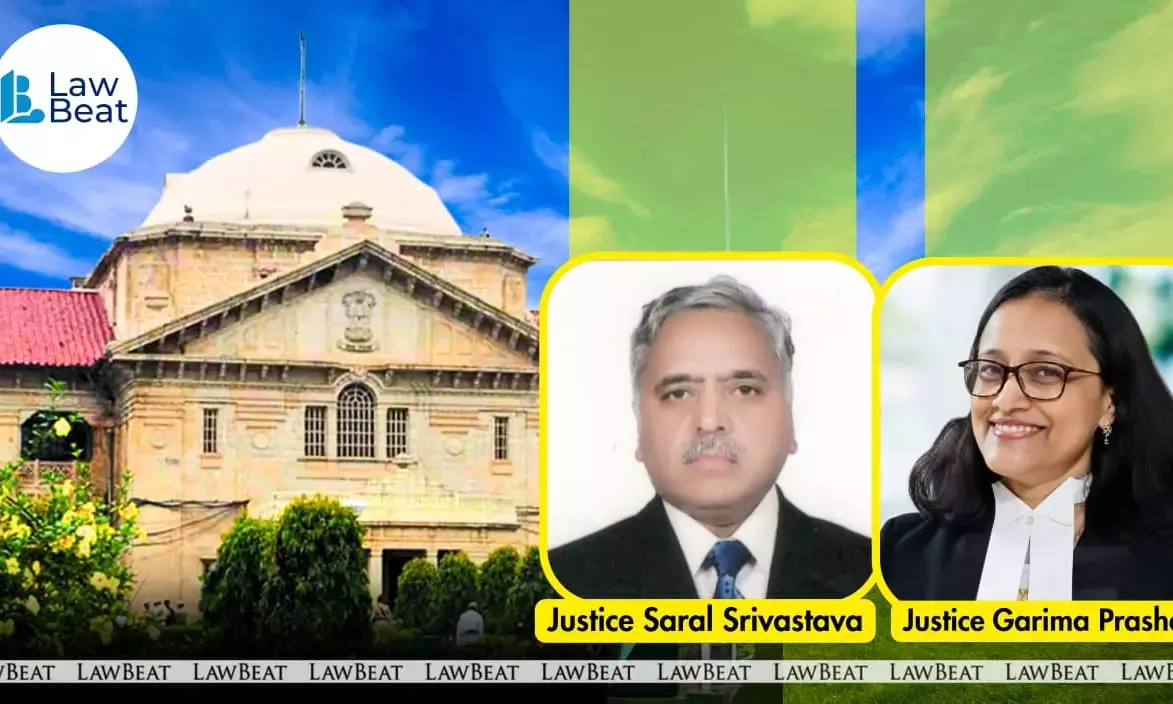
Allahabad High Court holds that expanding Namaz gatherings beyond private limits can invite State regulation to preserve public order and communal balance.
The Allahabad High Court has held that the expansion of religious practices in a manner that disturbs the existing social balance is not protected under the Constitution, underscoring that the right to practice religion cannot be used to alter the character of a locality or disrupt public order.
Dealing with a plea seeking permission to offer Namaz on a piece of land in Sambhal district, court observed that Articles 25 and 26 protect religious freedom only to the extent that it remains consistent with public order, morality and health.
It clarified that introducing new or expanded religious practices, especially where they were not traditionally followed and are likely to affect communal harmony, falls outside constitutional protection.
The bench of Justices Saral Srivastava and Garima Prashad was considering a writ petition filed by a man who claimed ownership over a parcel of land and sought protection to conduct prayers there. He argued that offering Namaz on private property is a fundamental right and cannot be interfered with by authorities.
The State, however, disputed both his ownership and the nature of the activity, pointing out that the land was recorded as public and that prayers at the site had historically been limited to Eid occasions.
Accepting the State’s position, court held that the right to practice religion is not absolute and must be balanced against the rights of others and the need to maintain social harmony. It emphasised that while private worship is protected, such protection is confined to activities that are genuinely private, occasional and non-disruptive.
Court drew a clear distinction between private devotion and organized religious activity. It noted that once a religious practice takes the form of regular or large-scale congregational gatherings, involving persons beyond the immediate household, it ceases to remain purely private. Such activity, the court said, may affect access, movement, and the character of the locality, and could require regulation in the interest of public order.
In this context, court stressed that even on private land, religious activity cannot be expanded in a manner that effectively converts the premises into a public religious space. Any such transformation would attract regulatory oversight, including compliance with local laws and administrative controls.
Importantly, the bench held that the State is not required to wait for an actual breach of peace before intervening. Where an activity has the potential to create social tension or disturb communal equilibrium, authorities are entitled to take preventive measures. This approach, court noted, is consistent with the constitutional principle of secularism, which mandates equal application of law to all religious groups.
Applying these principles to the case, court found that the petitioner was not merely continuing an existing practice but attempting to introduce regular congregational prayers by inviting people from within and outside the village. This, it held, amounted to an expansion beyond a limited private sphere and was therefore subject to regulation.
Court also found that the petitioner failed to establish ownership over the land, noting that the claimed gift deed lacked essential details and could not override the revenue record showing the land as public.
Holding that no enforceable legal right had been made out, particularly in a matter involving public order and social harmony, court dismissed the writ petition.
Case Title: Aseen vs. State Of U.P. And 3 Others
Order Date: April 6, 2026
Bench: Justices Saral Srivastava and Garima Prashad