
“Right To Electricity Is Also A Right To Life”: MP High Court Directs Connection Within 7 Days
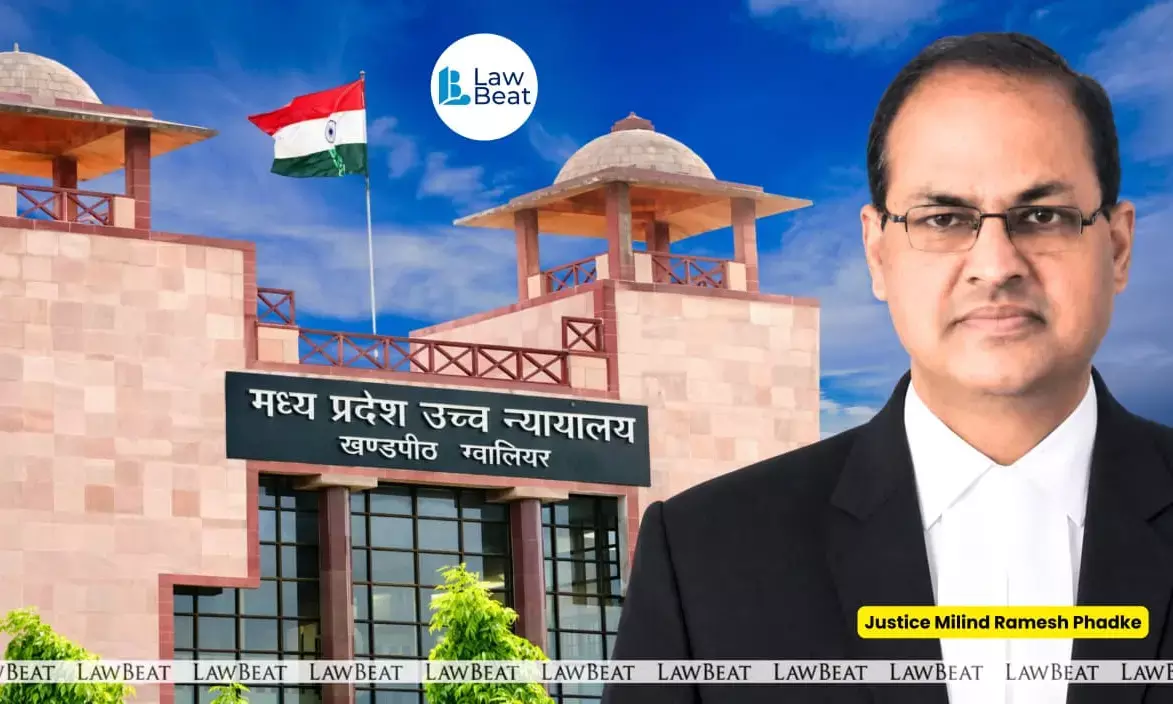
MP High Court: Right to Electricity Cannot Be Denied to an Occupier Over Family Property Dispute
The Madhya Pradesh High Court at Gwalior has ruled that a person living in a house can claim an electricity connection as an “occupier” under the Electricity Act, 2003, even when a family dispute over the property remains unresolved. The Court directed the authorities to release a connection to a woman within seven days.
Justice Milind Ramesh Phadke passed the order on September 24, 2026, allowing a writ petition filed by Smt. Preeti Sharma against the State of Madhya Pradesh and others. She had challenged the disconnection of her temporary electricity connection after a complaint by her own mother.
Observing that the dispute concerned share, right and possession in the house, the Court said electricity authorities “are not required to adjudicate upon complicated questions relating to title, partition or inter se civil rights of the parties.”
According to the petition, Sharma acquired a share in a three-storey house in Lashkar, Gwalior, through a compromise under Order XXIII Rule 3 of the Code of Civil Procedure in earlier civil proceedings, to which her mother, respondent No.5, was also a party. Sharma claimed a 1/7th share and said she lives in her portion with her husband and children.
After disputes arose, she alleged, her mother obstructed the supply from her father’s connection. Sharma then applied for an independent connection, and a temporary domestic connection was given to her on August 20, 2025.
Her mother approached the authorities, alleging that the connection was obtained by suppressing facts and violating its terms. It was disconnected on August 27, 2025. Sharma applied for a fresh connection two days later.
Sharma told the Court that the Consumer Forum dismissed her complaint as she was not treated as a consumer. After an earlier High Court order dated April 21, 2026, she submitted a fresh representation, but no effective steps followed, she said. Her children, studying in Classes IX and X, were struggling without electricity.
Advocate Arshad Ali M. Haque appeared for the petitioner. Government Advocate Shiraz Qureshi appeared for the State, Advocate Prateek Kulshrestha for respondents No.2 and 3, and Advocate Himanshi Pathak for the mother. The respondents argued that a connection could not be released unless Sharma established her right over the premises, and that the authorities had acted on the mother’s complaint.
The Court turned to Section 43 of the Electricity Act, which obliges a distribution licensee to supply electricity on an application by the “owner or occupier” of any premises. The Electricity Act, 1910 defined an occupier as a person in “lawful occupation”. The word “lawful” has disappeared from the 2003 law, which the Court called a “conscious departure by the Parliament.”
“The deletion has to be viewed as a conscious act of the Parliament and not just an omission,” it added.
The Court relied on the Calcutta High Court’s decision in Fashion Proprietor Aswani Kumar Maity v. West Bengal Electricity Distribution Co. Ltd., which held that a person protected in possession until removed by due process cannot be denied electricity. It also cited the Gujarat High Court’s ruling in Yogesh Lakhmanbhai Chovatiya v. PGVCL, which held that occupiers cannot be refused a connection merely because a land dispute is pending.
Allowing the petition, the Court held, “the petitioner has the right to claim electricity connection as an ‘Occupier’ under Section 43 of the Electricity Act 2003.”
It clarified that its observations apply only to her right to electricity “so long as she remains in possession of the property in question.” It said, “no-one, in the modern days can survive without electricity, and therefore, the right to electricity is also a right to life and liberty in terms of Article 21 of the Constitution of India.”
The respondents were directed “to release the electricity connection within a period of 07 days to the petitioner in the premises, where she is presently staying and occupying the same,” subject to Sharma complying with the other norms.
Case Title: Smt. Preeti Sharma vs. The State of Madhya Pradesh and Others
Judgment Date: September 24, 2026
Bench: Justice Milind Ramesh Phadke