
Right To Residence Under DV Act Cannot Override Senior Citizens’ Right To Peaceful Living: Delhi High Court
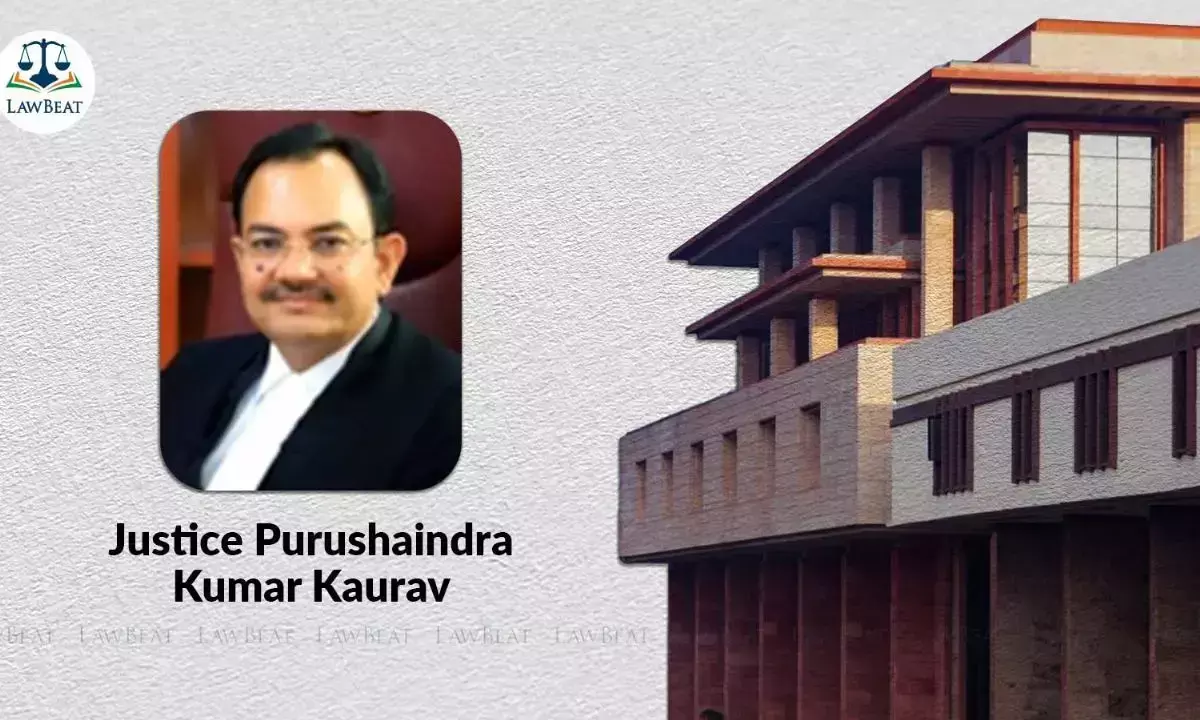
Delhi HC Balances DV Act Rights With Senior Citizens’ Right To Dignified Living.
The Delhi High Court has upheld an eviction order passed against a daughter in law and her son from a property owned by her elderly in laws, observing that while a woman may have a statutory right to reside in a shared household under the Protection of Women from Domestic Violence Act, such a right does not create any proprietary interest and cannot override the rights of senior citizens to live peacefully and with dignity in their own property.
The judgment was delivered by Justice Purushaindra Kumar Kaurav while deciding a writ petition filed by Smt. Ritu Taneja and her son Khushaal Taneja challenging an order passed by the Divisional Commissioner directing the petitioners to vacate the property which belonged to the petitioner’s in laws, Mr. Om Prakash Taneja and Mrs. Savitri Taneja.
“The contention advanced on behalf of the Petitioners that the assets of the family are traceable to ancestral business and that Late Sh. Pankaj Taneja had a subsisting share, therein, raises disputed questions of fact as well as law, including issues relating to the nature of the property, existence of any coparcenary or joint family arrangement, and the extent of alleged beneficial or proprietary rights. Such questions necessarily require detailed examination of evidence, including documentary proof, accounts, and possibly oral testimony, which cannot be satisfactorily undertaken within the summary framework of proceedings under the Senior Citizens Act, 2007. The jurisdiction under the said Act is neither intended nor equipped to adjudicate upon such claims and consequently, such pleas cannot constitute a legally sustainable defence to an eviction order sought for the protection of senior citizens’ right to peaceful residence”, the court observed.
The dispute arose following the death of petitioner no.1’s husband, Late Mr. Pankaj Taneja, in February 2020.
After his demise, relations between the daughter in law and her elderly in laws deteriorated significantly, leading to multiple disputes within the family.
The senior citizens approached authorities under the Maintenance and Welfare of Parents and Senior Citizens Act, 2007, and the Delhi Rules of 2009, alleging ill treatment, harassment, and mental distress caused by the petitioners. They sought eviction from the property to enable them to live peacefully.
Initially, the Maintenance Tribunal, acting through the District Magistrate, ordered eviction of the petitioners only from the ground floor of the property.
However, upon appeal, the Divisional Commissioner expanded the relief and directed eviction from the entire premises after recording that the relationship between the parties had become so strained that continued cohabitation was “wholly untenable.”
Before the High Court, counsel appearing for the petitioners argued that the Safdarjung Enclave property constituted a “shared household” under the Domestic Violence Act and therefore petitioner no.1 had a right to continue residing there.
It was further argued that the in laws had substantial financial resources but were allegedly not supporting the petitioners financially.
The petitioners also claimed that the property had been acquired using ancestral business funds and raised disputes regarding LIC policies and other financial assets of the deceased husband.
Petitioner no.1 denied allegations of harassment and contended that she had cared for her mother in law during her illness. It was also submitted that forcing her and her son out of the property would cause serious hardship.
On the other hand, counsel appearing for the senior citizens submitted that the property was self acquired and exclusively owned by the respondents.
They alleged that the petitioners had subjected them to continuous harassment and emotional trauma.
It was further pointed out before the Court that petitioner no.1 was financially independent and employed as a government teacher earning more than Rs. 1 lakh per month.
The respondents also informed the Court that petitioner no.1 had access to alternative accommodation at Khirki Extension and additionally had interests in plots located in Faridabad.
The in laws expressed willingness to hand over documents relating to the Khirki Extension property and the Faridabad plots once the petitioners vacated the Safdarjung Enclave property.
While dealing with the dispute, the High Court observed that the Senior Citizens Act is a welfare legislation enacted to ensure that elderly parents and senior citizens are able to live with dignity, autonomy, and peace in the evening years of their lives.
The Court emphasized that proceedings under the Act are summary in nature and cannot be converted into forums for adjudicating complicated civil disputes relating to title, inheritance, or co ownership claims.
The Court observed that claims regarding ancestral property, inheritance rights, or competing ownership interests must be determined before competent civil courts and cannot be conclusively examined in proceedings under the Senior Citizens Act.
Addressing the issue of “shared household,” the Court relied upon Supreme Court judgments including S. Vanitha v. Deputy Commissioner and Satish Chander Ahuja v. Sneha Ahuja.
Referring to these precedents, the High Court clarified that the right of residence available to a daughter in law under the Domestic Violence Act is protective in nature and does not amount to a proprietary right over the property.
The Court categorically held that such a right cannot be used to defeat the legitimate entitlement of senior citizens to peacefully enjoy their self acquired property, particularly in situations where the relationship between the parties has broken down irretrievably.
The court also noted that petitioner no.1 was not financially vulnerable or destitute, but rather a financially secure and independent government employee.
According to the Court, the dispute appeared to revolve more around competing property claims than the absence of shelter or financial insecurity.
Finding no arbitrariness, perversity, or illegality in the Divisional Commissioner’s order, the High Court upheld the eviction direction.
The Court directed the respondents to deposit the original documents relating to the alternative accommodation at Khirki Extension and the Faridabad plots before the Divisional Commissioner within 30 days.
The petitioners were directed to vacate the Safdarjung Enclave property within 45 days from the date of deposit of the documents.
The Court further ordered that neither side shall create any third party rights in respect of either the vacated property or the alternative properties without permission from a competent court.
The writ petition was accordingly disposed of without any order as to costs.
Case Title: Smt. Ritu Taneja & Anr. v. Govt of NCT of Delhi & Ors.
Bench: Justice Purushaindra Kumar Kaurav
Date of Judgement: 08.05.2026